Pay Without Performance: 10 Channel CEOs Who Make Too Much
Greed is good again -- at least for some CRN Solution Provider 500 CEOs who have doubled, tripled, even quadrupled their salaries amid a shaky economy, lackluster financial results and unimpressive stock gains.
This conclusion is based on exclusive pay-for-performance research and analysis done by Obermatt Inc., a Switzerland-based compensation consultant firm, and CRN. Together, Obermatt and CRN looked at total compensation from 2009 to 2011, fiscal year sales, net income and stock prices for the same time period. Of the 36 publicly traded solution providers Obermatt and CRN examined, 10 CEOs were overpaid by more than 100 percent, according to the study.
In the most egregious cases, CEOs received significant salary increases while revenue fell, losses were reported and investor confidence waned. All the while, those CEOs piled up hefty increases in stock options, grants and bonuses that are out of line, according to the Obermatt/CRN analysis.
[Related: Video: Executive Compensation In The SP500: Who's Overpaid? ]
These increases in total compensation came against a backdrop of unrest among Americans over the growing disparity between the rich and poor (think "Occupy Wall Street"), continued economic uncertainty and prolonged unemployment.
Here are the top 10 companies with the most overpaid executives among the CRN SP500 community, according to the Obermatt/CRN Pay-For-Performance Index. CRN is pleased to highlight this story which originally ran as an exclusive on the CRN Tech News App in September.
NEXT: Pay Without Performance No . 10: EMTEC
Dinesh Desai, Chairman, President and CEO
Obermatt/CRN Pay-For-Performance Index: 128 percent excess pay

Emtec had a tough 2011 fiscal year, posting a $4.3 million loss on a 5 percent drop in sales to $212.1 million. Meanwhile, the company's stock price for its fiscal year ended Aug. 31, 2011, closed at just 80 cents per share, down from $1.14 per share at the end of its prior fiscal year.
That performance led to a 29 percent decline in total compensation for Emtec Chairman, President and CEO Dinesh Desai to $674,756 in 2011, compared with $959,528 in pay in 2010.
The sharp drop in Desai's total compensation came with Emtec's compensation committee deciding not to award any annual bonus to Desai because of the failure to meet the "minimum threshold" for adjusted EBITDA of $7.71 million with earnings per share of 17 cents per share -- an "all-or-nothing target," according to the company's 2012 proxy.
Even with that sharp drop in pay, Desai is rated as 10th on the list of most overpaid CEOs with 128 percent excess pay, according the Obermatt/CRN Pay-For-Performance Index.
John Howlett, vice chairman emeritus at Emtec, Springfield, N.J., noted that a significant portion of Desai's compensation over the three-year period, more than $300,000, includes repayment of a loan with interest that Desai made to the company that is counted as non-cash compensation.
Furthermore, Howlett also believes the Obermatt/CRN Pay-For-Performance Index should use EBITDA instead of net income when calculating the performance of a company.
Using EBITDA, Emtec earned $3.9 million in fiscal 2011 instead of showing a $4.2 million loss after one-time and other nonrecurring charges.
"Adjusted EBITDA also eliminates certain unusual costs and reflects certain changes in the business made by management and includes adjustments which, in the opinion of management, are necessary to reflect the underlying ongoing operations of the business. We publish quarterly press releases, which give a factual picture of our cash-based EBITDA, and ask that all our stakeholders review this information," Howlett said.
Also, Emtec is engaged in a transformation of its business model "with more and more of our revenue coming from consulting and outsourcing services," Howlett said. That explains why revenue growth slowed in 2011 after showing a minimal increase in 2010 compared to 2009, he said.
"Our most recent 10-Q for the period ending May 31, 2012, is reflective of that change [to consulting and outsourcing services] with 53 percent of our quarterly revenue coming from these areas compared with only 10 percent in 2008," Howlett said.
NEXT: SS&C Technologies No. 9: SS&C TECHNOLOGIES
William Stone, CEO
Obermatt/CRN Pay-For-Performance Index: 139 percent excess pay
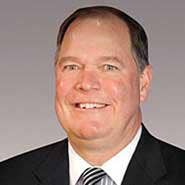
SS&C Technologies' sales have grown almost 37 percent in the two-year period from fiscal 2009 to fiscal 2011. During that same time frame, SS&C CEO William Stone's total compensation increased 120 percent.
Stone makes CRN's list of most overpaid executives because his total compensation increased at a much faster pace than the company's sales and earnings growth. His total compensation amounted to $6.6 million in 2010, up from $2.5 million in 2009. In fiscal 2011, his total compensation package fell to $5.5 million, according to a Securities and Exchange Commission filing by the Windsor, Conn.-based solution provider and software developer for the financial services market.
Stone landed ninth on the Obermatt/CRN Pay-For-Performance Index with 139 percent in excess pay. At press time, executives at SS&C had not responded to a request for comment.
Stone's total compensation increased after the company went public in March 2010.
In February 2010, the month before its IPO, SS&C's compensation committee amended its option incentive plan to "provide greater incentives to our named executive officers and employees" and to eliminate certain provisions of the options that the committee believed "were more typical of private-company options than options of publicly traded companies," according to the 2012 proxy.
Stone received a $2.2 million stock award in 2010 and an option award of $1.6 million that year. In fiscal 2011, he didn't receive a stock award, but his option award increased to nearly $2.3 million, according to a company proxy.
NEXT: Micros Systems No . 8: SS&C TECHNOLOGIES
A.L. Giannopoulos, CEO
Obermatt/CRN Pay-For-Performance Index: 183 percent excess pay

Micros Systems reported improved performance in fiscal 2010, but the total compensation of CEO A.L. Giannopoulos outpaced the company's revenue, earnings and stock price gains during that period.
In fiscal 2010, Micros' net income increased almost 19 percent on just a 0.7 percent increase in sales growth. Micros' stock price, however, increased 41 percent that fiscal year. In return, the board rewarded Giannopoulos with $7.8 million in total compensation, a 177 percent increase compared to the $2.8 million he was awarded in fiscal 2009.
It's that kind of hike in total compensation that put Giannopoulos eighth on the list of most overpaid CEOs, according to the Obermatt/CRN Pay-For-Performance Index, with 183 percent excess pay. The Columbia, Md.-based company, which manufactures and sells IT into the restaurant, hotel and specialty retail markets, declined to comment on its CEO compensation for this article.
In fiscal 2011, Micros' sales increased 10 percent as the company crossed the billion-dollar plateau, while earnings increased 26 percent and its stock price increased 56 percent for the year. Giannopoulos' compensation that year totaled $8.67 million, a 10.6 percent increase.
In fiscal 2011, Micros' compensation committee said its primary considerations for executive bonuses were based on revenue and income before taxes, according to its proxy statement.
"We believe revenue growth is a principal indicator of our ability to compete effectively, increase market share, and realize economies of scale that can enhance margins," the company wrote in the proxy.
Micros added that it didn't use net income, or income after taxes, as a performance metric because "tax rate fluctuations often are related to factors that are out of control of management, and we believe that bonus awards should not be affected positively or negatively by these fluctuations," according to the company.
For fiscal 2011, revenue was 100.8 percent of budgeted revenue and income before taxes was 109.6 percent of budget, according to the company. Accordingly, the incentive bonuses for Giannopoulos and two other executives were 105.2 percent of their respective target bonuses. For Giannopoulos, that amounted to an additional $2.1 million in compensation. He received an equal amount of "discretionary bonus" and earned an additional $2.5 million in option awards.
Giannopoulos was not the only Micros executive well compensated in 2011. The total compensation for Kaweh Niroomand, executive vice president of Europe, Africa and Middle East, amounted to $4.4 million while the compensation for Thomas Patz, executive vice president of strategic initiatives, general counsel and corporate secretary, amounted to $4.2 million.
Meanwhile, the total compensation for Stefan Piringer, executive vice president of Asia-Pacific, amounted to $3.7 million, and the compensation for Cynthia Russo, executive vice president and CFO, amounted to $2.3 million. The compensation for all four executives amounted to more than four times their base salary in bonuses and option awards for fiscal 2011.
In a proxy filing, Micros maintains that compensation is determined by the CEO's individual performance and financial results. However, it notes, "In most respects, the process used by the Compensation and Nominating Committee is qualitative rather than quantitative."
NEXT: GTSI No. 7: GTSI
Sterling Phillips, Current CEO
Scott Friedlander, Former President and CEO
Obermatt/CRN Pay-For-Performance Index: 227 percent excess pay

Former GTSI President and CEO Scott Friedlander had been at the helm of the $1 billion government systems integrator for only 10 months when the Small Business Administration on Oct. 1, 2010, suspended some 60 GTSI federal contracts pending an investigation into the company's practices regarding small-business partners.
Friedlander, who was executive vice president of GTSI when the alleged violations occurred, stepped aside 25 days later as part of a GTSI "administrative agreement" with the Small Business Administration.
Despite the scandal, Friedlander walked away with total compensation in 2010 of $1.11 million, up from $748,191 in 2009.
As a result of his resignation, GTSI paid Friedlander a one-time severance payment of $450,000 in addition to a severance payment of his ending salary of $400,000 for a period of one year.
Friedlander's severance agreement is one reason why GTSI's total compensation for the CEO position placed it seventh on the Obermatt/CRN Pay-For-Performance Index. Friedlander and his successor accounted for 227 percent in excess pay, according to the index.
This came as the company's shares dropped 20 percent from $5.65 when he took the CEO post on Jan. 13, 2010, to $4.47 on Oct. 26, 2010, when he officially stepped down.
Sterling Phillips, former chairman and CEO of government contractor Analex Corp., took the GTSI CEO job in December 2010 with a total compensation package that totaled $828,145 in 2011.
With Phillips at the helm, GTSI sales fell 46 percent in 2011 to $356.7 million compared to $666.7 million in 2010. The company's shares, meanwhile, dropped another 12 percent in 2011 from $4.71 on Dec. 31, 2010, to $4.16 on Dec. 30, 2011.
In June, GTSI was sold to global solution provider power Unicom Systems Inc. for $76.7 million, or $7.75 per share, a 48 percent premium over GTSI's closing price just before the deal was announced.
GTSI halted trading in late June and is now a private company under Unicom.
In an email to CRN, GTSI's senior vice president and CFO, Peter Whitfield, wrote that he felt it would be "inaccurate and inappropriate to include GTSI on any listing or analysis of public companies," given its sale to Unicom. He did not return subsequent emails or voice-mails seeking comment for this article.
NEXT: CIBER No. 6: CIBER
David Peterschmidt, CEO
Obermatt/CRN Pay-For-Performance Index: 228 percent excess pay

In 2011, Ciber reported a loss of $67.3 million with its shares dropping 17 percent for the year. Just the same, Ciber CEO David Peterschmidt's total compensation increased 16 percent to $3.0 million.
It's that kind of pay-for-performance that puts Ciber sixth on the list of having the most overpaid CEOs, according to the Obermatt/CRN Pay-For-Performance Index. Ciber's CEO position accounted for 228 percent in excess pay over the period from 2009 to 2011, according to the index. Ciber executives did not return several emails or phone calls seeking comment for this article.
The hike in 2011 total compensation came after Peterschmidt received total compensation in 2010 of $2.6 million including a $300,000 bonus for only six months as CEO. Peterschmidt also received 400,000 restricted stock units in June 2011 based upon what the company's compensation committee called a "review of market data and Peer Group equity compensation for similar positions."
Peterschmidt's increased compensation came as Ciber's shares fell from $4.68 on Dec. 31, 2010, to $3.86 on Dec. 30, 2011.
The company showed some bottom-line improvement in 2011, with a loss of $67.3 million compared to a $77.2 million loss in 2010. Also, in Peterschmidt's favor, the company's sales for 2011 increased to $976.9 million compared with $953.8 million in 2010.
In a statement last February after Ciber announced its annual 2011 results, Peterschmidt maintained that the company has made "measured progress" in a "turnaround" period.
"The significant actions we have taken, including stabilizing North America, lowering our risk profile, agreeing to sell our Federal business and improving delivery quality, have come about by the changes we have made on several fronts including strengthening our leadership and overhauling our operations," he said in a statement. "We do, however, understand the importance of delivering improved operating profits and cash flows and remain confident that we will achieve these goals as we move through 2012."
Meanwhile, Peterschmidt's predecessor, former Ciber CFO and interim CEO Peter Cheesbrough, who joined the company as executive vice president and CFO in 2007 and left the company in April 2011, received $1.29 million in total compensation in 2011, up from $942,079 in 2010 and $520,187 in 2010.
Ciber paid Cheesbrough, who became interim CEO and president for just 10 weeks in 2010, upon his departure as a director of the company on April 29, 2011, "a lump sum payment of $684,000, which is an amount equal to his annual base salary ($360,000), plus his annual target cash incentive ($324,000 -- 90 percent of his base salary)." In addition, Ciber accelerated the vesting of 29,280 stock options and 89,760 restricted stock units for Cheesbrough.
NEXT: TeleCommunications Systems No. 5: TELECOMMUNICATION SYSTEMS
Maurice Tose, CEO and President
Obermatt/CRN Pay-For-Performance Index: 231 percent excess pay

In 2010, TeleCommunication Systems' shares closed the year at $4.67, down more than half from $9.68 at the end of 2009. The next year, shares fell even further to $2.35.
That steep drop was one reason why the mission-critical wireless communications solution provider's founder, chairman, CEO and president, Maurice Tose, ranked as the fifth most overpaid CEO, with 231 percent excess pay, according to the Obermatt/CRN Pay-For-Performance Index. TeleCommunication Systems executives did not return repeated phone calls and emails for comment.
Even with a steep drop in TeleCommunication Systems' share price in 2011, Tose's total compensation jumped 55 percent to $2.7 million compared with $1.7 million in 2010. For 2009, Tose's total compensation was $3.7 million. That increase in total compensation came with the company earning $28.3 million on a then-record 36 percent increase in sales to $300.1 million.
"The record operating results of 2009 continue to illustrate our ability to monetize highly reliable wireless communications technology in three key areas: cellular text messaging, mobile location-based applications and infrastructure, and secure satellite-based communications, including deployable kits," said Tose in a prepared statement discussing the 2009 results. "We foresee strong growth in both of our business segments in 2010 and beyond."
Annapolis, Md.-based TeleCommunication Systems is also transitioning from the more mature text messaging business toward more "TotalCom" solutions for federal and state government customers, Tose said in early February.
"[2011] was a year of investing for engineering depth, enhanced performance and functionality of our systems and services, enhanced sales and marketing, as well as protection of our rapidly growing portfolio of proprietary intellectual property," Tose said in a statement. "Long term profit growth is our primary objective, as the security and reliability of communications technology becomes increasingly important to government, enterprises and many consumers, and TCS is a leader in fulfilling that demand."
NEXT: Genpact No. 4: GENPACT
N.V. Tyagarajan, CEO
Pramod Bhasin, Former CEO
Obermatt/CRN Pay-For-Performance Index: 295 percent excess pay

Genpact's CEO, N.V. Tyagarajan, has overseen an attractive 43 percent growth in revenue at the business-process-outsourcing pioneer through the past three fiscal years. But from fiscal 2009 to fiscal 2011, the total CEO compensation for Tyagarajan and his predecessor, Pramod Bhasin, increased 170 percent. It's that spike in total compensation that contributed to Genpact being ranked No. 4 on the list of most overpaid CEOs with 295 percent in excess pay, according to the Obermatt/CRN Pay-For-Performance Index.
Genpact's 2012 proxy notes that part of the base salary for the CEO and other executives is to retain them and ensure they can "maintain a standard of living commensurate with their skill set and experience."
Tyagarajan was named CEO in 2011 after serving the company as COO in 2009 and 2010 under former CEO Bhasin. About $4.5 million of Tyagarajan's total compensation in 2011 was in equity grants that are vested out over a four-year period, in effect reducing the compensation that Tyagarajan actually received last year, said Piyush Mehta, Genpact's senior vice president of human resources. SEC guidelines dictate that the compensation be reported the first year, Mehta said.
"When you have a new CEO you want to give him some level of assurance and provide him with some [security] so that he will continue to deliver," Mehta told CRN. "It only looks like you're paying him $8 million because it's all factored into one year."
New York-based Genpact, which was spun out of General Electric in 2004, does not use predetermined individual or corporate performance factors or goals to establish compensation levels for executive officers. However, in determining 2011 annual cash bonuses for the named executive officers, the compensation committee looked at overall operational and financial performance and each named executive officer's role in that performance, according to the company's proxy.
The committee awarded higher bonuses in 2011 than 2010 because revenue increased 27 percent compared to 2010 and revenue from global clients (excluding General Electric) increased 43 percent, according to the proxy. Tyagarajan's increase in 2011 total compensation came in share awards ($5.2 million for 2011 after taking over as CEO in June 2011, according to the proxy). He also earned a 2011 bonus of $1.3 million, about 80 percent higher than his 2010 bonus, because he exceeded the targets set forth in his contract, according to Genpact.
"The compensation committee also considered Mr. Tyagarajan's seamless transition into the CEO role and strategic acquisitions in determining Mr. Tyagarajan's bonus. Due to the scope of Mr. Tyagarajan's position, the compensation committee also determined that a bonus that was materially higher than the other named executive officers was warranted," the company wrote in the proxy.
NEXT: Black Box No. 3: BLACK BOX
Terry Blakemore, CEO
Obermatt/CRN Pay-For-Performance Index: 297 percent excess pay

Black Box's fiscal 2010 earnings dropped 23 percent to $34.5 million. Nevertheless, Black Box CEO Terry Blakemore's total compensation doubled to $4.6 million in 2010 compared with $2.3 million in 2009 while leading the Pittsburgh-based communications systems integrator.
That hike in total compensation combined with the drop in earnings is one of the reasons that Blakemore was No. 3 on the list of overpaid CEOs, according to the Obermatt/CRN Pay-For-Performance Index, with 297 percent excess pay. Black Box executives did not return several email and voice-mail messages regarding their CEO compensation.
Blakemore's increase in total compensation came after Black Box's compensation committee, with the aid of an outside compensation consultant, "extensively re-evaluated the nature and structure" of the company's compensation program, according to the company's 2012 proxy. Blakemore's total compensation fell in 2011 even as the company posted record sales and a sharp rise in profits. For fiscal 2011, in fact, Black Box posted a 53 percent increase in earnings to $52.9 million. The company's sales were up 11 percent in fiscal 2011 to $1.07 billion.
Blakemore himself acknowledged the stronger results, pointing to the "power of our diversified solution offering and client base."
"In fiscal 2012, we look forward to strengthening our position as a communication system integrator by investing in our business and making select, strategic acquisitions," said Blakemore in a release discussing the 2011 results. "We remain committed to grow profitably and deliver value to our clients and shareholders."
Nevertheless, Black Box posted a loss in fiscal 2012 of $247.7 million on a 2 percent increase in sales to $1.09 billion. The loss came with "softening demand" in the commercial business and decreased spending from federal clients, according to Blakemore, who will retire from the company next spring and remain a member of the board of directors until the 2013 Annual Meeting.
On June 20, Black Box said that its board of directors had appointed Michael McAndrew, the company's current executive vice president, CFO, secretary and treasurer, to succeed Blakemore as president and CEO effective April 1, 2013.
Blakemore, who has been with the solution provider for 12 years, led the January acquisition of InnerWireless, a provider of in-building antenna systems, in an effort to expand Black Box's communication technology offerings. The buyout was announced the same day that Black Box reported a $283.4 million loss, or $16.12 a share, on revenue of $275.9 million in the third quarter.
NEXT: Premiere Global Services No. 2: PREMIERE GLOBAL SERVICES
Boland Jones, Founder and CEO
Obermatt/CRN Pay-For-Performance Index: 411 percent excess pay

Premiere Global Services (PGi) founder and CEO Boland Jones received more than $8.1 million in 2010, about four times more than the $2.0 million he took home the prior year.
That increase in total compensation was one of the factors behind Jones' ranking as the second most overpaid CEO, according to the Obermatt/CRN Pay-For-Performance Index, with 411 percent excess pay.
In an email to CRN, Sean O'Brien, executive vice president of strategy and communications at PGi, noted that the CEO's total compensation in 2011 decreased 64 percent from 2010 while sales increased 7 percent and while non-GAAP diluted EPS and stock price each increased more than 20 percent. "Our total shareholder return for 2011 [outperformed] the Dow Jones Industrial Average, Nasdaq Composite and Russell 3000 indices, as well as our compensation study peer group and stock performance graph indices," O'Brien wrote.
Also, 82 percent of PGI's shareholders approved the company's "say on pay" vote this year, he noted.
In a 2011 proxy, PGi noted that certain executive officers received a higher bonus payout in 2010 as compared with 2009 "as a result of our company's improved performance against established financial metrics." However, in 2010 the Atlanta-based developer of virtual collaboration solutions saw its stock, revenue and earnings all fall compared to 2009.
Boland's compensation appears to have been the subject of some debate between the company and two proxy advisory firms hired by PGi.
According to a proxy statement dated June 2, 2011, ISS Proxy Advisory Services and Glass Lewis & Co. both advised shareholders to vote against the compensation committee's recommendations for executive compensation, asserting that there was a misalignment between the compensation of the CEO and company performance.
PGi countered that the proxy advisory companies utilized a "one-size-fits-all" approach to evaluate stock price performance over a multiyear period but in contrast measured CEO compensation on a year-over-year basis.
Despite those claims, both proxy advisory firms maintain that PGi "significantly overstates" the valuation of Jones' long-term incentive (LTI) award, according to the proxy.
PGi argued to shareholders in the proxy to consider that Boland had not received a salary increase, an increase in bonus opportunity or a long-term incentive award since 2005.
"Unlike many companies, awards under our LTI program are made on a periodic basis, not on an annual basis. Our CEO had not received an LTI award since 2005 and was fully vested in his prior award," the company wrote in the proxy. "Our compensation committee looks at performance and compensation over time, and we believe that it is important for shareholders as well to look at our CEO's compensation over recent years and evaluate his 2010 compensation in that light."
PGi also argued that Boland's pay should reflect improved performance coming out of the global recession.
"For example, our CEO's 2009 total realized compensation was significantly lower than in 2008, reflecting pay for performance during the period PGi was hardest hit by the recession, with his 2010 realized compensation more comparable to 2008 pre-recession compensation. If our CEO's pay is evaluated on a year-over-year basis, we believe that it is most appropriate to compare his compensation in 2010 with that in 2005, which was the last year in which he received an LTI award," the company wrote in the proxy.
NEXT: StarTek No. 1: STARTEK
Chad Carlson, Current CEO
Larry Jones, Former President, CEO and Director
Obermatt/CRN Pay-For-Performance Index: 515 percent excess pay

Former StarTek president, CEO and director Larry Jones may have left the business-process-outsourcing provider in June 2011, but he is being paid as if he was holding the top job until June 2013.
Under the terms of what StarTek called a "separation agreement," Jones was paid a lump sum of $1.0 million along with $1.0 million of severance pay in the form of "salary continuation" and health-care benefits for two years. This comes despite the fact that the Denver-based company's shares plummeted from $13.14 when Jones took the top job on Jan. 5, 2007, to $4.05 when he left the company four and a half years later on June 23, 2011.
Jones' total compensation for 2011 amounted to $1.86 million, double his total compensation of $932,100 in 2010. StarTek's current chief executive, Chad Carlson, received $897,474 in total compensation for 2011, a period in which he was CEO for just six months. Carlson's total compensation in 2010 was $812,960 as executive vice president.
The jump in total compensation for Jones and Carlson ranked StarTek as No. 1 on the list of overpaid CEOs, according to the Obermatt/CRN Pay-For-Performance Index. The two CEOs combined to receive 515 percent in excess pay, according to the index. StarTek executives did not return several calls and emails seeking comment.
Overall, StarTek's sales fell 24 percent to $219.5 million in 2011. At the same time the company's net income swung from a $4.64 million profit in 2009 to a loss of $26.5 million in 2011. In addition, the company reported a $19.4 million loss in 2010.
In the company's 2010 annual report, StarTek Chairman Ed Zschau and Jones, a onetime chairman of national IT service provider Sarcom, both maintained that StarTek sales activity "during the year improved over 2009 and that momentum should continue into 2011."
But in a June 23, 2011, statement, Zschau thanked Jones for his service to the company. "We feel that now is the right time to make a leadership change," said Zschau.
In the case of StarTek, 95 percent of its revenue now comes as an outsourced customer care provider for telecommunications companies and most of it from just two companies. In 2011, 58 percent of StarTek's revenue was from AT&T and 20 percent from T-Mobile, according to the company's financial reports.