HP Kills TouchPad Tablet, 'Exploring Options' For WebOS
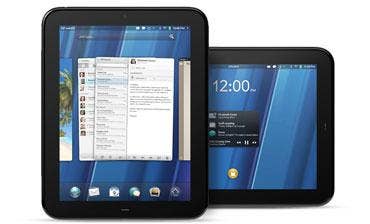
Hewlett-Packard Thursday said it will stop manufacturing its TouchPad tablet PC just over six weeks after its launch. HP is also discontinuing its Pre3 and Veer smartphones and says it will "explore options" for WebOS.
HP's decision to kill off the TouchPad follows a flurry of price cuts earlier this month and a report earlier this week that Best Buy, fed up with weak consumer demand for the TouchPad, has asked HP to buy back unsold inventory.
Word of HP's move Thursday came as the Palo Alto, Calif.-based company also confirmed that it is considering a spin-off of its PC business and revealed plans to buy information management software firm Autonomy for $10.3 billion shortly before the planned release of HP's latest financial results.
Terry Hedden, CEO of Infinity Technology Solutions in Tampa, Fla. That does mobile development, said his company hasn’t done any development on WebOS and had received no customer inquiries about the TouchPad, so he found the tablet’s demise hardly shocking.
’I’m not surprised in the least bit,’ Hedden said. ’The best thing HP could have done was to give away TouchPads to the channel, which they did [at XChange Americas last week] but it was too late to get any traction.’
Hedden said WebOS was doomed from the start. ’The market just can’t support a fourth platform; you’ve already got [Apple] iOS, Android and Windows,’ he said. ’It was a mistake for HP to buy Palm, and it will cost them. But I’m positive that they’ll try again with Android.’
Paul Hilbert, a partner with Englewood Cliffs, N.J.-based solution provider Network Doctor, said he was stunned that HP pulled the plug on the TouchPad, especially when HP made such a grand spectacle about its release and its mobility plans. Hilbert had attended last week’s XChange Americas conference and received one of the many TouchPad tablet’s HP handed out there.
"The product was still in its infancy, but it seemed like they had a solid plan for it," Hilbert said, adding that the TouchPad was a pro-sumer device that took a little from the consumer side and a little from the business side to make a well-rounded offering. "It hadn't even really hit the market."
But stiff competition from the Apple iPad and a host of other tablet wannabes, coupled with other major players making massive mobile pushes, could have caused HP to rethink its strategies for the TouchPad and webOS, he said.
"I wonder if this has anything to do with the Google-Motorola deal and if HP felt threatened by Google Android," Hilbert said of Google's proposed $12.5 billion buyout of Motorola Mobility, a move that gives Google the much needed hardware chops to accompany the success it has captured with its Android mobile operating system.
NEXT: Some Channel Partners Surprised By Move
Still, the move to kill off TouchPad caught some in the channel off-guard.
Geoffrey Lilien, CEO of Lilien Systems, a Larkspur, Calif.-based solution provider and HP partner, said he is surprised at HP's decision to drop the TouchPad.
"I'm really, really surprised considering how hard they have been talking about the product," Lilien said. "At APC (HP's Americas Partner Conference), mobility and the TouchPad were the big topics. I guess I won't be migrating off my iPad to a TouchPad any time soon."
And word of HP's decision comes one day after some channel players told CRN Wednesday that TouchPad sales have been in line with their expectations. "Commercial sell-through has met our expectations thus far," David Dennis, senior vice president of product management at Synnex said Wednesday in an email. Synnex ahead of the launch of HP’s tablet had said it expected to see strong uptake of the TouchPad.
Synnex was not alone in its optimism.
"It's early days, but we are pleased by the traction we have gotten in customer engagements and assessments," said Kristin Rogers, executive vice president of sales and marketing at PC Mall, a Torrance, Calif.-based partner. "Our focus is largely on getting evangelists internally (we have deployed over 50 internally across out company), working on training the sales force on why WebOS makes sense in the enterprise.
"While we are thrilled by HP’s pricing moves and advertising, and have a lot of activity in demand generation ourselves for small business and consumer – and while results have been just ok, we are not concerned and believe it will take a little time to get traction, and get HP above the noise level," said Rogers.
HP has often pointed to its channel as a competitive differentiator from the likes of Apple, and one of the main thrusts of its TouchPad message was that channel partners would be able to sell it as part of an enterprise mobility solution. HP has also been trying to get partners on board with WebOS development, and while the TouchPad news could dampen their enthusiasm, this option could still be open to the channel if HP can build WebOS critical mass by licensing it to third parties.
HP is reportedly looking to convince home appliance and car manufacturers to license WebOS for use in their products. In a Wall Street Journal interview earlier this week, Stephen DeWitt, senior vice president and general manager of its WebOS global business unit, reportedly said there's an "enormous amount of interest" in WebOS but didn't identify the companies involved.
DeWitt has also previously alluded to an HP strategy for WebOS that extends far beyond tablets and smartphones.
"No one has ever had a playground of hundreds of millions of disparate devices to build applications on top. It's one thing to have a smartphone, but what about applications that run on all sorts of different things that create experiences that we haven't even envisioned yet?" DeWitt said. "What's most important for HP is to inspire the innovation we know is possible across the universe of devices that we can impact."
ROB WRIGHT, ANDREW R. HICKEY and JOSEPH F. KOVAR contributed to this story