Two Veteran Video Execs Depart HP For Vidyo
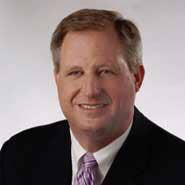
Vidyo has confirmed to CRN that James Fairweather is its new vice president, worldwide channels. He comes to Vidyo after a year as vice president, worldwide sales for HP's Visual Collaboration Business Unit, but is as much known in the channel for the 12 years he spent at Polycom, where until 2009 he was vice president, North America & U.S. sales. He now reports to Rob Hughes, senior vice president, worldwide sales at Vidyo.
The Hackensack, N.J.-based company also confirmed that Mark Reid will join Vidyo as senior director of engineering. Reid is also a well-traveled HP and Polycom alumnus, most recently senior director of engineering for HP's Visual Collaboration unit. Earlier, Reid was senior director of engineering for Polycom's Telepresence and Vertical Solutions Division, focusing on product strategy for telepresence and custom products, and was also a big contributor to the development of the H.323 audio/video standard. Reid reports to Roi Sasson, Vidyo's senior vice president of engineering.
Both Fairweather and Reid said they turned down offers to return to Polycom, which acquired HP's Visual Collaboration business in June, and also to stay on at HP in other roles. In addition to their shared Polycom heritage, both executives go back to PictureTel, which was acquired by Polycom in 2001. Both are also based in the Greater Boston area, where they'll stay while at Vidyo.

For Polycom, the $89 million HP Visual Collaboration acquisition included all of HP's video telepresence products and managed services, and came with a strategic agreement through which HP will resell Polycom telepresence and video-led UC products exclusively.
But to Fairweather, an offer from Vidyo -- one of several he received following word of Polycom's HP video acquisition, he said -- was the most compelling. Vidyo's involvement was a big factor in his joining HP in 2010, Fairweather told CRN, because it was Vidyo's technology that was OEMed in HP's Visual Collaboration portfolio, which launched that same year.
"It's the primary reason I went to HP," Fairweather said. "We had a very strategic relationship with Vidyo. This really is a premier product in video technology."
The HP-Vidyo agreement ended following the Polycom acquisition, but Vidyo has continued to pursue channel relationships with VARs, service providers and other vendors, including Ricoh, which uses Vidyo technology in its nascent unified communications product portfolio.
The industry's embrace of software-enabled video, Fairweather said, can't be taken lightly.
"We truly believe that software-based conferencing is the next generation of videoconferencing," Fairweather said. "I go back to when people were paying $50,000 for an endpoint and hanging it off an ISDN line for $3,000 a month, and that was a successful business model then. Then VoIP and video-over-UP came, and H.263 and H.264, and it's come a very long way."
Vidyo's platform is powerful, Fairweather said, because it solves ease-of-use and ease-of-integration problems that have vexed IT administrators for years.
The company's portfolio has continued to expand, most recently adding VidyoPanorama, a multi-screen telepresence system that can support up to nine screens delivering 1080p/60fps video and, like Vidyo's other products, works without the need to invest in lots of proprietary hardware, telepresence rooms and connectivity.
CIOs find that compelling, Fairweather explained, because they can move away from investing in costly endpoint appliances and multipoint control units and embrace products that sits comfortably in their infrastructure.
"What Vidyo really sells, and what we really specialize in, is scalable infrastructure," Fairweather said. "And one of the things I found at [HP] is that not only do your traditional videoconferencing resellers find that interesting, but a lot of your data and server VARs are very interested in that that because it fits on all of the technology they've been selling and supporting for years. The infrastructure runs on any x86 server and the client runs on a P.C. You can run high-definition conferencing at a very scalable rate, and no one's ever been able to do that before -- that's what really interested me in this company."
NEXT: Why Vidyo Was The Right Fit
Fairweather said he held discussions with several major video industry players, but Vidyo's buzz was hard to ignore.
"If you look at the momentum this technology is carrying, and you look at the industry, everyone knows they've got to do something in this space," he said. "Cisco, Polycom and LifeSize talk about this, but at the end of the day, this is the last thing they want to see. Their whole installed bases are hardware-based endpoints or MCUs. No one has the scalability and infrastructure that Vidyo has."
Vidyo was already looking to hire channel managers, and when Fairweather became available, it saw a chance to bring talent and years of video channel sales relationships over, said Vidyo's Hughes. (Hughes himself is a past Polycom channel chief, and has also held executive positions at Radvision and LifeSize. Most of Vidyo's executives have spent time at one or more of the industry's stalwarts, in fact.)
Vidyo's products allow solution providers to tell a mobility story, a SaaS story and an infrastructure story as well as a video conferencing one, Fairweather said. As worldwide channel chief, he'll be focused on developing Vidyo's partnerships with VARs and integrators focused on SMB all the way up to larger enterprises.
"With channels, you have to do what you say you're going to do," Fairweather said. "I think you need to manage [solution providers] as business partners, but also treat them like customers. They want leads, they want lead generation engines and all the things that are part of a program, like co-op marketing or MDF. For a small company, Vidyo has done an extremely good job of all that so far."
David Phillips, president and COO of York Telecom, an Eatontown, N.J.-based solution provider and video specialist, said Fairweather's hiring is a big move for Vidyo as it looks to broaden its channel appeal.
"This will be perceived as very positive for Vidyo," Phillips said. "It makes them more legitimate, in a way. [Jim] knows everybody, and from people I've spoken to, the thought is this makes them even more a proper player in the industry."
Phillips, who joined York Telecom in March, was senior vice president of worldwide sales at Polycom until February 2009. He managed Fairweather as part of his team.
Vidyo, with whom York Telecom has been looking to tighten its relationship, will benefit from what Fairweather can bring to its channel focus, Phillips said.
"It's a good move for [Vidyo co-founder and CEO] Ofer [Shapiro] and Vidyo, and a good move for Jim," Phillips said. "Now he can bring his relationships to bear there, and he has a wealth of experience and knowledge that's going to enable them to be a trusted partner to customers. He's a good guy."
The ball's in Vidyo's court to grow its relationships and harness the growth of trends such as video-as-a-service. For example, about 30 percent of Vidyo's sales at present go through service providers at present, Hughes told CRN.
But it's also a matter of perception, and positioning the Vidyo platform not only as a lower-cost, feature-rich, flexible alternative to big ticket systems, but also as a more enterprise-centric video solution than what users get with Skype and low-end video services, Hughes said.
"We give them the freedom from dedicated hardware like the Skype service provides, but we also provide a bunch of business-quality functions like encryption, like recording, like multi-point and other features that aren't part of what Skype has," Hughes said. "We're that bridge technology: we sit in between the Ciscos and Polycoms and the high-end stuff -- which is a market we think is pretty limited -- and the free or cheap guys doing video chat."
The company's profile is heightening. Among admiring notices from the A/V and networking analyst communities, it also recently celebrated a major win with the Ontario Telemedicine Network, one of the world's largest telemedicine networks and a contract for which Vidyo beat out all of its major rivals.
The mobility factor is one of many keys to Vidyo's appeal, Fairweather said.
"For remote workers, especially, using the same infrastructure they're currently on right now is very significant," he said. They still have the travel-savings and productivity-savings pieces, but the bigger issue has always been ease of use and connectivity. That all goes away with this product."