Q&A: Joe Tucci On NetApp, Dell And VSPEX
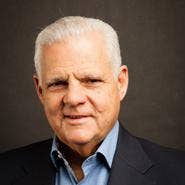
EMC is on a serious push to embrace the channel and eliminate the last vestiges of the intensely direct-sales culture that make the company the world’s largest storage vendor. That push is evident not only at the field level, but all the way to the top. CRN editors talked to Joe Tucci, EMC chairman and CEO, about the importance of the channel shortly after the company’s first fiscal quarter 2012 conference call and a couple weeks before the opening of this week’s EMC World.
CRN: Is EMC taking market share from NetApp?
Tucci: My style is, even though it’s not in vogue, I don’t like to trash talk. I said [on the April financial report call], ’Look guys, if you grow faster than somebody, you’re taking share. We grew our midtier, on an apples-to-apples basis—a lot of companies like to use published results, which is fine, because if you buy a company, you can change your results, right? So, by apples-to-apples, you put the company you just bought in both periods, which I think is fair, and then what’s your growth? That’s apples-to-apples growth.
But what happens if, if I buy a $200 million company, I didn’t have it last year, and I have it this year, you’re reporting higher growth. So I said, on an apples-to-apples basis—and of course we didn't buy anything, so it’s all organic-based [growth]—we grew midtier 26 percent year-on-year. And I think that’s faster than any of the big guys are doing. I know it’s faster than what any of the big guys are doing. And therefore, we’re taking share. From everybody.
Now obviously a small company can grow faster because of their small base.
The second thing I said was that the channel is heavily involved—heavily involved—in over two-thirds of our midtier storage product sales. Over two-thirds. So, is the channel important? Absolutely. Critical.
CRN: That’s remained constant, though, the two-thirds of midterm sales through the channel.
Tucci: Well, the [overall sales] number’s growing like crazy. This is a 26 percent bigger number than it was last year. And you got a number that’s in the billions. ... And when you see the size of that growth, and more than two-thirds of it is being driven by and heavily influenced by the channel, what does that tell you? The channel is incredibly important to our future. We have changed our stripes.
NEXT: The Channel, Dell And Profitability
As long as I’m living and breathing, we’re gonna have a strong direct sales force. It’s the power of ’and,’ not the power of ’or.’ It’s not, are you a direct sales organization or a channel organization? It’s, have you mastered how to do both? And then you have to be concerned about the profitability and the business success of your partners. If you're going to call them a channel partner, I want them to be successful. And I want them to worry about our success. And I do believe we’re doing that well.
And it's a visceral, deep belief. It’s not something I’m saying because you’re here from CRN, or I want to make you happy so you write a better story. This is a deep belief.
I also got the question, why do you think this is working better now than in the past? And I said, well, when we were growing up in the beginning, we were a direct sales organization. I can recall, when we bought Data General, [which] was primarily a channel [vendor], we were going to make it from an 80 percent channel, 20 percent direct to a 20-80. That was a strategic plan. That was our DNA. So obviously we’ve changed our DNA.
The second thing we did after that was we had a very close and very good relationship with Dell for quite a number of years. The good part about it was, it worked very well. The bad part about is, our channel partners always resented that relationship. And not only resented it, they felt that Dell would use its superior pricing because of its size to put undue pricing on them.
One of the positive things that came out of our separation from the Dell relationship is that we were now free, more free, and the channel partners were more open to us building a tight relationship with them.
CRN: Did you look at the profitability of partners before and after the Dell relationship? Have the margins gone up in the wake of that?
Tucci: Yes, they have. It’s now a religion inside of EMC. We worry about the profitability and the viability and the success of our partners.
CRN: We’d love for you to compare the profitability within that mid-tier storage with NetApp, IBM, HP, Dell, all of them.
Tucci: We have that. Would I share that publicly? No. ... We want partners to believe it’s the best deal with us. We’re going to give them the most competitive products. We’re going to give them the best support. We’re going to have them make good margins. Meet and exceed the business plans that we’re putting together that are very competitive. If we give them the best products, the best support, competitive margins, it's a good formula.
NEXT: Channel Partners Are Not A Numbers Game
CRN: On the call, you were talking about 2,000 new channel partners in the midtier. Are those the right channel partners you're looking for? Is that the right number you're looking for in terms of active channel partners?
Tucci: I hate the numbers game, because I don’t think the company with the most partners wins. You can get overdistributed. I don’t know what the right number is. But more is not better. It’s how do I get the right partnerships that are deep and mutually beneficial. Because if they, our partners, don’t care about our success, and if we don’t care about their success, then we don’t have a partnership. The only way you can possibly use the term ’alliance’ or ’partners’ is if we at EMC deeply and viscerally care about a partner’s success, and they care about our success. They want us to have the best products. They want us to get breadth and depth with the products. They want us to be able to beat the competition. They want us to post good numbers. And then they want to post good numbers. And we care about their numbers. And that’s a win-win. If you don’t get it there, it’s not a win-win.
So it’s not a numbers game. To me, that’s the least impressive part.
CRN: EMC World. What’s the message this year? What’s different? What’s making your heart beat faster? What’s going to be your message during your keynote address?
Tucci: Our theme is going to be, ’transform.’ ...I think you can make a really good case that the global economy and world is different, and is transforming. For sure, within that world, business and governments, etc., they have to transform. IT is definitely transforming. This industry has been built, as you’ve heard me speak, in these waves [including] IT-as-a-Service, cloud computing, big data, which is a massive wave, scale-out. So IT is transforming.
And then the individuals that come to this conference, we’re gonna challenge them to transform themselves. If one thinks as an individual or as a company that what I did yesterday and last year and two years ago is gonna be sufficient for the future, sell that company short. You have to transform, and individuals within those companies have to transform. That’s the high-level theme we’ll be using.
If you bring that down to the partner community, which will be there in big, big numbers that week, we’ll be challenging them, and have suggestions, and listening. Good conferences work two ways. Obviously we’ll go there and impart some beliefs and knowledge. But the great thing that happens at these conferences is you listen. I always try to listen a lot more than I speak. And I hear a lot coming back. And together, how are we going to decide how to transform our companies, our relationships, ourselves, to meet the demands of this vast global economy and the promise of what IT can do in this latest wave.
NEXT: VSPEX, VCE And The Importance Of Choice
CRN: In that regard, talk about VSPEX. Compare and contrast VSPEX and the market opportunity with VCE. Why did you introduce it? And how important and big an opportunity is it compared to VCE?
Tucci: They’re both massive opportunities. First of all, they’re both very much focused on the channel. The VCE is aimed for the middle and higher ends of the market. It’s totally baked, in a can. The VSPEX is aimed at the middle and down. And we are giving you proven, tested blueprints, if you will, a recipe where you can take EMC storage, take your pick of networking, take your pick of x86 server, and take your pick of hypervisor, even though VMware is part of the family.
You’ve heard me say this a number of times. This world really is all about, this wave of change is really all about a efficiency, and better costs, a whole new way of controlling your IT, whether it’s in your data center, or a public data center, or hybrids. Substituting automation for old management tools, real true automation. A whole new level of choice. And this is where VSPEX lights the light on all of these. And that’s going to give you unmatched agility.
VSPEX just lights the light. When we say we’re gonna give you choice, we give you choice.
CRN: Dell and HP both have the networking piece. They own it. And the server piece. Do you think you need to own these technologies? Do you need to buy that? Or come out with your own server?
Tucci: No, we don’t. Look, we're a technology company unlike, say, a Dell. We spend over 11.5 percent of revenue on R&D. That’s a big number. And what are we spending it on? This year’s forecast is $2.5 billion spent on R&D. That’s a lot of money. We’re very focused on virtualization and cloud. It’s on storage. It’s on information protection. It’s on information security, and information intelligence and analytics.
That is a vast subset of the things that the two companies you mentioned, Dell or HP, or IBM, are doing. But a much higher percentage of revenue. In HP’s case, more than twice. In Dell’s case, more than 10 times the percentage. And we’re spending it only right there. And we’re going deep.
And, of course, what we don’t have—servers—what we don’t have—networking—we partner.
I don’t want to be all things to all people. I want to do the things I just mentioned extremely well, and have truly distinctive best-of-breed products. Not good-enough products. Truly distinctive, best-of-breed products.
NEXT: EMC Partnering With Other Vendors
In addition to that, we’ve been spending over $2 billion a year also acquiring technology companies. You put it all together, that’s a massive spend in all those five or six areas I mentioned. And that’s our distinctive advantage. We’re a product company. I’m not going to spend huge amounts of money buying an integrator or outsourcer. I’m not. I’m gonna partner for that. So I’m gonna partner with systems integrators and outsourcers, not buy one. I’m gonna partner for servers, not buy [a server builder]. I’m gonna partner for networking. Now there are things within virtualization to help control and automate that will obviously do a lot in compute. We do a lot with storage. We're going to do more and more networking and security and other functions. But that’s the opportunity we have.
We have a very different strategy. But I think, every bit of me believes, that that is our distinctive advantage.
CRN: But look at the environment. You talk about partnering with vendors. That’s great. Right now, the only server vendor that we can see EMC really partnering with at a major level is Cisco. Dell, IBM, HP all have their storage. ...
Tucci: Well, first of all, you’re right. They’re going after all things to all people.
CRN: Yep. And they would never partner with an EMC anymore.
Tucci: There’s two things I’m gonna mention here. Let’s go back to VSPEX. We’re not telling the channel what to do. The channel can pick any server. If HP or Dell or anyone else is brash enough to say, ’You can only use my servers with my storage,’ go ahead. Have at it. That’s not what the channel wants to hear, I don’t think. What VSPEX says is, YOU pick the server.
By the way, you know how big the whitebox server market is? You kinda missed an important server vendor, right? If you are one of our channel partners, you can now pick HP. Will HP try to stop you? I don’t know. They’re pretty arrogant if they do. You can pick Dell. You could pick IBM. [And there are] international companies from Japan and China and Taiwan that have offerings here. Or you pick a white box. Those are your picks. [And] I don’t tell you who to pick for networking. That’s what VSPEX is all about. Efficiency and choice. A whole new level of agility. That’s what we’re giving our channel partners. And from what I’ve read, in your publication by the way, channel partners like it.
NEXT: VCE Is A True Best-of-Breed Integration
CRN: But then again, if you believe, like a lot of vendors we talk to, that converged infrastructure is where the market is going, and that’s why you have Vblocks and why you have VSPEX. ...
Tucci: In there, that’s why we took best-of- breed. What is the best hypervisor on the market? VMware.
CRN: OK, that would be a subjective call.
Tucci: Look at the [market] share.
CRN: That’s why I didn't answer the question.
Tucci: OK, the leading. What is the leading networking in the world? Cisco. What is the leading storage in the world? EMC. What is a very innovative server with networking built-in? (Cisco) UCS. So we’ve taken two best parts from Cisco, two best parts from EMC and VMware, and we created VCE. So that is a best-of-breed integration.
So we did that. And now we’re saying, OK, if you want more choice, and you want to go down below the market which VCE is targeting, and we say VSPEX.
You with me? We’ve done both. We’re trying to be, it’s not my way or the highway. It’s, here’s options for you.
Look, VCE is phenomenal, and has phenomenal potential. There’s our best of breed. You’re still using EMC storage. We’ve now done a lot of work internally so you can pick your x86 server of your choice, here are two networking choices and hypervisor choices that we’ve preconfigured and done a lot of integration with, and here you go. You’ve got the Vblock, and you’ve got VSPEX. Boom.
Which is a whole lot better than the other way, which you can still do, is buy whatever you want and put it all together yourself with your own blueprint. You still have that world.
So we’re giving you the whole world now.
CRN: Can you categorically say that EMC will never come out with an EMC server offering?
Tucci: I can tell you categorically I’m not thinking about doing it.
CRN: You’ve got the technology. You’ve got the connections. Intel’s a great partner, Pat Gelsinger. ...
Tucci: Yeah, but Intel’s already built out, and Pat when he was there was a big piece of this, Intel has already built out a huge whitebox community. You’ve already got that. I got that. I can pick from it.
Could I do it? Sure. Am I thinking about it? Honestly, no.
NEXT: EMC's Plans For Vertical Integration
CRN: Can you get to tuning the servers to run the fastest, and the same thing with the networking, without owning it? There’s a whole drive toward vertical integration. Oracle does it. Cisco does it. Everybody’s saying, my way or the highway.
Tucci: I’ve never wanted to be like everybody. I’m just telling you our way. Our way is to listen to you, and give you options.
So you could say, here’s my stack. Buy my stack. But I’ll tell you, if you do that, if you go out and buy a stack from five different vendors, you’re gonna look for the furthest thing from a cloud. You want to build your infrastructure horizontally, and then drop your applications on. If you build an infrastructure for every application that you have, at the end of the day you'll be costing yourself a lot more money. Because you’re optimizing this, then you’ll optimize that, and you’ll optimize that. Whereas Amazon Web Services, they’ve optimized this, and then you put the applications on top. That’s what we're doing. We're building a much more robust, mission-critical infrastructure.
So do I think I need to build and sell networking devices? No I, don’t. Do I think I need build and sell naked server devices? No, I don’t. Obviously we sell gazillions of servers. They just happen to have storage software on them.
CRN: Let’s talk about EMC’s Cisco relations. In late 2011, Cisco surveyed the partners at its partner executive forum, and the majority of partners surveyed said that if they had the choice, they would prefer to see VCE disbanded because of the problems in terms of bringing VCE out initially and piecing it together. When we talk to the Cisco guys, they feel they can’t get the deal closed quick enough, so they go toward the [NetApp] FlexPod solution. So the Cisco reps in the field, and even a lot of the Cisco solution providers, are kind of saying, for my money, I want to make the deal fast. I’d rather see this thing disbanded. The majority of guys. What’s your response to that? That seems to me that the Cisco guys haven’t pulled their weight on this VCE thing.
Tucci: Look. First of all, I think the leaders in Cisco, John Chambers and his team, are phenomenal. They have vision, and they understand that that sometime you have these overnight successes that stay successful for long periods of time. And that’s phenomenal when that happens. Most often, though, it takes a while to build a success. Very often you put something out and say, ’Wow,’ and it goes fumph. [Look at] the iPad. Phenomenal. Obviously that was built on a lot of things that Apple has done. The product, when Apple put it out, was a new class of product. It’s started off strong, and it’s continued to be a phenomenal product.
NEXT: The EMC/Cisco Relationship
But very often in life, it takes time. When you do something different, it takes time for the market to absorb it. And VCE was fundamentally different.
If copy-catting is the sincerest form of flattery, then we’re being flattered. Because everyone’s trying to build one, whether it be Dell or HP or IBM. But we did it first. And it’s different. And any time you do something different, and the field’s gotta make its numbers every quarter, it’s like, ’Ah, I don’t know if I can deal with the different things.’
And then, of course, how do you make a uniform product that big, that converged, when in effect it comes out of three different companies? It took us a while to get it down. And I’m telling you, now we’ve got it. It’s doing wonderfully. But it’s aimed at bigger customers, right? We’re bringing Vblock down [market], but the initial Vblocks for a long time, you had to be of [a certain] size. So you’re hearing more noise from smaller guys. And that’s where VSPEX comes in.
But I’m telling you, the success we’re having is phenomenal. And I’m very pleased. And we have big investments. And John and I would not put big investments in this unless we thought it had great future. And it does. And it will.
So we’re now basically covering the waterfront. So for the Cisco people in the channel that are selling smaller ... there’s a lot of channel emphasis with VCE now. But it took longer because it was more complex, more differentiated. And that took a while for the channel.
We actually took out complexity. But for a while [the channel] said, this looks a whole lot more complex. It takes a while to get used to it, and get a rhythm. But it’s doing wonderfully now.
And there’s still this need down here [in the midmarket], but we’ve covered it, and we’ve covered it in a much more agile way than, say, NetApp has covered it with the FlexPod. A much more agile way.
CRN: Has any compensation changed now that you’ve got VSPEX and VCE? Does EMC need to compensate direct or channel sales differently to encourage better collaboration with VCE or the Cisco reps?
Tucci: We wouldn’t be doing two-thirds of our sales in the midtier through the channel if the compensation wasn’t working. Because we still have a big direct sales force. If they didn’t think it was good, that wouldn’t be happening, and we wouldn’t be getting the growth we’ve been getting.
NEXT: VCE Compensation
CRN: Do you think VCE compensation needs to change? Or at this point, is it working?
Tucci: I think we have a good comp around VCE. And the cooperation and understanding gets better every day. Are we exactly where we want to be? No. Are we light years ahead of where we were this time last year? Yeah.
CRN: So you have pumped $383.2 million into VCE in fiscal 2011. At the same time, the net loss was $209.2 million, according to the [SEC Form] 10-K. How much is EMC going to invest in it going forward, and when will it be profitable?
Tucci: You gotta remember that you can’t really look at it that way. It’s another one of the things we gotta look at. The profit and the revenue flow back through the parents. So therefore, the more successful VCE is, in theory, the more money they’ll lose.
But what we do, underneath it all, is keep a management P&L. If we were losing that much money, we wouldn’t be doing it. Obviously there was a loss. But at the levels we’re headed to, we keep talking about sometime this year, and we haven’t given an exact quarter, this will be a billion-dollar-run-rate business. And I can assure you that, at that level, this will be a profitable business.
But, when you look at the 10-K, because VCE expense shows up below the line, in other expense, you will see it will look like a loss. But there’s a management P&L on top. We know how much of that profit went through the parents. But you can’t double-report. So it’s in the [EMC] Symmetrix line, it’s in the (Cisco) Nexus line, it’s in the UCS line for Cisco, it’s in the [EMC] VNX line, etc. It’s in VMware’s profit.
So that’s where the profit ends up. But some of the expense is down here, in VCE, in the business. And obviously if you do it that way, and we do it that way, you’re always gonna see a loss down here. But we’re smart enough to understand it. We track what profits we make through that. And we are satisfied with the progress.
You’re right. The world kind of understands it, and they don’t understand it.
CRN: Does VCE really need a separate organization? Do you feel that sometime in the future it could be pulled back into the companies?
Tucci: The problem is, how do you pull it back in? I think what makes it different and unique over VSPEX or FlexPod or anything like that is that this is a real skin-in-the-game investment for Cisco, EMC and VMware. And as a dedicated organization, with people that do very good things, if you pull it back in, then it becomes more like the other product. It loses its distinction. That’s not what we’re contemplating at all.
NEXT: VCE In The Long-Term
CRN: So five years from now, will VCE be a separate company?
Tucci: That’s the plan.
CRN: And if you were doing this thing today, would you do anything differently?
Tucci: Look. Anybody in any place in life with the benefit of hindsight which by definition is always 20-20. Foresight is never 20-20. I don’t know how many things I’ve gotten right in my life, but it’s a small percentage.
Now, before you react to that, I’ve had things that have been way more successful than I thought, I’ve had things be way less successful than I thought. It’s very tough when you put together a plan, especially when you go into the unknown, to hit it perfectly. It’s almost never done. So when you look across a company on a product basis, on a business plan basis, they almost never work out perfect. Now, obviously if you’re going to do good, hopefully more of them will work out better than they don’t.
Obviously, with the benefit of hindsight, 20-20, yeah, there’s things we could have done better. Things we would have done a little differently.
I think forming a joint venture, the roots of what we did, were right on. We started out VCE as, I forget what the name was, does anybody remember it. ...
CRN: Well it originally started out as VCE—VMware, Cisco, EMC—and became Acadia...
Tucci: Acadia. There you go. Thank you. If you look at the mission statement of Acadia vs. where VCE is today, it’s vastly different. So obviously, if [I had known] this, John and I would not have started out with Acadia. We would have started out with VCE. There’s one right there.
Acadia was a BOT, a build, operate and transfer. It’s very different from where we ended up. Just the fact that we registered the Acadia name, just the fact that we started down that path, we’d say, wow, that's not where we wanna be. And we moved it.
So now, with 20-20 hindsight, John and I and [others] would say, that didn’t serve us well, this serves us extremely well, let’s do less of this and more of that.
Think of your life. Put together a plan for something. How many times does it work out exactly like you thought? One of life’s joys, I think, is that life is the journey. And that journey never ends up 100 percent like you like, like you think. It ends up, it’s exciting, you react to it, and that’s the excitement of life to me, and that certainly is the excitement of running a business.
NEXT: The Technology CEO Council
CRN: You were a member of the Technology CEO Council. Was the economic stimulus effective for the technology industry? Did it achieve its goal of creating jobs? Do you feel like the stimulus worked?
Tucci: The answer is, part yes, part no.
CRN: We went back and looked at the numbers, and it's kind of interesting. IBM, out of the Act, came away with $104.6 million in contracts and grants. Honeywell got $73 million. EMC had $871,428, according to the recovery.gov database. Looking at the federal market, is that a game of political gamesmanship that these companies are able to walk away with that much while EMC gets less than a million, the storage market leader?
Tucci: I don’t want to comment on that. ... I’m 100 percent convinced of one thing, the stimulus aside. I’m 100 percent convinced that things will never go back to the way they were. This is a sea change. It doesn’t mean we can’t have higher employment [or] a great economy again. We will. There are cycles. There are innovations that are going to drive that. There’s a lot more we can do.
Like everybody else in the world, what really irks me is the two parties not coming together to do what’s right for America. Because we have such an opportunity now. The world is opportunity rich. We gotta come together and quit fighting.
CRN: If you were starting a business today, and you’re going to be addressing global partners, where would you start? If you were looking at it with that vision you had when you [took over at] EMC, and acquired all those companies, what would you do if you were starting a business today?
Tucci: I would do something around big data. See, I'm convinced that, with the power that the scale-out x86 architecture is giving you at really good prices, and the agility that virtualization and cloud computing is bringing, you can mass enough computer power now to analyze huge amounts of information in real time. Real time. Not build a data warehouse of what happened last week, last month, last year. Real time, what’s happening now.
And to do that, you’ve got to amalgamate three sources of information. You have a tremendous amount in your database in structured format in a company or government agency. There’s massively more information that’s unstructured in your corporation. And then you have all these public sources, including data that, if people opt in, and you carry around a smartphone, they know exactly where you are. If you can amalgamate public sources of data, huge amounts of public data, huge amounts of unstructured data, less so amounts of structured data, and then you can use real time and predictive analytics, that is where businesses will get huge competitive advantages and governments will get huge amounts of efficiency, and constituencies of those governments will feel they are getting more services and more value.
NEXT: EMC, Big Data And The Cloud
So that’s where this whole thing’s at. You can go industry by industry, right? The way personal medicine will work in the future, where it’s gonna be, you take this smart pill, and you get much more prescriptive medicine than we do today, and much more purpose-fit. Of course, it will lead to a lower cost of medicine. The ability that, if you opt in, a retailer can know exactly where you are in a store and push deals to you.
I could go on and on and on. I mean, this is where the action’s going. If I were starting up something today, I’d say, go where the action’s going. Where’s the arrow being shot?
Cloud computing is a means to an end. The end is this ability, in real time, to process this massive amount of information. Companies are going to pay dearly for that. And the successful ones will use that much more advantageously.
That’s those three sources (of information). Today, a lot of it is still structured. But there’s much more data that’s very valuable in the company that’s unstructured. And of course these public sources swamp anything any company could possibly have. So it’s how do you combine all of that in real time to make a decision?
CRN: Do you feel you have the technology pieces you need for big data at EMC?
Tucci: The technology is here. Do we have all the pieces we need? We have a lot of them. For me to say we have all the pieces we need would be saying I’ve just done our last M&A, which I have not. And I could cut back on R&D.
But we have a vision. We have a plan. And we’re going to go execute on it.
CRN: One of the things it seems that EMC is missing is, EMC does a lot with the cloud, but it seems like there's so much cloud infrastructure out there that a big push is on to make it easier for people to get on the cloud through some type of gateway rather than having the on-premise storage. And we see this with big data. A lot of it is going onto the cloud and being processed within the cloud. Does EMC have any plans at all to start providing gateways to cloud storage rather than the actual storage itself, say like a Nirvanix type of technology?
Tucci: There’s a lot of things we’re looking at. But I don’t want to go into anything like that specifically, because there are competitors who would pay dearly to know what we’re thinking next. And I’m not telling.
NEXT: How Have Things Changed Since 2008
Tucci: I’m very bullish about the opportunity. Obviously, the best word for our global economy is fragile. The trigger, without a doubt, is Europe. Europe’s in a recession as sure as I’m sitting here. If they can contain it, and it remains relatively mild, and of course that’s a relative term, and it’s not going to be the same in all parts of Europe. You know Germany and Greece are both in Europe but a long ways apart in terms of their economies. But looking at is as Europe, if [the recession] stays mild, I think the world will be just fine.
That’s a trigger. But barring that, there's a lot of opportunities, and the rest of the world is on the mend. And I don't think it’s gonna be a hockey stick recovery. I think it’s gonna be slow and gradual. That’s fine. And that gives you plenty of opportunity if you, again, have a good plan and you’re executing on it.
CRN: How much tougher is it to be the CEO of a big company since this 2008 meltdown and when we’re all globally connected?
Tucci: I tell people, and this is not tongue-in-cheek, this is fact, the toughest hand I've ever had is taking over Wang in Chapter 11 bankruptcy. We had $60 million in cash in the bank. We had $2 billion in creditors coming after us. So, claims of $2 billion, and $60 million in the bank. And of course Wang had hopelessly lost leadership with no chance of getting it back in word processing, office automation, and email, etc. Tha’'s a tough hand. 2008 and the crisis that we faced since then compared to that hand makes it easy.
CRN: After being dealt that hand, you made Wang a services company.
Tucci: I couldn't bring it back to life being office automation and word processing what Wang was known for. It was gone. I wasn’t going to beat Microsoft. We’re in good markets. We gotta play our game. We gotta be confident in the economy. You gotta do adjustments for it. But you don’t adjust your strategy. You adjust your tactics, but not your strategy.