7 Key Players Sound Off On Server Virtualization

VMware, which has an 86-percent share of the server virtualization market for x86-based hardware, is not resting on its laurels. Instead, the Palo Alto, Calif.-based company, which had one of the most successful IPOs in the past few years when parent company EMC sold about 10 percent of it in 2007, is exploring new areas for continual expansion, said Julie Eades (left), director of worldwide partner marketing.
Over the past year, VMware launched a number of new products to expand its virtualization reach, including VMware Fusion, a hypervisor-based server virtualization technology for the Macintosh platform. Also new last year was its Virtual Desktop Initiative (VDI) platform for virtualizing desktop PCs. While a couple of solution providers have adopted VDI, VMware will push hard on getting the channel ready for the technology this year, Eades said. VMware also introduced a light version of its server virtualization technology aimed at bundling free-of-charge with server hardware from multiple server vendors.

The acquisition by Ft. Lauderdale, Fla.-based Citrix of virtual server vendor XenSource vaulted Citrix into the position of being able to offer the most comprehensive virtualization portfolio in the industry, combining the hypervisor-based server and desktop virtualization technology from XenSource and its legacy Citrix Presentation Server application virtualization technology. Plans call for the different virtualization technologies to be integrated this year.
A new version of Citrix XenServer is currently in beta testing, said Simon Crosby (left), CTO of Citrix's Virtualization and Management Division. The new version is the first from Citrix/XenSource to support Fibre Channel, 64-bit Linux, and Windows Vista, with Windows Server 2008 support probably to come, Crosby said. Citrix is also including support for Symantec and other software vendors for data backups, as well as support for Network Appliance NAS appliances for integrated backups, he said.

Sun Microsystems, which has offered hardware-based server virtualization and Sun Solaris Container virtualization for years, late last year unveiled its hypervisor-based server virtualization strategy, called xVM. Sun's xVM uses hypervisor technology from the Xen community, which also is the base technology underlying the XenSource server virtualization technology which was acquired by Citrix earlier this year. Sun has added Solaris technology to the Xen technology in xVM to allow it to work seamlessly with other Sun technology such as ZFS and FMA (Fault Management Architecture).
Sun also unveiled its Sun xVM Ops Center. xVM Ops Center is a control and command console that unifies the management of both physical and virtual servers, including container-based and xVM hypervisor-based virtual servers. It provides end-to-end management including discovery and inventory of server assets, lights-out data center management, bare metal provisioning of operating systems, hypervisor management, application provisioning, and automated software lifecycle and updates. xVM allows the virtualization of servers based on Solaris, Windows, and Linux operating systems.
Vijay Sarathy, senior director of marketing for Sun xVM, said that the company has already released xVM Ops Center, which can manage both virtual and physical servers. "It does everything except unpacking and plugging in the servers," Sarathy said.

Microsoft, based in Redmond, Wash., has complemented its Windows Server operating system for some time with Virtual Server, a server host-based virtualization technology. In December, the company released the beta for its long-anticipated hypervisor-based platform, code named Viridian but since given the official name Hyper-V. Instead of a stand-alone server virtualization product, Hyper-V is one of the core functions of Windows Server 2008, said Larry Orecklin, general manager of Microsoft's System Center and virtualization business. As such, it is included with the operating system, Orecklin said. "We believe this gives customers an easy way to take advantage of virtualization and the skills they have with Windows," he said.
Hyper-V works with Microsoft's System Center Virtual Machine Manager, an application that manages virtual servers created by Virtual Server, Hyper-V, and VMware's virtualization software. While Hyper-V is included with Windows Server 2008, that does not make it free of charge. Customers must pay for a license to set up a virtual machine at $700 per instance, or $2,300 for four instances, Orecklin said. That is in addition to a charge of $860 per physical server for System Center Virtual Machine Manager, he said. Hyper-V is expected to be generally available six months after Windows Server 2008.
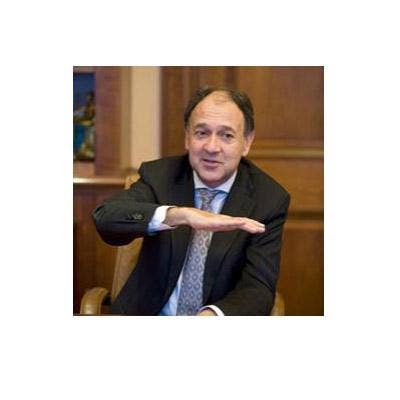
Oracle, based in Redwood Shores, Calif., in November became the latest major software vendor to offer a server virtualization platform when CEO Larry Ellison unveiled Oracle VM during the Oracle OpenWorld Conference.
Oracle VM, now available for free downloading, is a Xen hypervisor-based server virtualization platform. Enterprise-class support is available from Oracle at $499 per hardware server with one or two CPUs per year, or $999 per year for a server with an unlimited number of CPUs.
Oracle VM supports several Windows and Linux guest operating systems, and can be used to create a virtual server in less than a minute, Oracle said. It supports a wide range of Oracle applications.
Any confusion as to what happened to SWsoft and Parallels, and about which name to call them (it) is over now that SWsoft, which acquired Parallels in 2004, is renaming itself Parallels.
The company shortly to be known as Parallels includes several different virtualization technologies, including the Parallels Virtuozzo Container, a container-based server virtualization technology, and software to virtualize Microsoft Windows environments on Macintosh platforms. The company also said late last year that it would move into the virtual desktop and the hypervisor-based server virtualization markets.
Serguei Beloussov, CEO of the Renton, Wash.-based vendor, said that Parallels Server, the hypervisor-based server virtualization product, will ship shortly. Just last week, the company released a beta version of the product which runs on Windows, Linux and Macintosh platforms. Early 2008 will also see Parallels release a new version of its Parallels Virtuozzo Container technology. Beloussov said that version 4.0 will include better support for infrastructure support tools such as backups, server clustering and file systems. Also new will be large-scale management tools that integrate with Active Directory to manage thousands of servers.
Virtual Iron, based in Lowell, Mass., is a relative newcomer to the server virtualization market, having introduced its first Xen hypervisor-based platform in December 2006. Since then, the company has built a customer base of more than 1,000 companies worldwide.
This year will see Virtual Iron focusing much of its product development on the convergence of server and storage virtualization, said Mike Grandinetti, vice president and chief marketing officer for the vendor. This month, the company unveiled a relationship with FalconStor, the Melville, N.Y.-based developer of virtual storage technologies, in order to ease the migration of virtual servers over storage area networks. "Workload mobility is important, so the ability to migrate virtual machines has become critical," he said.
Virtualization will also expand its product to support more advanced use cases such as high availability and load balancing this year, Grandinetti said. "You will also see more partnerships with server and storage vendors," he said.