Stoneware's Private Cloud Poses Triple Threat
Company:
Headquarters: Carmel, Ind.
Technology Sector: Software
Key Product: Stoneware WebNetwork 5.4
Year Founded: 2000
Number of Channel Partners: 30 in the U.S.
Ideal Channel Partner: Midmarket-focused solution provider
Why You Should Care: Stoneware provides the channel the opportunity to move their customers to a Web-based centralized computing model.
The Lowdown: Stoneware offers solution providers an opportunity to sell hardware, services and software in a single package. Using the Stoneware WebNetwork software, solution providers create a private cloud computing network for customers built on on-premise hardware.
"We allow an organization to deploy its own private cloud," said Rick German, CEO of Carmel, Ind.-based Stoneware. "That allows users, customers and vendors to plug into a private cloud to get access to the Web, [Microsoft] Windows and other hosted applications."
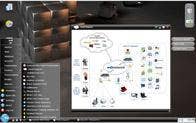
From a centralized management dashboard, solution providers can manage SaaS-based applications, similar to Google Documents or ZoHo, and reduce the cost of a standard office license. Additionally, organizations can add databases, file systems and shop specific hosted applications.
"Instead of paying for licenses on 120 seats for Microsoft Office, a customer can connect to the private cloud and use something like ZoHo Office for $5 a seat," said German. "Plus, because those applications are hosted in the cloud, a user can access them from any device anywhere."
Stoneware's WebNetwork is designed for plug-and-play functionality. Rather than having to rewrite or modify existing applications, the software automatically integrates those products. "We're not looking to rewrite the line of business," said German. "Solution providers can plug the applications in just as they are, connect to the cloud and serve them. It's done with no development."
Because the private cloud is generally hosted on customers' own hardware, solution providers have the opportunity to wrap hardware and services into the deal. A school, for example, may want to use a private cloud to deliver information to students, but storage space might be lacking, creating an opportunity for a sale. From there, a services deal that produces a reoccurring revenue stream isn't out of the question.
"A trusted integrator might start with something basic, like the installation of an office product for example," said German. "From there the solution provider can broaden the agreement by plugging in student or patient records. After that, there are security configurations that need to be taken care of as well."
Regardless of what gets installed into the private cloud network, management is the same. Using a browser, solution providers can monitor the status of the private cloud and control user access.