Intel, DreamWorks Don 3-D Glasses For Super Bowl
The chip maker and the movie studio inked a deal last July for Intel to supply the processing power for DreamWorks' animation authoring tools and render farms. The two companies will showcase the first fruits of their partnership in a commercial spot for the upcoming DreamWorks movie "Monsters vs. Aliens" just before half-time during Sunday's Super Bowl telecast.
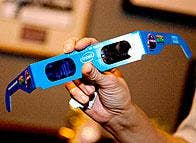
And the pair couldn't really have found a bigger stage -- 90 million viewers are expected to watch the Super Bowl, according to an Intel spokesperson at Thursday's event in San Francisco. Just in case several million more tune in, Intel and DreamWorks have shipped 130 million color-coded, paper 3-D glasses to assorted outlets around North America. The glasses are required to get the full 3-D effect when watching the ad.
The feature film comes out on March 27, and it requires a special screen and a different set of 3-D glasses, said DreamWorks' product marketing guy Tom Warner, who was full of information about how great 3-D filmmaking is going to be for viewers. What Warner didn't want to talk about as much was the graphics technology that DreamWorks used to create "Monsters vs. Aliens" -- "I don't know," he replied brusquely when asked by a reporter what graphics cards the studio has in its animators' workstations.

The upshot to that is that Intel's first major effort to produce a discrete graphics part -- code-named Larrabee -- is supposed to materialize as an actual product sometime late this year, or possibly in 2010. It's all very hush-hush, which explains the reluctance of Warner to talk about graphics at all.
What's already known about Larrabee is that it's an x86-based processor, unlike the GPUs made by Nvidia and Advanced Micro Devices' ATI division. The cores, dozens of which will power a Larrabee GPU, are multithreaded and based on the Pentium P54C design.
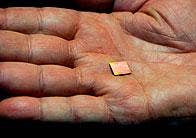
What isn't known is a lot about when, where and how Larrabee first appears, and if anybody's got their hands on an actual working product yet. But chatting with a couple of Intel people at the event did yield some interesting, if cryptic, information for the many people hungry for Larrabee news:
Will Larrabee show up in a standard video card format, with a mainboard, casing and cooling fan? Yes. When? No comment. Is DreamWorks using Larrabee in any capacity? Samples of the technology are "where you would expect them to be" at this stage of the development process. Is there a Larrabee SDK out there? That's under NDA. Would, say, major video game houses like EA Games know anything about Larrabee and software development around it? That could be "a fruitful line of inquiry."
So there you have it. Maybe there's some geeky corner of the Internet where everybody already knows about Larrabee's current status, but that's as much as we've ever been able to pry out of Intel.