Focus On The Trees, Not Just The Forest
Organizations love to talk about vision. Strategy decks, objectives and key results and five-year restructuring plans. All while the people responsible for bringing those plans to life quietly fade into the background.
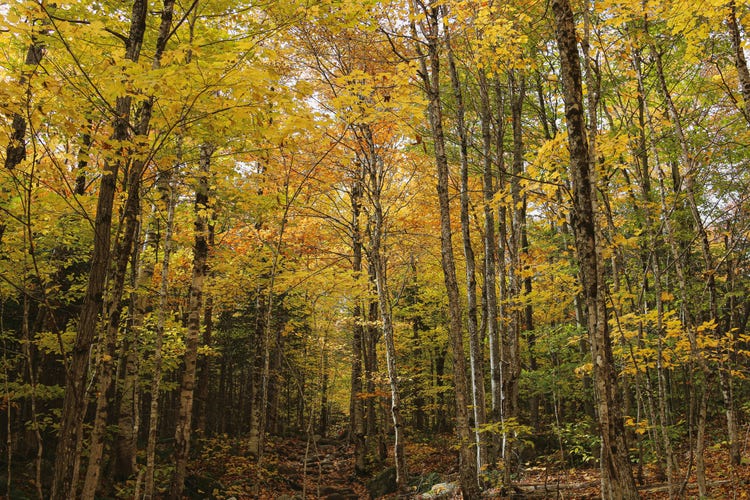
It’s the paradox of modern leadership: we celebrate the forest while overlooking the trees that make it possible. The goals, the growth, the grand vision are amazingly beautiful and needed. Yet, without healthy trees, there is no forest at all.
Last week, I was in conversation with a friend and mentor who alerted me that I was having a hard time seeing the forest through the trees. At the time, I understood him to mean I was focused on the details and not the goals for which I was seeking advice. This of course got me thinking and, as I often rely on, researching.
The phrase “can’t see the forest for the trees” dates to a 1546 collection of proverbs written by John Heywood. It served as a warning against missing the big picture by focusing too much on details. But in today’s corporate landscape, many leaders face the inverse problem. We are so busy chasing the big picture that we lose sight of the people—those individual details—that sustain it.
Some historians trace the idiom’s rise in popularity to the Industrial Revolution, a time when leaders were learning to manage scale for the first time. The lesson was clear: production may define the system, but people define its success. And, within this AI Revolution and digital economy where organizations expand faster than their ability to care for the humans within it, the same truth holds.
Seeing The Trees: The People Behind The Progress
What does this have to do with leadership? I’m so glad you asked. Let’s imagine the trees are the people: employees, partners and collaborators who keep the organization alive and growing. Seeing the trees means paying attention to the humans behind the metrics.
When leaders lose that focus, engagement suffers. According to Gallup, employees who feel invisible are 61 percent more likely to disengage with their organizations. When people are not seen, or feel as if they are not acknowledged, they stop contributing to innovation. They do what is required but stop imagining what’s possible.
Inclusive leadership demands attention to these details. It means knowing that behind every KPI is a person making a thousand micro-decisions that affect whether goals are met or missed. Seeing the trees isn’t soft leadership; it’s strategic foresight. Healthy teams sustain healthy growth.
Seeing The Forest: The Goals That Guide The Work
And the forest? It represents the organization’s broader vision; its strategy, objectives and long-term direction. Leaders must see it clearly to ensure alignment, resource allocation, and sustainable outcomes. But leadership becomes lopsided when the forest dominates every decision.
Over emphasizing the big picture leads to what I call “macro-blindness”: the inability to notice when culture is cracking under the weight of unchecked ambition. Growth becomes extractive instead of generative.
When organizations lose sight of the trees, they risk losing their roots, i.e. their values, belonging and overall purpose.
Leadership As A Both/And Practice
The best leaders don’t choose between people and progress. They hold both at once. Focusing only on people can result in endless empathy without accountability. Focusing only on results creates efficiency without humanity.
Sustainable leadership requires integration:
- Empathy with execution. Care deeply about your people and set clear expectations.
- Vision with visibility. Communicate long-term goals while ensuring individuals see their role in achieving them.
- Culture with clarity. Protect belonging while maintaining performance standards.
Leadership maturity is measured by one’s ability to zoom in and out, seeing the forest without losing sight of the trees, and seeing the trees without losing the forest.
Cultivate the Ecosystem
Every organization is an ecosystem. Each tree contributes to the forest’s resilience. Each forest depends on the health of its trees.
Leaders who focus on the trees understand that growth is not simply about scale. It is about sustainability. They prioritize relationships as much as results. They see people not as resources to be managed, but as roots to be nourished.
So, the next time you review a quarterly dashboard or strategic plan, pause and ask:
Who made this possible?
What do they need to thrive?
Have I spent as much time tending the trees as I have admiring the forest?
Because when leaders stop seeing the people, the forest stops growing.
It’s not enough to lead with vision. Lead with presence. Lead with care.
Focus on the trees, not just the forest, and you’ll build something that lasts.
The Inclusive Leadership Newsletter is a must-read for news, tips, and strategies focused on advancing successful diversity, equity, and inclusion initiatives in technology and across the IT channel. Subscribe today!
Photo by Brian Yurasits on Unsplash