The Generational Mismatch: Why Every Age Group Thinks Leadership Is Failing Them
Every generation sees leadership differently, and the gap is widening. Here is why the mismatch matters.
The workplace is experiencing a generational mismatch. And the cost of misunderstanding each other is showing up everywhere in the IT channel in burnout, in disengagement, in slow decision-making, and in the rising pressure on middle managers who are trying to hold everything together.
This is not a situation created by age; it is a leadership expectation gap.
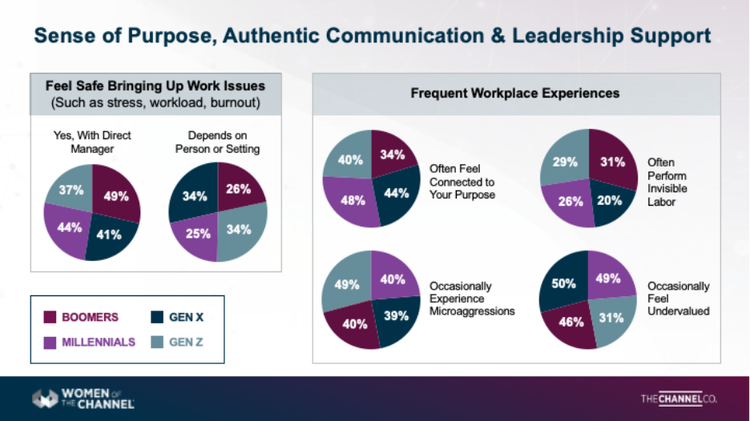
The 2025 Women of the Channel State of Work Life Balance data makes this clearer. Different generations believe their leaders are missing essential qualities, and the qualities are not the same. Gen Z wants culture, communication and trust. Millennials want decisiveness and authenticity. Gen X wants empathy and motivation. Boomers want authenticity and vision.
Gallup established this mismatch a decade ago in its 2015 study. Historically, only 31 percent of U.S. employees are engaged at work, dropping fastest when people are unclear about expectations or disconnected from leadership.
Yet the numbers did not change in the updated 2025 study where managers drive roughly 70 percent of the variance in team engagement, meaning that any mismatch in leadership behavior hits productivity immediately.
Put these two datasets together and the story becomes unavoidable. Employees across generations believe their leaders are missing something essential, and the numbers show that these gaps directly undermine engagement, clarity and performance.
Gen Z: ‘Give us culture, clarity and leaders who communicate.’
The Women of the Channel study’s data shows that Gen Z is the generation most likely to report that their leadership lacks real culture building behaviors. They want leaders who communicate clearly, listen fully and create an environment where they feel safe to contribute.
Gen Z is not asking for perks. They ask for belonging and honesty, with a clear understanding of how decisions are made. More than anything, they want to know if their work has a purpose, clearly communicated from leaders who are not afraid to be humans.
Gallup reinforces this. Gen Z is the least tolerant generation when communication is unclear or absent. They do not stay in chaotic environments by choice. They leave in search of cultures that feel stable.
Millennials: ‘We need decisive leadership, not endless collaboration.’
Millennials are no longer the “young professionals” in the room. They are running programs, leading teams, and carrying a large portion of the channel’s operational weight.
According to the Women of the Channel study’s data, they believe leadership lacks decisiveness and authenticity.
They feel exhausted by meetings that do not produce decisions and are drained by vague direction.
They also often feel unsupported when leaders avoid making the hard calls.
Millennials want transparency and clarity. They want leaders who can say, “This is where we are going. This is what is needed.” Without that, the load becomes heavier, and burnout accelerates.
Gen X: ‘We need empathy and a reason to stay engaged.’
Gen X is often the most overlooked generation in the workplace. They hold institutional memory, manage complex workloads and support multiple life responsibilities at once. Yet the Women of the Channel study shows they are the most likely to say their leadership lacks empathy and motivational energy.
Gen X does not want hand-holding. They want recognition and want leaders who understand the weight they carry.
Gallup data shows that engagement drops quickly when effort becomes invisible. Gen X feels this deeply, especially when they support teams from behind the scenes.
Boomers: ‘Give us authenticity and real vision.’
Boomers consistently report that the qualities they want most from leadership are authenticity and vision. They want leaders who stand for something. They want to understand the long-term plan. They want to know their experience still has purpose.
When Boomers do not see vision, they often hesitate to pass along knowledge. They want confidence that what they have built will matter in the future.
The Real Issue Is Not The Generations. It Is The System.
People often blame generational conflict on work ethics or personality. The data says something different. We have groups of leaders attempting to satisfy four different sets of needs with little support or structure.
Leaders are expected to communicate like Gen Z wants.
Lead decisively like Millennials expect.
Show empathy like Gen X needs.
And inspire like Boomers value.
No individual leader can meet all of these expectations without a workplace system that supports them. Generational mismatch is a sign of structural gaps, not personal failure.
Three Shifts That Close The Gap
- Tell people what you are doing and why you are doing it.
Clarity supports Gen Z and Millennials.
Context supports Gen X and Boomers. - Lead with humanity, even when decisions are difficult.
Empathy keeps Gen X engaged.
Authenticity keeps Boomers aligned.
Transparency keeps Millennials grounded.
Psychological safety keeps Gen Z committed. - Build culture into leadership expectations, not into personality.
When culture depends on the right leader, it collapses. When it depends on clear systems and shared behavior, it becomes sustainable.
The Bottom Line
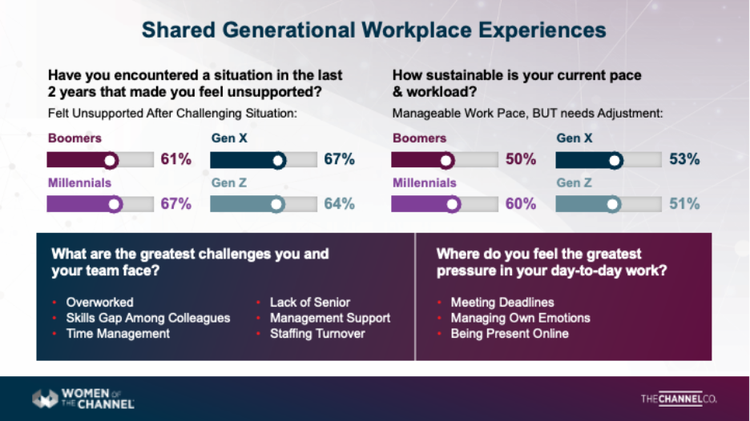
Every generation believes leadership is failing them, and they are all correct. Not because leaders lack skill but because the workplace has changed faster than leadership models have.
The future belongs to leaders who can read the room across generations. Those who take time to understand that clarity, empathy, clear strategic vision and authenticity are keys to working across generations.
Age differences are not the problem. Misaligned expectations are.
Organizations that close this gap now will build the most resilient and innovative cultures in the IT channel.
The Inclusive Leadership Newsletter is a must-read for news, tips, and strategies focused on advancing successful diversity, equity, and inclusion initiatives in technology and across the IT channel. Subscribe today!