The Leadership Blind Spot: Bias In The Age Of AI
AI learns from organizational patterns, not intentions. Unexamined bias can become embedded in the automated systems leaders rely on every day.
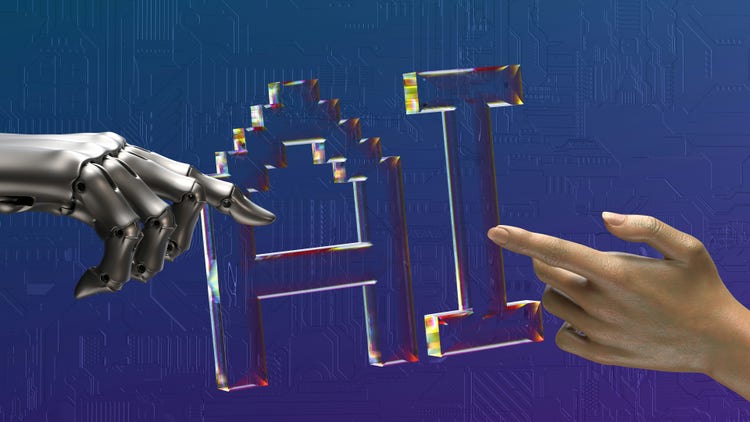
Do you ever worry that the choices you make today might become the automated rules of tomorrow? As AI tools spread through the workplace, the instincts and patterns inside an organization are quietly teaching systems how to make decisions at scale. What used to be small human biases are now becoming digital defaults.
We are seeing this play out in real time. My recent viral post on LinkedIn sparked a wave of conversation about gender, bias, and power shape whose voices get amplified online and whose get ignored. The reaction made something very clear. People already understand what happens when bias meets technology. The patterns get louder. The inequities get faster. And the outcomes get harder to question because “the system” appears neutral, even when it is simply repeating the same power dynamics we already live with.
Bias is not just an individual problem. It is a structural reality. It shapes who gets coached and who gets corrected. Who is seen as high potential. Whose confidence is labeled leadership and whose is labeled disruptive. These patterns existed long before AI arrived. Now AI is learning from them, and once it does, it scales them.
And this is the part leaders need to understand. AI does not learn from what we intend. AI learns from what we consistently do.
It learns from our documentation, our evaluations, and our hiring history. But AI tools also learn from our silence and our organizational habits.
This is how bias moves from human decision making to organizational structure to automated system logic. Not because anyone chose it, but because no one interrupted it.
How Bias Becomes Digital Bias
Different AI tools absorb and reproduce bias in different ways.
Large language models learn from the patterns in organizational communication and decision making. If certain groups have been described as less ready, less technical, or less aligned, LLMs can internalize that and repeat it in summaries, recommendations, or automated coaching.
Resume screeners detect patterns in who was hired before. If an organization’s past hires reflect a narrow demographic, the system will assume that demographic signals “success.”
Performance-scoring tools learn from old evaluations. If one group received harsher feedback or shorter reviews, the AI interprets that as a trend.
Facial recognition systems misidentify darker-skinned individuals and women at significantly higher rates. The MIT Gender Shades study found error rates for darker-skinned women up to 34 percent compared to under 1 percent for lighter-skinned men.
Predictive analytics tools learn from inconsistent or biased documentation. If one team over-documents one group and under-documents another, the algorithm will treat that imbalance as objective truth.
None of these tools are neutral. They are mirrors. If the input is skewed, the output is too.
According to Harvard Business Review, AI systems “tend to calcify inequity” when they learn from historical data without oversight. Microsoft’s Responsible AI team also warns that LLMs reproduce patterns of gender, racial, and cultural bias embedded in their training sets. And NIST’s AI Risk Management Framework states plainly that organizations must first understand their own biases before evaluating the fairness of their AI tools.
The message is consistent across institutions. AI amplifies the culture it learns from.
Where Leaders See The Impact First
Bias-driven AI rarely appears as a dramatic failure. It shows up in subtle ways.
An employee is repeatedly passed over for advancement even though their performance is strong. Another receives more automated corrections or warnings than peers with similar work patterns. Hiring pipelines become less diverse. A feedback model downplays certain communication styles while praising others. Talent feels invisible even when the system claims to be objective.
Leaders assume the technology is fair because it is technical. But the system is only reflecting what it learned from the humans who built it and the patterns it was trained on.
AI does not invent inequality. It repeats it at scale. And scale makes bias harder to see and even harder to unwind.
How Leaders Take Back Control
The first step is awareness. Leaders must recognize that every AI system is trained on human decisions and organizational patterns. The question is not whether bias exists. It is whether leaders choose to identify and interrupt it.
This requires honest reflection about how decisions are made. Harvard Business Review emphasizes that AI fairness begins with evaluating the human systems that generate the data. Leaders need to look closely at who receives opportunity, who receives scrutiny, and how similar behaviors get interpreted differently across groups. These patterns matter because they become training data.
The next step is to audit the datasets behind your AI tools. Microsoft and NIST both recommend reviewing historical evaluations, hiring trends, documentation practices, and promotion outcomes for unevenness. If your organization has gaps, your algorithm will too.
Finally, leaders must combine technical governance with cultural accountability. You cannot build ethical AI inside an unethical decision-making culture. Technical fixes mean little if the organizational environment producing the data remains unchanged.
Bias is not a data problem alone. It is a leadership problem. And leadership is the only place where it can be solved.
The Leadership Imperative In The AI Revolution
AI is reshaping the workplace faster than many expected, but despite its speed and sophistication, AI will not make an organization more fair on its own. It will only make an organization more consistent. Whatever patterns exist will be repeated. Whatever inequities exist will be reproduced. Whatever power dynamics exist will be scaled.
If a culture values fairness and reflection, AI can reinforce that. If a culture avoids accountability, AI will reinforce that too. Bias becomes structural when no one interrupts it. Bias becomes digital when technology learns it.
Leaders now face a choice: examine the pattern while it is still small, or wait until it becomes automated and far more difficult to undo.
Either way, the future is being built. The question is whether it is being built with intention.
The Inclusive Leadership Newsletter is a must-read for news, tips, and strategies focused on advancing successful diversity, equity, and inclusion initiatives in technology and across the IT channel. Subscribe today!
Photo by Igor Omilaev on Unsplash