The Overlooked Identity: Afro-Latine Voices In The Channel
Leaders Ty Smith and Mayka Rosales-Peterson discuss how Afro-Latine identity shapes opportunity, inclusion, and global fluency across the IT channel.
When we talk about diversity in the tech channel, we often picture categories neatly separated: Black, Hispanic, Asian, White. But identity does not fit in a dropdown box. For professionals who identify as Afro-Latino or Afro-Latina, that box has never been big enough. Their stories show what happens when culture, commerce, and connection intersect in the global technology ecosystem.
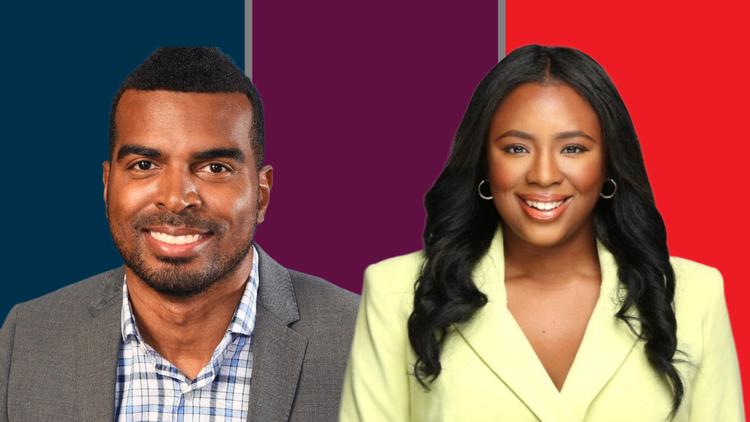
In an interview with Mayka Rosales-Peterson, vice president of marketing at Lava Technology Services, and Ty Smith, president of Optical Diversity Telecom, we explored how Afro-Latine identity shapes belonging and opportunity in the channel. The discussion revealed that global fluency is a business advantage that often goes unseen.
Defining The Terms
Before diving in, a quick note on language:
- Latino/Latina refer to people of Latin American origin or descent and are the most used terms in the United States..
- Latinx emerged as a gender-neutral term within academic and activist spaces to include people who do not identify within the gender binary.
- Latine offers a similar gender-inclusive option that aligns more naturally with Spanish pronunciation and usage.
- Hispanic refers to people with origins in Spanish-speaking countries and focuses on language rather than geography.
At CRN, we primarily use Latino, Latina, and Latine because our readership is U.S.-based and these terms remain the most recognizable and inclusive across business contexts.
‘You Can Be Both, Even When the Box Says Otherwise’
As Ty Smith explained, “When you fill out a census, there’s no way to mark that you’re Black and Hispanic at the same time. You can only pick one or the other.”
That limitation extends beyond paperwork. It shapes who gets seen, who gets invited into conversations, and who is assumed to have expertise. Both Smith and Rosales-Peterson described moments when they were questioned for their right to belong based on appearance, accent, or last name.
Rosales-Peterson recalled, “My Spanish teacher pointed me out and said, ‘Do you belong here?’ I said, ‘Yes, my family’s from Panama.’ She made me prove it.”
Those early experiences of being asked to earn belonging do not disappear in adulthood. They show up in conference rooms and sales meetings too.
The Myth Of A Single Latinx and Hispanic Identity
Rosales-Peterson and Smith both emphasized that Latin America is not one culture. “It’s vastly different and diverse. There’s native, there’s Black, there’s white, there’s everything,” Rosales-Peterson said.
Smith added context often missing from U.S. conversations about race. “The same Africans who were enslaved in the Caribbean and North America were also brought to Central and South America. Brazil, for example, has the highest population of Black people outside of Africa.”
That history shapes not just identity but opportunity. Yet as Smith noted, “If you look at demographic data or business strategy, those complexities disappear. Our categories were never built to recognize both.”
Business Blind Spots Have Human Consequences
When companies expand into Latin America and the Caribbean, they often underestimate how culture, race, and language interact. The result is missed connections, misinterpreted cues, and missed revenue.
“I could be walking by a partner doing business in Honduras,” Smith said. “They might never ask for my input because they don’t see me as Latino. They’d go to someone who looks the part, even if that person’s family is from a completely different country.”
Rosales-Peterson echoed that reality. “When they found out I spoke Spanish, they only wanted to work with me. It shows how people decide who’s credible based on language or look.”
The outcome is predictable. Afro-Latine professionals are often either overlooked or over-relied upon, without recognition or fair compensation for their cultural labor.
Recognizing Untapped Global Fluency
To move forward, organizations need to evolve from counting representation to recognizing depth. Diversity is not just who is in the room. It is who feels known for the full scope of what they bring.
Smith and Rosales-Peterson’s insights point to three actions for leaders in the channel.
- Recognize Untapped Global Fluency.
Move beyond rigid demographic boxes. Create voluntary ways for employees to share the languages, relationships, and cultural fluency they choose to bring to global work. Protect privacy and reward contribution, not disclosure. - Equip Teams with Context.
Expanding into Colombia, Panama, or the Dominican Republic requires more than market research. Offer cultural intelligence briefings that include Afro-Latine perspectives and local nuances. - Design Equity into Opportunity.
Review how international roles, client engagements, and partnerships are assigned. Ensure assumptions about language, fit, or appearance are not quietly shaping who gets the opportunity.
Culture Is A Business Competency
For both Smith and Rosales-Peterson, identity is not a challenge to overcome. It is a resource to honor. “It’s part of the food we eat, the music we play, the way we celebrate,” Rosales-Peterson said. “The issues come up mostly in the States, not back home.”
Their conversation reminds us that global business starts with local understanding. Cultural fluency is not decorative. It is strategic.
As the channel expands into Latin America and the Caribbean, success will depend not only on technology but on people who carry the knowledge to connect across cultures.
Innovation begins with understanding. And understanding begins with listening.
The Inclusive Leadership Newsletter is a must-read for news, tips, and strategies focused on advancing successful diversity, equity, and inclusion initiatives in technology and across the IT channel. Subscribe today!