7 Top Security Execs On How The AI Revolution Is Impacting MSPs
In an executive roundtable hosted by CRN, executives from leading cybersecurity vendors dug into the promise and peril of AI for MSPs and MSSPs.

At the same time, AI-powered threats can be expected to only continue growing over the coming years, putting additional pressure on MSPs and MSSPs to automate their own security response and remediation activities.
[Related: Mistaken Identity? AI Agent Oversight Key To Success]
During the recent XChange August 2025 conference in Denver, an event hosted by CRN parent The Channel Company, CRN convened a roundtable of executives from the seven security vendors to discuss the future of the industry and coming opportunities for the channel.
Taking part were Mike DePalma, vice president of business development at OpenText Cybersecurity; Dave Baggett, founder and CEO of Inky; Scott Barlow, chief evangelist and global head of community at Sophos; Bob Skelley, vice president of global channel strategy at Arctic Wolf; Addie Finch, vice president of channels for the Americas at Cato Networks; Adam Winston, field CTO at WatchGuard Technologies; and Xan Stevenson, head of partner sales and distribution at Meter.
What follows are their comments on the risks and opportunities of AI for MSPs.
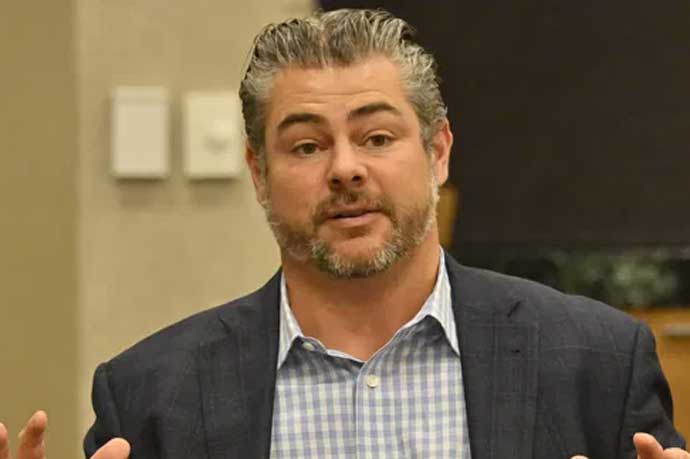
Mike DePalma
VP, Business Development
OpenText Cybersecurity
I think the biggest impact right now is figuring out where the MSPs fit into this. AI is such a broad term that I think that the channel—from the vendors down to the MSPs—have to figure out what their role is [with AI]. It’s not the standard resale markup type [of opportunity]. It’s not a product. So that’s where I think the biggest question mark is—what is the macro vision? Five years from now, what is the value prop that the MSP is adding to their clients when it comes to AI?
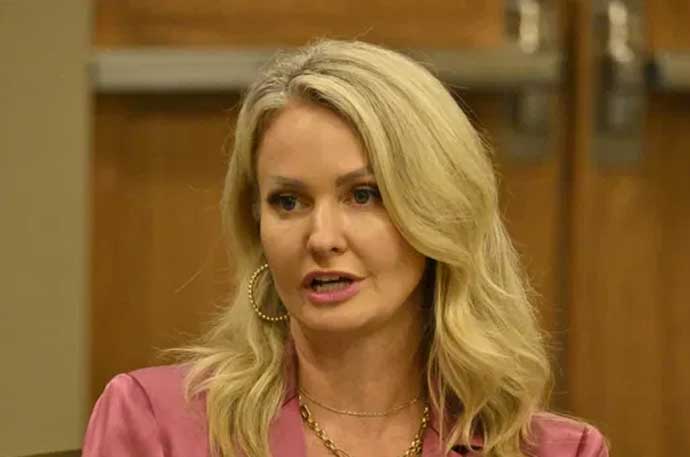
VP, Channels, Americas
Cato Networks
[For MSPs] I think it’s not only what services are they going to offer and how do they monetize AI. I also think the MSP, for instance, is now having to look at do they have the architectural model to support AI initiatives? AI and the bad guys are going to punish complexity. And so if you look at how many MSPs are running siloed security tech stacks, fragmentation will kill all efforts. And so I think they’re not only having a look at how do we go create services and value around AI but do we have to rearchitect what we’re historically offering to be able to do that?
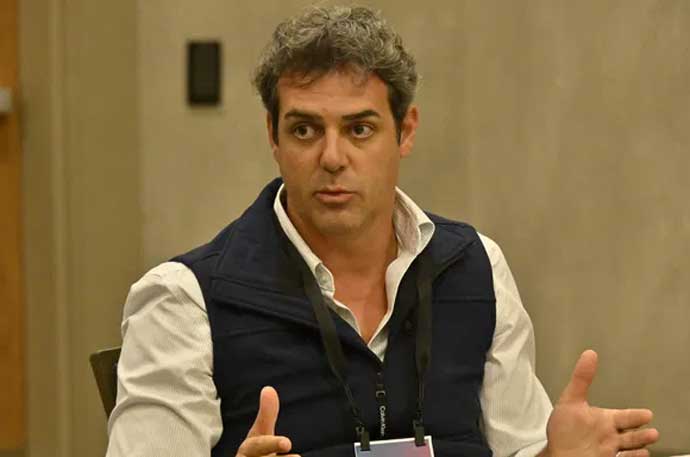
Field CTO
WatchGuard Technologies
[MSPs] have some relationship to network traffic, endpoint security, identity and it's in a mixed environment. You’re not able to deal with the problem unless you have control in all those places because AI will basically shame you by showing you all those gaps a lot faster than they have in the past. And so if we’re dealing with one attack group [carrying out] 400 attacks a year—and they can agentically multiply that by five—you’re going to have such a big problem in just trying to play Whac-A-Mole. That environment is probably not going to change. We probably didn’t change that environment, post-pandemic, the way it should have. We didn’t put everything in the cloud. We just have this mixed, hybrid IT environment—and that’s what you have to restore control of, first, before the adversary gets agentic—while simultaneously making sure you remain profitable so [that] you still exist in a year.
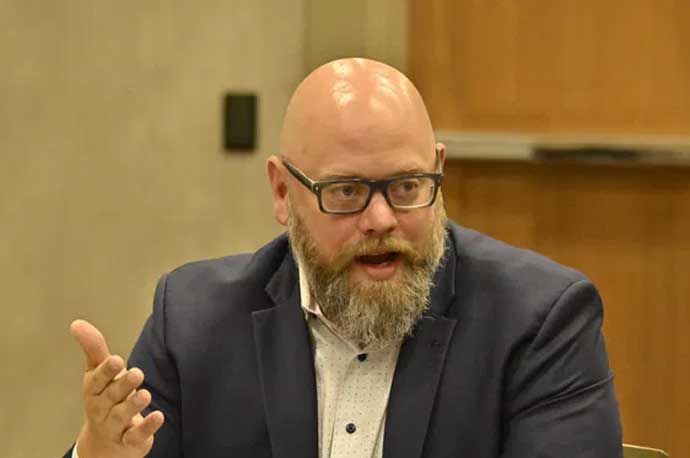
Xan Stevenson
Head Of Partner Sales, Distribution
Meter
There aren’t enough network operators that are in the market. A lot of MSPs are just dealing with lack of talent. And the reality is those people aren’t showing up five years from now—they’re going to be doing other things. And just the landscape of how people enter the networking space as operators is changing. What that means too is you’re going to have to be in a situation where you can support Tier 1 and Tier 2 [issues] as table stakes and automate the network as fast as possible. If you don’t do that, you’re just not a viable option in the market.
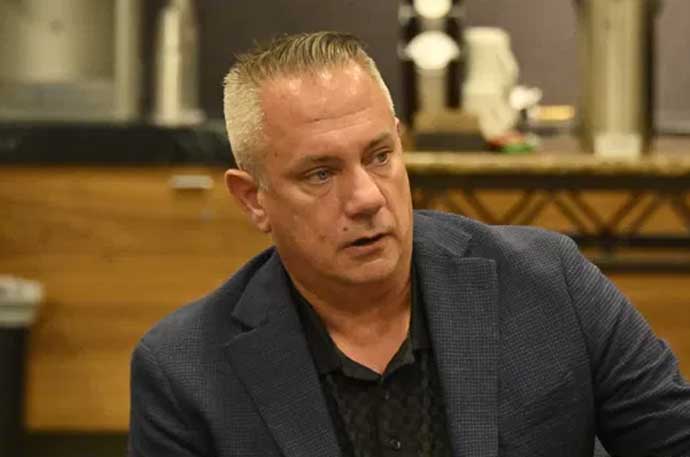
Chief Evangelist, Global Head Of Community
Sophos
A lot of MSPs and partners need to be the translator for their end customers. They need to focus on how AI, and even cybersecurity in general, can help the end customer receive the business outcomes that they’re looking for. But I think the guardrails need to be put in place for the end customer who’s not as technologically advanced, who doesn’t understand that AI can actually still hallucinate and give you wrong data. Having that relationship with AI just needs to be very cautious. But the partner needs to be able to translate what AI could do for the end customer and their business.
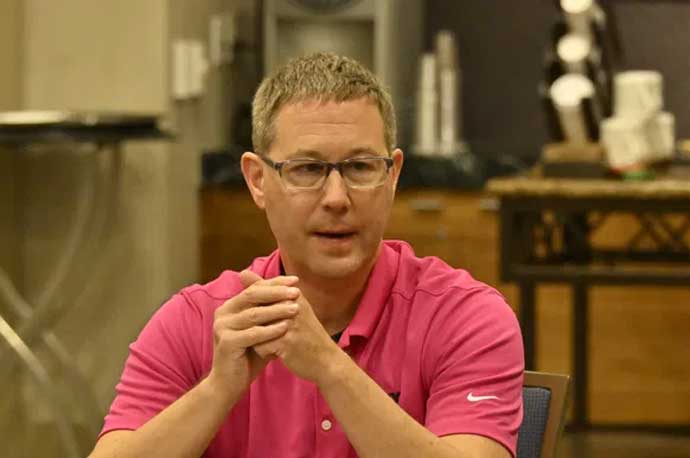
Founder, CEO
Inky
One of the things that’s really struck me about MSPs is I’ve never met a single one who had any free time. They’re all massively busy—nobody’s golfing on a Friday afternoon if they’re an MSP. And so one of the things that we focused on a lot is how do we make their lives easier? How do we make our stuff [be] less work and [managing] our system less work? There’s a massive, massive opportunity with agentic AI to automate out a lot of the work. What’s a little terrifying is, [in terms of hallucinations], imagine unleashing something like that on your security controls?
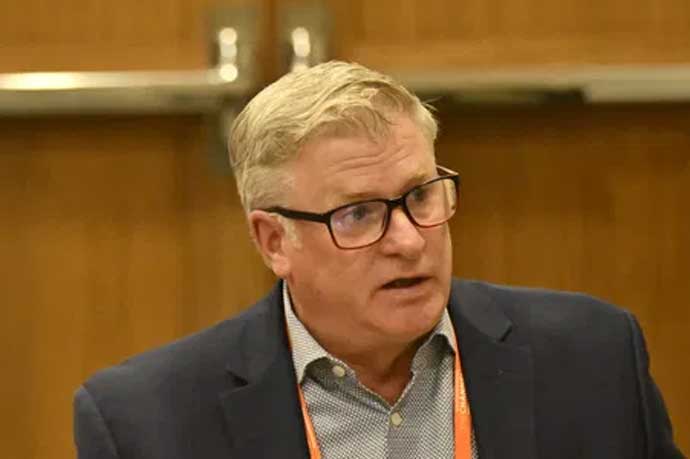
Bob Skelley
VP, Global Channel Strategy
Arctic Wolf
Certainly the threat actors are getting much more sophisticated through use of AI. But so are the defenders. We’re seeing the ability to scale things like triage and threat hunting and response actions. All of that is being impacted by the use of AI. And this is allowing you to bring more enterprise-grade capabilities and solutions with smaller teams to smaller businesses. So that’s a real, positive impact. Even with generative AI, using it for [basic functions such as] building out playbooks or client reports, you can create efficiencies. As an MSP, same thing—utilizing generative AI to create some of the user training and service delivery efficiencies. I think there is a distinct capability there for the defenders. And I think we’ll continue to try and stay ahead of the threat actors as much as possible. But it’s an ongoing war out there.