ConnectWise Exec Urges MSPs To Embrace ‘Autonomous Service’ Era
‘This is not about replacing your help desk; it’s about evolving it,’ said Brian Troy, senior director of product marketing at ConnectWise. ‘The MSPs who are succeeding are using AI to augment, not replace, their teams.’
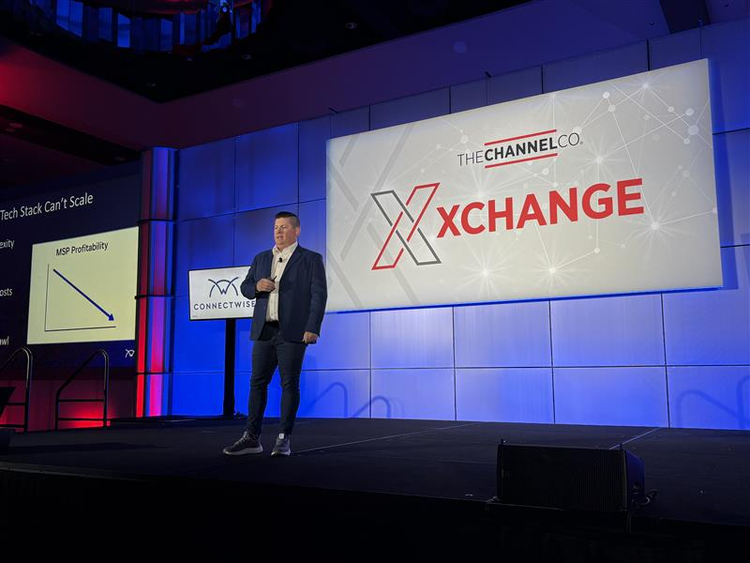
MSPs should embrace the autonomous era or risk being left behind, according to one ConnectWise executive speaking Sunday to a room full of MSPs on the future of automation and managed services.
“We’re not just talking about automation anymore,” said Brian Troy, senior director of product marketing at Tampa, Fla.-based vendor ConnectWise, during a keynote session at CRN parent The Channel Company’s XChange August event in Denver. “We’re talking about frictionless detection, resolution and restoration done at lightning speed, without someone needing to sit in a swivel chair.”
Tory said the shift he described isn’t hypothetical or futuristic; it’s already unfolding. And it’s driven by the rising complexity of IT environments, ballooning labor costs and increasing demands from clients who expect faster, smarter service, he said.
[Related: ConnectWise Exec: Innovations, New Pricing And Packaging For Asio Platform In High Gear]
“For the past decade, I’ve had the chance to learn from so many of you, and what I’m hearing is consistent,” he said. “You're feeling the pressure. Your tech stacks are more complex, your teams are overwhelmed, and yes … AI has officially entered the chat.”
But AI on its own isn’t enough, he added.
“Too often, AI is just another point solution: a chatbot here, a tool there,” he said. “The real breakthrough comes when AI is paired with orchestration and intelligent action, when it’s embedded across your entire service model.”
Troy took it a step further and introduced the concept of autonomous service. He described it as a framework that goes beyond basic automation to create synthetic workers capable of handling repeatable, time-consuming tasks without human intervention.
As an example, he presented a digital worker named Olivia , a synthetic teammate designed to handle common tasks like onboarding new Microsoft 365 users, assigning billable licenses and creating documentation tickets.
It’s not just about cutting costs, he said, but about rethinking team structure and roles entirely.
“This is not about replacing your help desk; it’s about evolving it,” he said. “The MSPs who are succeeding are using AI to augment, not replace, their teams.”
One partner, Troy noted, had already automated 70 percent of their level one tickets. Another reported an 80 percent drop in response time after adopting AI-driven workflows.
But he advised MSPs not to go all in but rather start small where there’s low risk. Automate one process, get one synthetic worker up and running and go from there, he said.
Implications Of A Synthetic Workforce
This was the first time solution provider Travis Woods heard the term “synthetic worker,” which heralds a whole new way of doing business, he said.
“There will still be someone who has to manage them, just like a regular team,” Woods, CEO of San Francisco Bay Area-based Fort Point IT, told CRN. “We’re not just talking about installing tools anymore. We’re talking about managing a new kind of workforce.”
He said companies should recognize that simply deploying AI is not enough, it must be trained, monitored, updated and integrated into human workflows with care and strategy.
“This changes what management even means,” he said. “A whole new skill set is being developed not in how to lead people, but in how to supervise, orchestrate and optimize synthetic workers.
“There aren’t many people out there saying, ‘Hey, this is how I envision managing a synthetic workforce,’” he added. “We're at the very beginning of understanding how this all fits together.”