Evotek CEO On Employee Compensation, Hot Emerging Startups And The Cybersecurity Dangers Of AI
At the 2025 XChange Best of Breed conference, Evotek CEO Cesar Enciso addressed a range of topics around his fast-growing solution provider business, including his decision to bootstrap the company without venture capital investment, his strategy of hiring former CISOs and other top executives, and Evotek’s efforts to identify and work with IT startups with ground-breaking technologies.
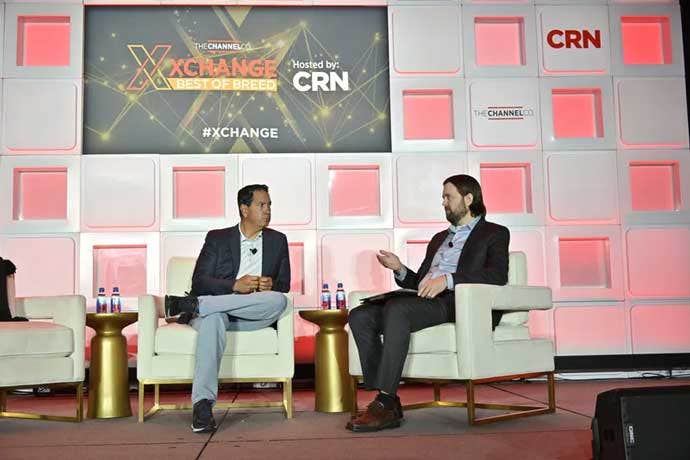
Since its 2014 founding, solution provider and systems integrator Evotek has always done things a little differently, putting more emphasis on providing clients with top-level solutions and consulting services and less emphasis on selling products. The company was also early to recognize the value of taking a security-first approach to just about all aspects of IT.
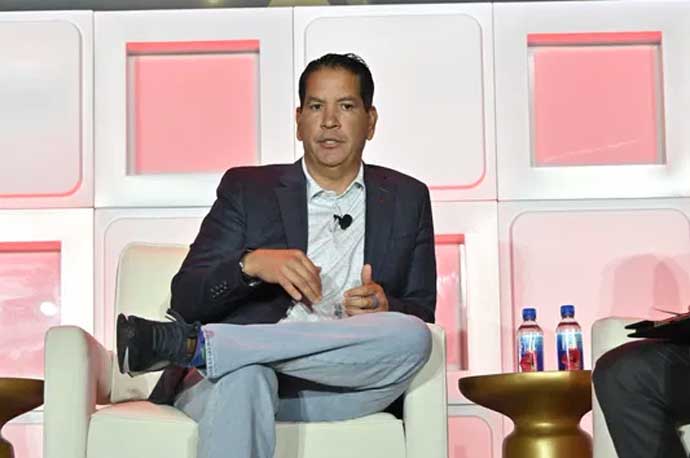
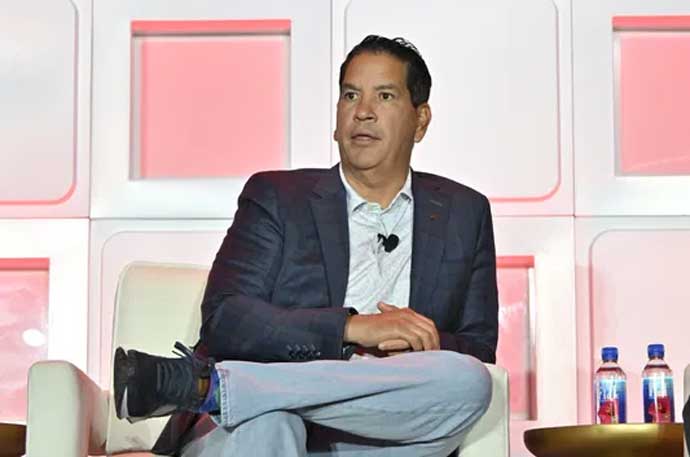
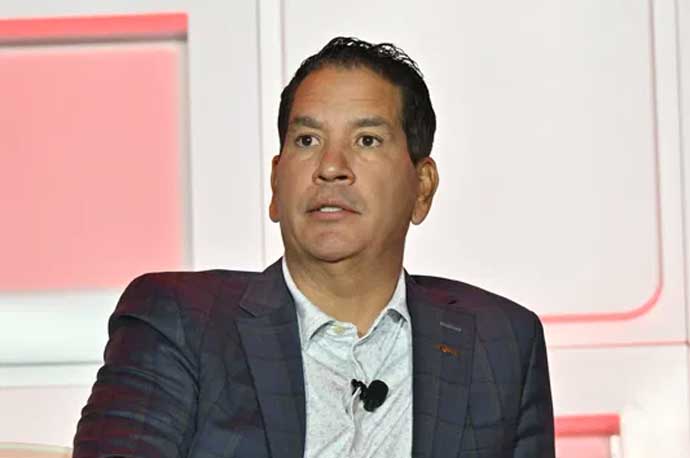
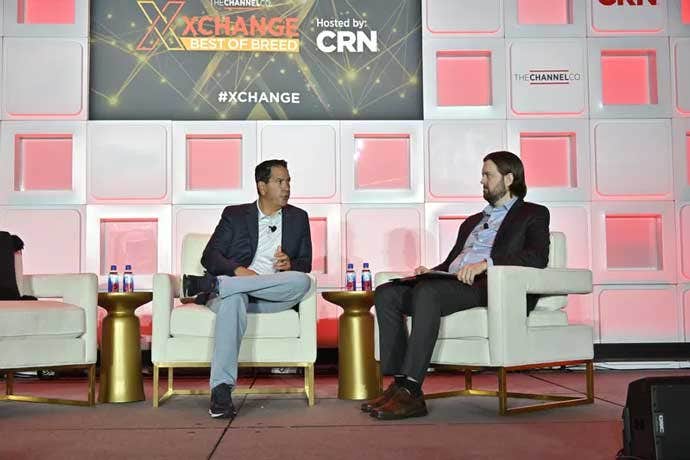
The company’s founders, including CEO Cesar Enciso (pictured left), have bootstrapped the fast-growing company to $650 million in annual revenue and have not taken any venture capital funding. Evotek regularly appears on CRN annual lists and rankings, including the 2025 Tech Elite 250, and was No. 92 on the 2025 CRN Solution Provider 500.
Before starting Solana Beach, Calif.-based Evotek, Enciso held account manager posts at Cisco Systems and Symantec Veritas before moving to the systems integrator world, working for more than a year as a general manager at Trace 3 and two years as a regional vice president at Technologent.
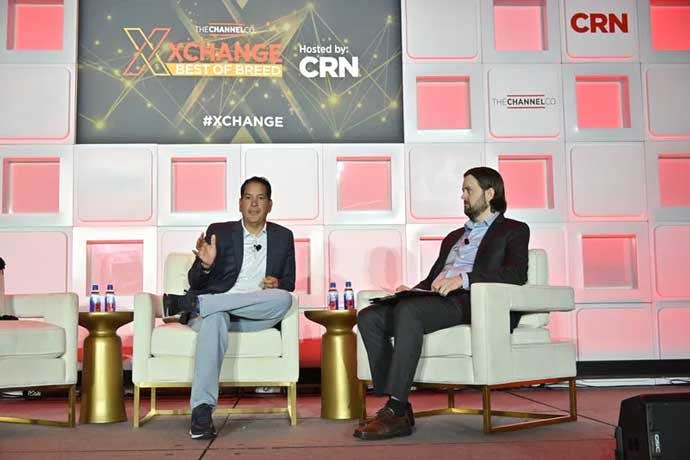
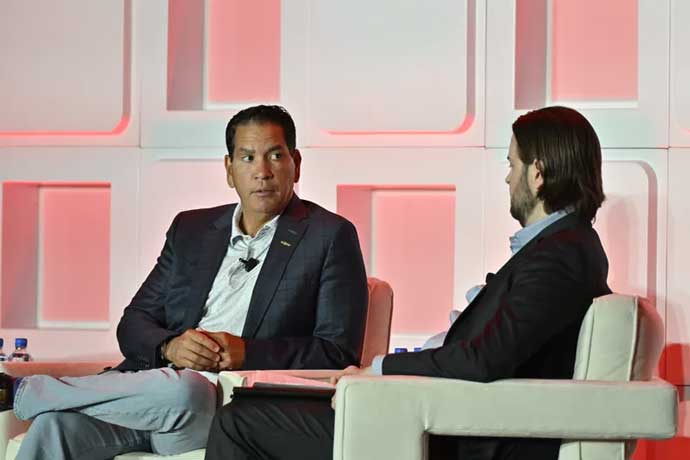
Enciso joined CRN Senior Editor Kyle Alspach (pictured right) in a Q&A at the 2025 XChange Best of Breed event in Atlanta last week, hosted by CRN parent The Channel Company, where he discussed a range of topics including employee compensation, his strategy of hiring former CISOs and other top executives, Evotek’s efforts to identify and partner with leading IT startups, and the cybersecurity challenges around artificial intelligence.
Here is what Enciso had to say in his discussion with CRN.
Just to set the stage, you’ve done things a little differently with Evotek. What are some of your big differentiators?
What was interesting was I’m a huge reader and at the time I was spending a lot of time on the whole concept of conscious capital. I was reading a few books about the founders of The Container Store and the story of Whole Foods. And one of the things that was interesting to me was this concept that, and I’m not saying that this was true [of the companies] I joined, I felt like there was a disconnect between the [company] culture and the executive team.
So early on, I basically built the business around a lot of differentiators with our employees. So I pay 100 percent of health-care [costs] for all my employees. I give every single one of my employees … $6,500 for their retirement. Our comp rates for our account managers is at the very, very high end of our industry. And I’m a big believer that if you take care of your people, they’re going to take care of you.
So when I started the business, I bootstrapped it with about $1.4 million. I told my partner at the time, I had four employees, that that was going to be some three years [of] salaries—I was going to do this regardless for three years. And our first year we went from zero to $32 million. Paid back in nine months. And this year we’ll hit a little more than $650 million.
As far as the solutions that you’re offering to your customers, as we’ve talked about before, you have this philosophy that everything should start with security. Tell me a little bit about how you came up with that even though it was, maybe, years before that was necessarily a default thing to do?
When I was looking at the marketplace in 2014, one of the things that was interesting … when I was at Cisco and when I was at Veritas—which Symantec acquired—the larger accounts I had would always have at least a quote from an Accenture type. There was Accenture, there were system integrators, VARs.
So I thought I would be more of a service company when I first started. Within our first two years of business, we hired 11 former CISOs from very large companies. This is around 2016, and cybersecurity was starting to … spike in the marketplace. And being able to go and bring a former CISO [on sales calls] gave me a lot of credibility in the marketplace.
The other thing that we did very early on, we really focused on that Fortune 500 space—85 percent of our clients are the American Expresses, the Disneys. The philosophy, really early on, was to bring services that were a lot more competitive than an Accenture type, then [we] could really start expanding [our] business.
As part of this, you also have a major focus on disruptive technology, working with early stage [IT] companies, and you actually have something called Evotek Labs that you’ve been operating. Tell me about that.
I think almost everybody can appreciate [that] if you’re trying to get new logos, trying to call in to, say, a Goldman Sachs, saying I can sell you NetApp or something, they’ll just hang up on you.
So early on we started a labs group that would go after disruptive technology. The example I like to use is we were Wiz’s first partner in North America. … To me, it was a lot easier to call the CISO at Qualcomm saying, ‘Hey, we have something that we believe is going to be game-changing. Do you mind looking at it, giving us your opinions, vetting it out?’ And that most definitely has hit home.
So we vet out [using] a bunch of tools and AI, we vet out about 600 emerging companies a year and we bring out about two to three to market. The two that I’m super excited about right now are Upwind and Reach Security. And what we do is we help them with their go-to-market strategy. We help them with hiring the right startup people. We get very, very involved with their go-to-market.
So what do you look for? I mean, in terms of separating out those two or three from the rest of them, or even in the case of Wiz, what stands out for you and your team about these emerging technology companies?
With Wiz, they had a product that was really relevant. They just hit the market at the right time, at the right place. Part of this, I should have said earlier, a good amount of our time is spent with the VC [venture capital] community, so [we’re] super connected with the Ballistic Ventures, the Bain Capitals, the Lightspeeds of the world. And I’ve always been a big believer that even if you’re the dumbest person in the room, it's probably a good place to be if you see them [investing] $40 million, $50 million—there’s a reason why Bain or Lightspeeed are doing that. So we follow where the money is flowing.
If you think of our business, we’re the trusted source. What the VCs are looking for is a shortcut into these [customer] relationships. If we [introduce startups] into American Express and Disney and we’ll sell them to those accounts, the valuation of those companies basically doubles up. If it scales at Disney, it’s going to scale in almost any account.
As you’ve brought a number of these companies to market, are there any other learnings from that that you think will be relevant?
I’m on my 11th year on this journey with Evotek. I think one of the things I have noticed, early on, was that the mindset of a lot of our [IT vendor] partners, a lot of the OEMs, I think had more of a direct [sales] mentality.
A lot of these people … now understand the power of the system integrators out there. What I do notice now—I’ll give you an example. We all know Cloudflare. They basically have a [sales] model that if they go through a partner instead of going direct, they pay their account managers basically a … premium by going through the channel. So they’re incentivized to go through partners.
So as security continues to grow in importance, everybody’s looking for this innovation, this next thing to help them solve their various security problems. But that has led to there being more and more [security] startups. You mentioned you’re looking at 600 [startups] a year. I know they’re not all going to be security, necessarily, but how do you help your customers with that? Is it mostly about curating the two or three you think they should look at? Or are you recommending other startups based on the specific problem?
So for us, it’s the ones that we have vetted out. But what’s interesting, because our clients know our playbook, they will call us and say, ‘Hey, I got a call from this individual. And they’re pretty excited about this company. Do you mind connecting with them?’ So this thing’s kind of taken on a life of its own. And it’s not just the VC community. It’s also our larger customers that are getting bombarded by [sales] account managers.
Does that speak to the power of working with partners such as Evotek, working with the channel in general?
Yes. I mean, the easiest way to scale is through us. It’s the easiest path, the CIOs, the CTOs and CISOs of the world, most of them are not going to take a [sales] phone call. I always like to say that with the right network, we should have—under the second degree of Kevin Bacon—that we should be able to get to anybody within our network. Executives today, they don’t take those calls and they have us show [their innovations] for them.
You mentioned earlier that you hired all these CISOs. And I would just love to hear a little bit more about that, how helpful that’s been. You mentioned going into a customer, an enterprise, with a CISO and there is automatic credibility. But overall, how does that assist with [working with customers]?
So that strategy has a couple of legs to it. I’ll give you our most recent example. We just hired the former CTO of Shutterfly. His name is Moudy Elbayadi, and he is heading my AI/innovation group. But what’s great about Moudy, he’s been a CIO for many, many companies. His network is absolutely huge. He has a huge following on LinkedIn. And he’s been with me now three weeks, but he’s already got us into four different accounts, four new logos, that we would have never been able to get into.
You mentioned some of the things you do to take care of your employees and reward them and going the extra mile in some cases. But beyond those things, what are some of your tips about being able to recruit people like this? I’m sure everybody would love to have a CISO or CTO join their team, but how are you appealing to those people?
So this might be a little controversial: Our industry has been so consolidated by private equity. And that’s something that’s been helpful for us to recruit. Private equity is incredibly successful with their [business] model, they’re trying to financially engineer companies, trying to get their money back quicker.
And a lot of times, not all the time, but a lot of times, they’re cutting comp to a lot of the most expensive resources. I can’t tell you how many account managers I’ve [acquired] from them being unhappy, not with their company, but with comp cuts.
One of the proudest things for me: I’ve never lost … an account manager to one of my competitors, that has left Evotek for someplace else. Because of the marketplace we most definitely share in the success of our company.
I did want to go back to that, your original thinking about not taking outside funding of any sort and Evotek is completely bootstrapped. What led to that decision?
I think the first thing is, I’ve been connected to the VC community for a long time. I had a mentor … early on and he gave me kind of a warning of, ‘Don’t sell too much of your company because sooner or later you’re not going to be able to make the decisions.’ When I started thinking about it, it kind of scared me. So I’ve never taken any money.
One of the interesting things is [that] we were incredibly profitable after nine months of being in business. But I’ve never taken $1 of profitability out of the business. I pay taxes on the profitability—otherwise I’d be in jail right now. Outside of that, I’m treasure chested. So if I ever needed to hire 40 people—it’s given me a lot of flexibility.
Hand in hand with that, you mentioned before that you have a pretty small sales staff and you come up with ways to reward them for taking the right kinds of actions. Talk a little more about that.
Yes, because the comp is a little higher than the average. You know, we have 34 sellers, I have 149 technical folks [and] the company is about 230 employees. Our sellers do incredibly well. But the other thing that’s different about Evotek is every single one of our employees can participate in commissions. Say we have an inside sales person and we have one of our CISOs [who] knows someone [and] they recommend a new logo. We have them participate in the commission of that account. We’ve had an inside sales person that tripled their salary on him being a neighbor of a CIO of a big retail store.
We’d love to hear in the few minutes left here just a little bit about your thoughts on where the industry is going. Is there anything left to be said about AI at this point in the conference, anything that you see as far as AI impacting specifically Evotek or the [solution provider] folks that are in the room right now?
The thoughts I usually have on [AI] are really focused on cybersecurity, the amount of attacks that are going to be happening. My customers are really worried about it. I had a call a couple weeks ago that this large enterprise thought they had about 90 licenses of people bringing in [AI software] because they told their employees [that if] they’re going to be using ChatGPT or anything in their environment, they needed to register it.
And we did this inventory check … and found out they had 1,500 unauthorized AI users. I think there’s going to be so many opportunities [for security solution providers]. And I might be the only one thinking this, but I think 96 percent of all AI companies are going to be going out of the business. But there’s going to be a lot of security challenges and issues.
Are there any other pieces of your strategy here? I know you like to partner with certain vendors on certain opportunities, but you’re not necessarily going to go all in on one vendor or the other, maybe you don’t want to overly commit yourself. I would love to hear your thoughts on how that feeds into everything else here, especially with intense competition.
The two other integrators that I worked for were super, super connected with one big manufacturer, and they were almost an extension of that manufacturer’s team. So early on, what we said is, we were going to be more beholden to our customers. … And what that has done, it’s given us a lot of credibility with our clients. … We have strategic partners, but not one of our vendors does more than 10 percent of our overall revenue. So most definitely, our customers feel like when we give them advice, it’s really the right advice and not advice based on how much margin we’re going to get.