Lessons From Women Of The Channel: Remember, Burnout Isn’t a Badge of Honor
As Women’s Mental Health Awareness Month comes to an end, it is time to reflect on the unique challenges women face, and more importantly, the systems that make those challenges feel inescapable.
Too often, conversations around women’s mental health are reduced to bubble baths, journaling, or the occasional PTO day. But when you ask women—especially Black women, LGBTQ+ women, disabled women, and others navigating the compounded weight of identity-based expectations—what’s really going on beneath the surface, a different picture emerges.
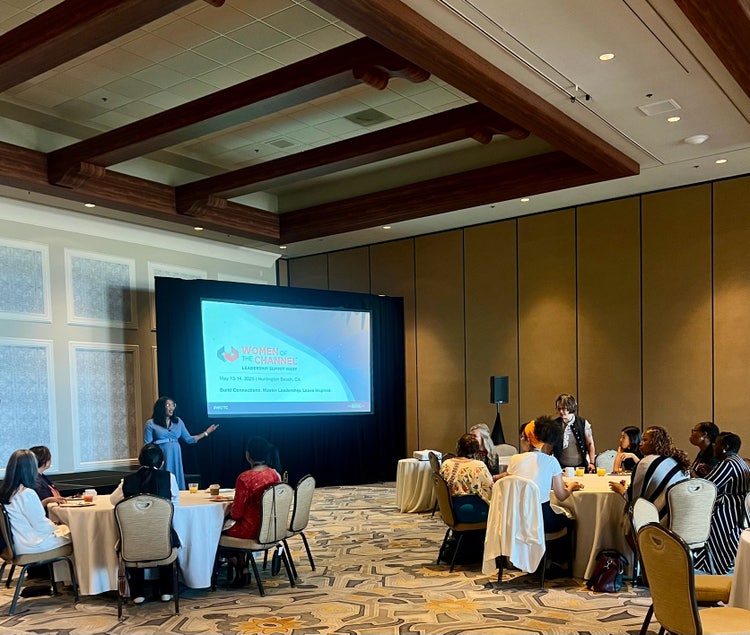
At the 2025 Women of the Channel – Leadership Summit West, I was able to connect with several women of color at a breakfast held for us, by us. We spoke about strategies on how we collectively manage environments where we are not of the majority. A week later, one theme resonates: the theme of burnout. It’s more than being tired. It’s that we’ve been expected to perform wellness inside systems that are not built with our unique experiences and needs in mind.
The Myth Of The ‘Strong Woman’ Is A Mental Health Risk
Some shared stories similar to mine: landing what I thought was my dream job. A $50,000 salary bump, a new house, longtime partner, and our daughter all sounds like the setup to a fairytale. But just two weeks after closing on our home in February 2020, the pandemic hit. What followed was not rest or celebration, but a realization: I was deeply, profoundly burned out.
And worse? I hadn't even noticed.
Like so many women, I for years had been praised for being “resilient,” “a go-getter,” “a force.” But resilience without restoration is just survival. And surviving isn’t the same as living.
According to McKinsey’s 2024 Women in the Workplace report, women leaders are burning out at significantly higher rates than men: 43 percent vs. 31 percent respectively. Among racially underrepresented women, especially Black and Latina leaders, the number climbs higher. And when we zoom in on identity? The reasons become more clear.
Intersectionality: A Mental Health Framework, Not Just a Buzzword
Coined by Kimberlé Crenshaw, intersectionality is a framework that helps us understand how overlapping identities—race, gender, disability, class, sexual orientation—create unique forms of discrimination and stress.
No two women, despite being in the same leadership role, experience the workplace the same way. Our experiences are shaped by and compounded by our racial identity, gender markers, varying ability, economic class and access, and even choice of partner. One may be navigating microaggressions and assumptions of incompetence alongside her job description. Another may be managing caregiving duties without the same social support or cultural permission to ask for help.
When we treat mental health like a one-size-fits-all issue, we miss these nuances. And more importantly, we miss the solutions.
We Need New SOPs For Women’s Well-Being
Corporations love a good standard operating procedure (SOP). Clear expectations. Repeatable processes. Metrics. But what if our personal and professional SOPs are outdated—or worse, harmful?
Women, especially those at the intersections of marginalization, are taught to put themselves last. To prove their worth by outworking everyone else. To hustle for respect, even when their bodies are screaming for rest. This is not a personal failing. This is a cultural one.
What we need is a new blueprint. A different rhythm.
- One that centers rest as a requirement, not a reward.
- One that recognizes boundaries as a leadership strategy, not a weakness.
- One that affirms community care as essential, not extra.
Mental health isn’t just about surviving stress. It’s about challenging the systems that cause it in the first place.
Women’s Mental Health Deserves Structural Solutions
So how do we start building a culture that doesn’t just accommodate women’s mental health, but thrives because of it?
- Normalize mental health conversations in leadership spaces. Burnout isn’t weakness; it’s data.
- Tailor employee wellness initiatives with intersectionality in mind. The same solution doesn’t work for everyone.
- Train allies and managers to recognize invisible labor. Asking women to carry the emotional labor of a group in addition to their job description contributes to burnout.
- Redefine what “strong” looks like. Strength can be soft. It can be quiet. Restful. Honest. Collaborative.
While Rest Is Resistance, Culture Shift Is The Goal
As poet Audre Lorde said, “Caring for myself is not self-indulgence, it is self-preservation, and that is an act of political warfare.”
This May, as we honor Women’s Mental Health Awareness Month, the call is clear: we can no longer afford to address burnout and mental health in isolation from the systems that shape them. We need more than wellness tips—we need cultural transformation. That transformation begins when we shift from surviving within broken norms to rewriting them entirely.
Building Strategies: Reclaiming Power
If we’re going to heal, we also have to protect what we’ve rebuilt. That means equipping ourselves with strategies that not only support our mental well-being but also reaffirm our leadership presence. Here are five ways to start reclaiming your power—at work, at home, and within yourself:
- Name It
Bring bias or burnout into the open without accusation.
This may sound like:
“That comment felt dismissive. Can we pause for a moment?”
“I’m not sure that aligns with our commitment to inclusion.” - Frame It
Emphasize impact over intent—especially in emotionally charged moments.
This may sound like:
“I want to share how that comment landed for me.”
“Hearing it that way shifted how I felt about this discussion.” - Redirect It
Return the focus to your goals and contributions.
This may sound like:
“I’d like to return to the original point I was raising.”
“Let’s stay focused on our project outcomes.” - Question It
Shift the burden from personal confrontation to systemic reflection.
This may sound like:
“What practices are we putting in place to ensure diverse leadership styles are valued?”
“How do we safeguard equity in decision-making conversations?” - Do Not Own It
Some strategies are internal, refuse to internalize bias or burnout.
This may sound like (to yourself):
“Their bias is not my burden.”
“My leadership and value are not up for debate.”
Your rhythm matters. If I’ve said it once, I’ve said it a thousand times, your mental health is not a luxury; it’s a leadership imperative. So, as you close this tab or walk into your next meeting, I’ll leave you with this: Protect your energy. Challenge the system. And don’t forget you’re allowed to rest.
The Inclusive Leadership Newsletter is a must-read for news, tips, and strategies focused on advancing successful diversity, equity, and inclusion initiatives in technology and across the IT channel. Subscribe today!