Security, Strategy And The Next Move: 10 Tech Executives On How Solution Providers Can Innovate In The AI Era
CRN rounds up the stories and insight shared this week at the 2025 XChange Best of Breed event that will help solution providers take their business to the next level.

The 2025 XChange Best of Breed event highlighted a host of tech executives and luminaries in the industry, all armed with ideas on how to help solution providers take their business to the next level.
Among the big topics of conversation this year was, understandably, AI, as vendors, solution providers and end customers alike are getting their arms around the technology and learning how to harness it for greater efficiency and productivity. But with new technology trends come security concerns. Executives spoke about the latest in cybersecurity threats and how solution providers can protect their customers at a time when technology is moving very fast, and businesses must transform or risk falling behind.
From AI initiatives to ransomware and project management, here’s a sampling of some of the stories, insight and information that was shared on stage this week at CRN parent The Channel Company’s 2025 XChange Best of Breed event this week.
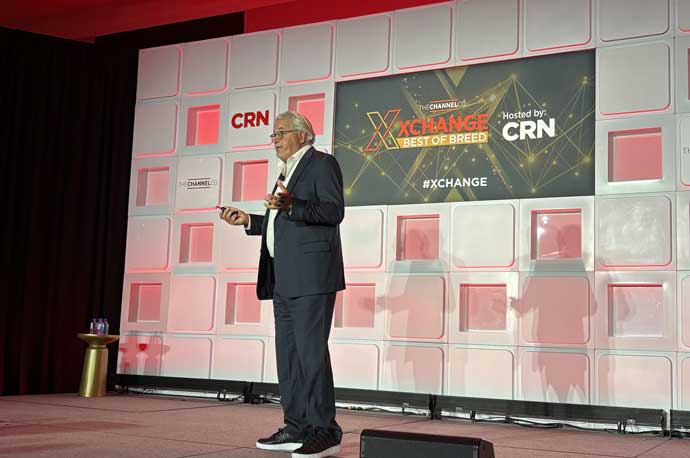
Steven Carlini, Chief Advocate, Data Centers, AI, Schneider Electric, On Where AI Is Now
Where is AI? Are we in the first inning? I would say no. I would say—and it’s not too big of a leap—but I think we’re in the second inning. I think there’s probably well over 500 large language models that are being used today, and ChatGPT-5 is about 1.5 trillion parameters. So there’s really no more public data out there that we can train AI on. We’re going to move from the training phase and we’re going to move to—some people call it ‘inferencing,’ some people call it ‘reasoning,’ some people call it ‘working models.’ So for all these hundreds and hundreds of billions of dollars that have been invested so far, there has to be a return, and that’s through the working models or the inferencing models.
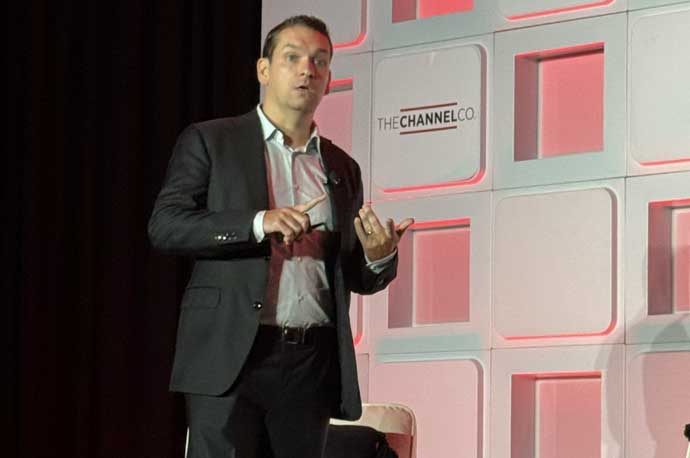
Danny Jenkins, Co-Founder, CEO, ThreatLocker, On The New Age Of Malware
The cybercrime industry is worth billions of dollars and, according to [online statistics portal] Statista, it is growing rapidly every single year and expected to continue to grow. An interesting fact is the cybercrime industry is now worth more than the endpoint security industry was when we started ThreatLocker. To make things worse, we are also having to deal with [Gen]AI [LLMs that are being used to create malware]. Three years ago, if you wanted to create malware, you had to be a developer. There are millions of developers in the world, but most of them have a job. And if they don’t have a job, they are probably somewhere in Eastern Europe or somewhere where there is a non-extradition treaty and maybe they create malware. Today, 4 [billion], 5 [billion] or 6 billion people have access [to LLMs] with the ability to create malware.
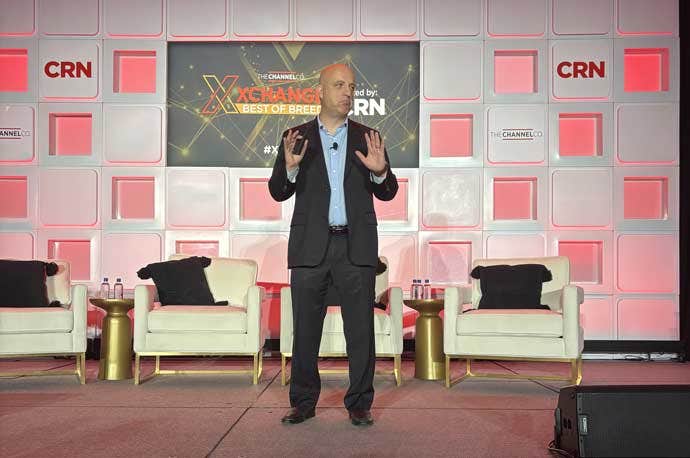
Ayal Steinberg, GM, IBM’s Growth Segment, On AI Initiatives
Everybody has kind of an [AI] initiative, but only about 25 percent of people actually have a project that’s in production. Twenty-five percent. Only less than 1 percent of people have what they’re self-declaring as a ‘mature application.’ … There are very few examples of people that have audited financial results showing how AI has truly transformed their business.

Christian von Treskow, Sr. Director, MSP Sales, Americas, Commvault, On Its Cyber Resilience Pricing
I think there’s a very top-down approach to our service provider space. We’ve taken a hard look at our pricing over the last couple of years. We compete on value—we don’t compete on price—so there are situations where we can’t beat the pricing, but at least against the Veeams, the Acronises, the Dattos of the world, I’ve seen us become extremely, extremely competitive in those situations. I also think we’ve done a lot from the way we architected our product to make it a lot simpler for those smaller deployments. I think that’s been something else that people have maybe said in past, that we’ve been perceived as more of a complex product. … I think we’ve worked really hard to unwind that, not only from a pricing perspective but just from a user experience perspective.
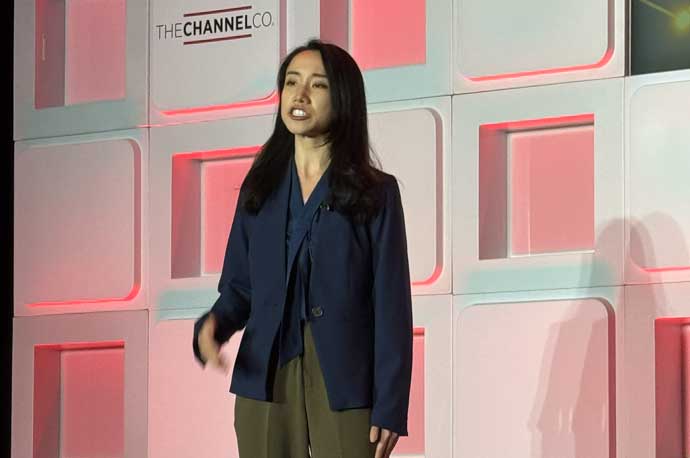
Yolanda Cao, Co-Founder, Everest Managed AI, On AI’s Return On Investment
One of our customers after a two-month pilot has been able to increase their margins by 11 percent by not hiring more technicians as they grow. Now even more exciting is they are triaging tickets 22 times faster, their techs don’t feel burned out, and they are reselling our AI Receptionist to their customers to help them generate more leads and revenue.
One interesting trend that we are seeing is that our product is not just for solution providers trying to adopt AI. It is also for their customers who keep asking how they can add AI to their businesses and generate actual ROI.
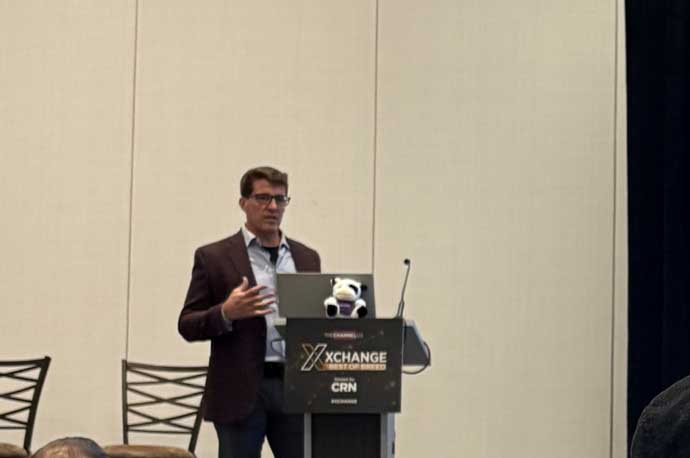
Mike Psenka, Founder, CEO, Moovila, On Project Management
Project management is maybe not one of the sexiest and most exciting things to talk about, but it’s a really old segment. But the reality is, people still get really surprised with projects. They still kind of go, ‘Hey, what happened? Why is that project late? I didn’t know what was going on.’ That hopefully doesn’t ever happen with your accounting software, your spreadsheets, your word processors—these are all things that are about the same age as project management. It’s not brand-new tech. So, my CTO and I went, ‘What’s going on here? Why are people unhappy?’ I love a good puzzle to solve the problem.
At the end of the day, if you can’t trust your project timeline, you’re going to see it's really toxic to the rest of your business. And this is the unpleasant surprise in so many different shapes and forms that you have.
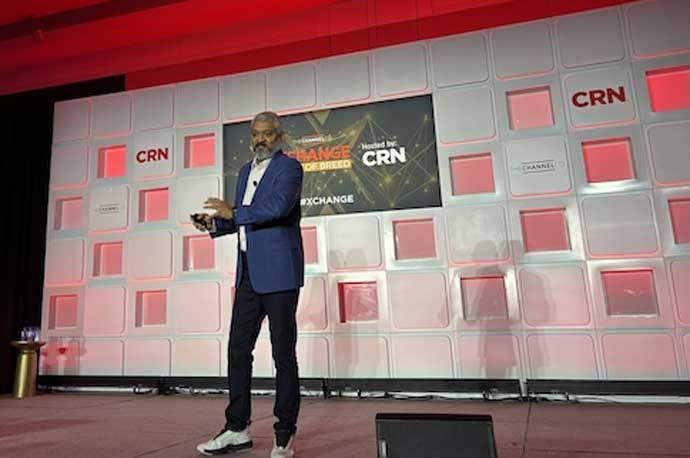
Srikant Ganesh, Sr. Manager, Systems Engineering, Secureworks, a Sophos Company, On Ransomware
We all talk about ransomware, and we deal with it as if it’s something very highly sophisticated—which it is, in many ways. But the initial access methods—I wouldn’t say [they’re] trivial, but it’s the normal things that we should be taking care of as part of security hygiene. It’s your weak passwords, it’s your lack of MFA, it’s stolen credentials.
John Pagliuca, President, CEO, N-able, On Elevating Cybersecurity Conversations
I was in Europe last week, and [the MSPs I was meeting with] were saying, ‘Hey, John, we get it. We understand that we need MDR [managed detection and response]. We understand that we need cloud-based backup ... we get it. But our customers don’t really want to hear that they need this other piece of layered security. They’re not willing to open up their budget and fund one more thing.’
And my advice to them, and my advice to you, is stop selling a solution. Stop selling the point solution. Stop selling the cyber solution. Stop selling cyber resilience. Start speaking business resilience. And that’s really what the conversation is about. Your customers, your business owners, your investors all understand the construct and the concept of business resilience, and that’s really what we’re in business for. Too many vendors in this space, they want you to buy their email security offering, or they might really want you to buy their backup offering, or they want you to buy these other elements. And really it’s more about the business outcome. And that business outcome that you need to be thinking through, making sure you have a comprehensive suite for, is really to make sure that there’s resilience there.
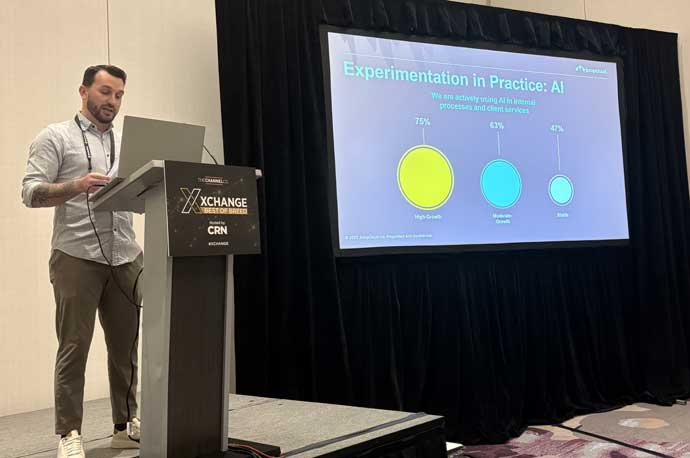
Kevin Atkins, Sr. Manager, MSP Sales, JumpCloud, On Survey Results From 300 MSPs Showing Only 22 Percent Had Revenue Growth of 20 Percent Or More In 2024
What is their secret? The single biggest differentiator is that they are bold. They take calculated risks and challenges head on. It’s not about changing things overnight; it’s about being strategic.
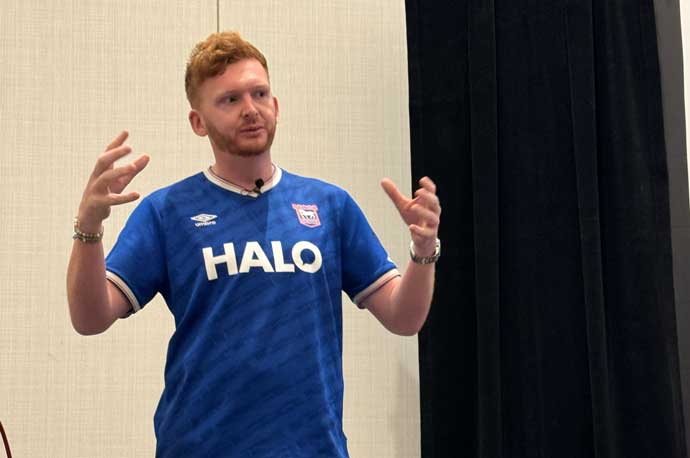
Tim Barton-Wines, Chief Commercial Officer, Channel Chief, Halo, On Being The Only MSP Vendor On This Gartner Magic Quadrant
Two weeks ago, we were named for the second year in a row to the Gartner Magic Quadrant for AI applications for ITSM [IT Service Management]. What is pretty funny about this to me, by the way, is we are the only MSP vendor on this list. Our AI has not got any weird name. It’s just called Halo AI, and it’s free of charge. It is totally free. … In Halo the application AI is super customizable and configurable, and there is a load of first-party productized stuff that is quite easy to turn on.