6 Solution Providers Weigh In On Early Agentic AI Transformation
‘Agentic AI is here, and now we have a whole new set of tools that we can build things and apply it to specific situations that would not normally be possible without it,’ Xperteks CEO Marcial Velez says.
Leveraging agentic artificial intelligence to connect internet service providers and MSPs, to triage help desk requests and to allow human resources workers to request specific resumes are just some of the ways solution providers are applying this cutting-edge technology to transform business processes and increase productivity.
“Agentic AI is here, and now we have a whole new set of tools that we can build things and apply it to specific situations that would not normally be possible without it,” Marcial Velez, founder and CEO of New York-based Xperteks—a member of CRN’s 2025 MSP500—told CRN in an interview.
AI agents could transform the way consumers shop and people interact with the internet. In October, New York-based consulting giant McKinsey reported that by 2030, the U.S. business-to-consumer (B2C) retail market alone could see up to $1 trillion in orchestrated revenue from agentic commerce, with global projections reaching as high as $3 trillion to $5 trillion. Those numbers don’t factor in services or the business-to-business (B2B) marketplace.
[RELATED: 9 Solution Provider Execs On The Impact Of AI]
Agentic AI In The Channel
Companies will need to integrate AI into existing systems and maintain data privacy, according to the McKinsey report. They should look for defensible moats they can build as AI grows in use, find AI partners who can adapt to quickly changing customer attitudes, look at data monetization and subscriptions as potential new revenue streams and invest in clear communication with users around the presence of agentic AI in products.
About 80 percent of the most mature organizations use or expect AI agents to manage repetitive tasks, Menlo Park, Calif.-based consulting firm Protiviti said in a report in September. One in four organizations has already integrated agentic AI and multi-agent AI into core operations. Another 27 percent plan to integrate the technology within six months.
To learn how solution providers are applying agentic AI to their business, CRN reporters at XChange NexGen 2025, hosted by CRN parent The Channel Company, asked channel executives attending the conference: “What use case are you looking at transforming with Agentic AI in 2026?"
Here’s what six solution providers had to say on the ways agentic AI is transforming their businesses.
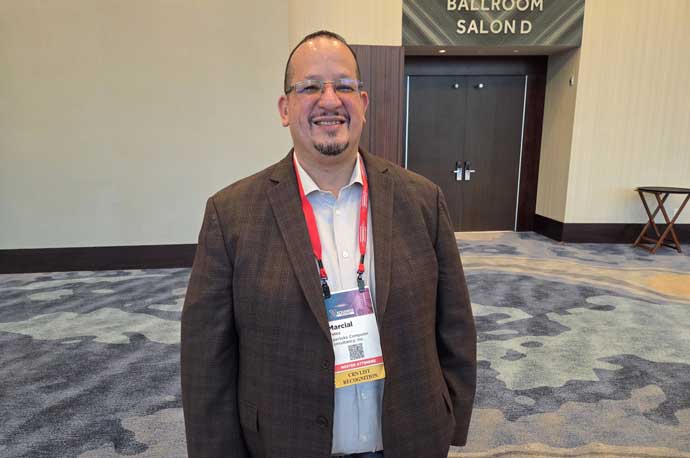
Marcial Velez
Xperteks
CEO, Founder
New York
We’re launching a program (that leverages agentic AI) called secure bonded internet. And the idea behind secure bonded internet is that it’s a growth system that allows us to connect ISPs (internet service providers) and MSPs and bring them into a place where ISPs want to be able to get more revenue with their existing customers. We can take outages that happen and be able to convert those into opportunities.
And MSPs can come in and be able to help configure the solution and get a front row seat to a customer that actually needs a service. And it gets them into the room so they can now talk about whatever it is that they need. And since we’re working with HUB Advanced Networks in Puerto Rico, this is going to be a place where we can prove (it) out.
Agentic AI is here, and now we have a whole new set of tools that we can build things and apply it to specific situations that would not normally be possible without it. If ISPs have an outage for an entire block right or an area, and there are 20 or 30 businesses, there’s not going to be a person that’s going to be able to call them all at the same time.
Agentic AI gives us that opportunity to be able to do that and orchestrate it so it can become frictionless in terms of what the deciding factor is for that business. Because outages cost business money and trust starts to erode.

Danny Perry
ITCubed
Managing Partner
Houston
We are incorporating it (agentic AI) into our help desk currently. And I think (for) a lot of people, that’s the first step.
(We are leveraging agentic AI for) dispatch, T1 (tier-one technical support) and really looking at triage of the initial tickets coming in and then assigning those to the right resource.
Or–and ideally–enacting an automated process that resolves the issue without tech involvement.
Getting what we want automated, going department by department, and figuring out the things that can be automated, or that we desire to be automated, and then working through those processes, that’s a completely different tool than the AI agent.
So getting those automated processes down, workflows, everything in regard to that. And then applying your agentic processes to it.
We’re laying the guide rails. We laid out the processes. And now, as this is incorporated, both from the technology standpoint and the people standpoint, we grow it organically in that way.
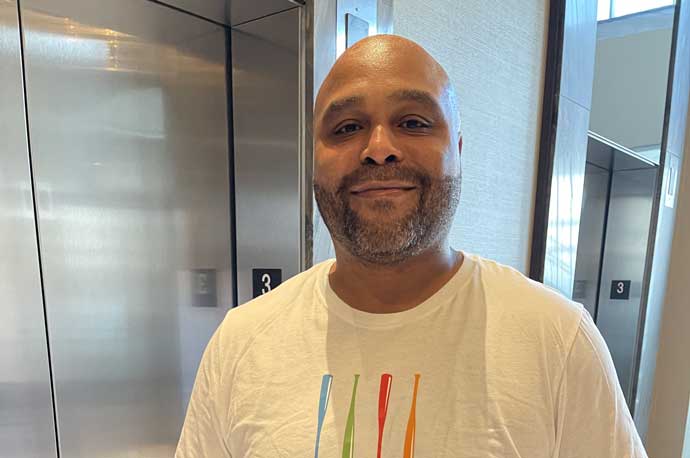
Melvin Williams
M&N Communications
CEO, Chief Security Officer
Blue Bell, Pa.
Where do I see agentic artificial bots in 2026? I think the opportunities that we’re going to see are going to be immense.
There’s going to be a myriad of opportunities to create bots, to create productivity tools that help our customers grow. We’re in the early stages of getting started. We have to master it as an MSP. But we’re already starting to see project work and requests for agentic bots to be created.
We had a project that we recently had done where we worked with a client for us to be able to create some agentic HR (human resources) bots that queried data and allowed the person to request specific resumes at a specific time, increasing productivity within the organization.
We’re just getting started, but we see thousands of agentic bots running our organizations and running our clients organizations.

Eric LeeShanok
LeeShanok Network Solutions
President
Tucson, Ariz.
The future is automation. How to automate our workflows and automate our client workflows.
We’re a little bit behind the times when it comes to automating IT processes, onboarding, offboarding. We’re going to evaluate all these different tools. And it seems like there’s no one tool that does it all. We need five tools. Five best-in-class tools. When it comes to implementing agents, we are just starting.
We’ve been looking at it for about a year, but we’re just not satisfied with what we’ve been seeing. I get delusional with some of the apps we keep researching. They promise a lot of things, but they only give you maybe 20 percent of what you’re really looking for. So we have to buy five more apps to get that full coverage. That’s what we’ve been working on.
The agentic AI part, I think we’re at the early stages of what we’re finding to be a practical use in the business environment. I know there’s a lot of very powerful agentic technologies. We just need to choose the right one for us.

Dustin Bolander
Clear Guidance Partners
Founder, Managing Partner
Austin, Texas
“We’re really focused on the basics–things that improve operations inside my MSP.
That includes dispatching, clarifying tickets, pre-tagging, documentation and so on. I’ve seen a lot of MSPs try to push AI into tier-one ticket resolution, but most are struggling with it.
I haven’t heard anyone say, ‘This works really well.’ So, the key is to focus on the simple, clear wins and use AI to make people’s jobs easier, not to do their jobs for them. That’s the approach.

Zac Paulson
ABM Technology Group
Vice President Of Technology
Fargo, N.D.
We’re not necessarily focused on a specific agent, but we’re looking at software that companies are already paying for that could be replaced by agents.
For example, say a bank is spending $50,000 a year on software to run reports. If that functionality could be recreated as an agent, there’s a clear ROI (return on investment).
You could rewrite the software as an agent that performs the same tasks, essentially a one-and-done cost. They buy it, they own it. So yes, our use case is really about replacing existing software with agents.