To Build A Vertical Practice, MSPs Must Learn The Tools And Jargon: Clear Guidance CEO
To build a law firm industry specialty, Clear Guidance Partners gained expertise in NetDocuments, went to legal conferences and more, says founder and Managing Partner Dustin Bolander.
Building a specialization in a particular industry so that a solution provider can win new business means talking that industry’s jargon, going to its conferences and getting certified in the industry-specific vendors those clients use.
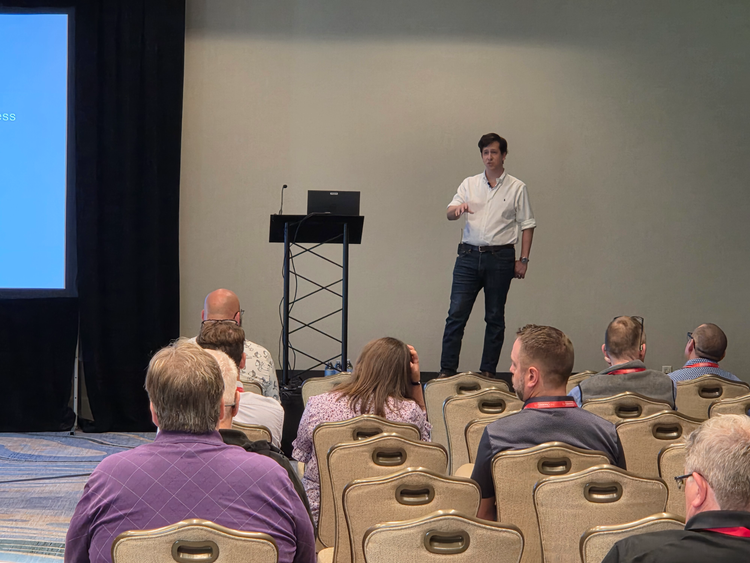
That’s some of the advice Dustin Bolander, founder and managing partner of Austin, Texas-based solution provider Clear Guidance Partners, shared with a crowd of solution providers gathered for the XChange NexGen 2025 conference, hosted by CRN parent The Channel Company. His company’s vertical expertise has outshone areas where it isn’t as strong, such as a slower help desk.
“I will never get up here and brag about, ’We’ve got the best help desk in the world,’” he said. “[But] whenever you call in, we’re going to understand [when the client says], ‘It’s a partner that is working on a litigation deadline and needs to finish this production.’ ... [Other partners] are talking about their QBRs [quarterly business reviews]. They’re talking about their ticketing system, their proactive patching, blah, blah, blah, blah, blah.”
[RELATED: Liability Defense, Not Just Compliance, Is A Winning Security Sales Play: Galactic Advisors CEO]
Vertical Focus For MSPs
For Clear Guidance Partners, which has a legal vertical focus, building the industry practice meant learning the specific technology tools and problems law firms frequently face, including Legal Electronic Data Exchange Standard billing systems, client audits and document management software.
Bolander and his team would visit legal tech vendors looking for more partners to ask for training so that it can go beyond implementation, support and referral fees.
“We don’t want your support to be bothered,” he said he tells vendors. “We don’t want your account managers to be bothered. Help us from that perspective.”
He can’t recall any deals his company lost where the client used NetDocuments, one of the legal tech platforms Clear Guidance has the most expertise in, Bolander told the crowd. However, in his experience, references from other law firms didn’t matter much to prospective clients. Prospects don’t usually ask for references and half the time the prospect didn’t check the reference.
Although verticalization can mean learning more applications instead of generic productivity applications that can work with any industry, Clear Guidance decided to go in-depth on a handful of law firm platforms and through that learned common problems such as needing to decrease the size of large PDF files for processing.
“Almost every piece of software that’s choking on a PDF is because it’s too big,” he said. “At that point, it doesn’t matter which software it is that’s trying to take the PDF in. It’s the same concepts with the issues, the same concepts on the solutions.”
Clear Guidance employees are familiar with law firm-specific scenarios such as matter syncing and client intake. An explainer on its website on how to export court files from PDF to Microsoft Excel has led to at least 10 new leads, he said.
Law firm clients like that specialized solution providers like Clear Guidance can move faster in support services because it knows the industry-specific software and understands common law firm technology problems, Bolander said.
Using industry jargon and terms incorrectly can also expose an MSP as not really knowing the vertical well enough, Bolander said. He’s come across MSPs that claim they have a law firm vertical but don’t have familiarity with the popular knowledge work platforms such as iManage.
And in areas where Clear Guidance didn’t have expertise, Bolander has partners he can contact, he said.