7AI CEO: Businesses Are ‘Not Crushed Yet’ By Agentic Attacks, But The Window Is Closing
Amid the potential for surging AI-powered cyberattacks in the near term, there’s a legitimate concern that ‘if customers are not starting to adopt the new technology—and staying in the old model—it’s going to be too little, too late,’ 7AI CEO Lior Div tells CRN.
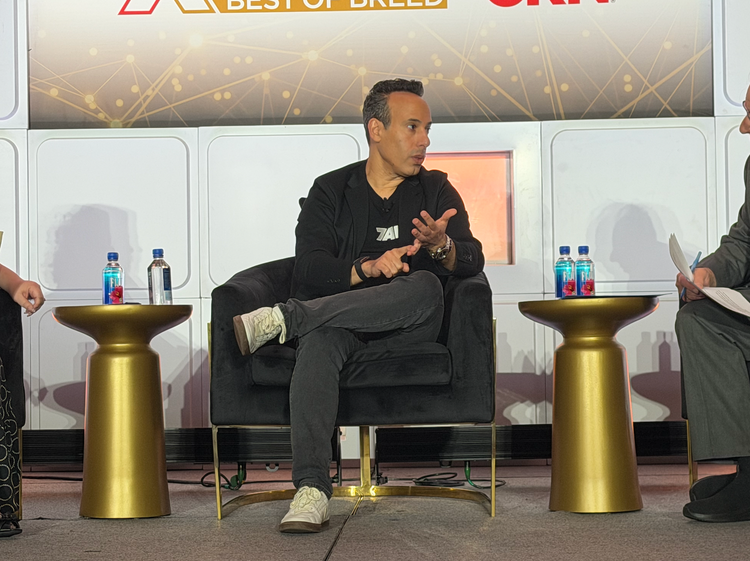
While signs are already emerging of an acceleration in cyberattacks powered by frontier-level AI capabilities, the likelihood of an imminent intensification in such attacks means it is now essential that the industry shift to an agentic security operations model that can keep pace, 7AI co-founder and CEO Lior Div said Tuesday.
In particular, the clock is ticking until AI capabilities on the level of Anthropic’s Claude Mythos—potentially via open-weight models supported by foreign adversaries—are in the hands of a broad array of threat actors, Div said in response to questions from CRN editors during the 2026 XChange Best of Breed Conference.
[Related: 7AI Launches First Formal Channel Program To Drive Agentic SOC With Partners]
Looking ahead, “if we’re staying in the old approach, we’re going to be crushed,” Div said during the conference, hosted by CRN parent The Channel Company in Atlanta.
“We’re not crushed yet, because those technologies are evolving right now,” he said. “I’m very afraid that if customers are not starting to adopt the new technology—and staying in the old model—it’s going to be too little, too late. But we still have this window that we can respond and do something.”
Still, this window of time—which at one point looked as if it might be several years long—has continued to narrow, to the point of now that it may be months away or even closer, according to Div.
The potential disruption from threat actors who can access ultra-powerful AI models might be comparable to a prior major shift in technology—when, years ago, the rise of Bitcoin helped to enable ransomware as a business model, he said.
Right now, “I think that this time is shrinking and shrinking to the point that I am anticipating that somewhere in the near future we will have [this type of] moment” as a result of AI, Div said.
The opportunities are no doubt massive for solution and service providers, though the urgency is just as real for the channel as for the customers facing a spike in attacks, he said.
7AI was launched in 2024 by Div, a repeat entrepreneur in security who was formerly CEO and co-founder of Cybereason, and has been among the fastest-growing players in the emerging market for agentic SOC (Security Operations Center) platforms. The startup unveiled its first formal channel program in July following partnerships with major solution providers such as GuidePoint Security and DXC Technology.
Increased AI-Powered Threats
Without a doubt, the pressure from AI-driven attacks is already becoming visible, including by way of attacks that are able to rapidly morph in response to defensive measures, according to Dallas Munday, vice president of engineering at New York-based solution provider BlackHawk Data.
Through the emergence of AI that can be used for rapid, widespread attacks, “the timelines are compressing and the volumes are massively increasing,” Munday said.
At the same time, solution providers and MSPs have a clear responsibility to develop improved AI-enabled defenses instead of simply treating it as inevitable that attackers will have the AI advantage, he said.
When it comes to the approach that will be needed going forward for agentic cyber defense, Div’s “perspective is exactly right,” Munday said.
“Instead of looking at this as, we’re just going to get overwhelmed and this thing has run out of control—we have an obligation, we have the capability and we should, as technologists, be trying to figure out how to navigate those waters,” he said. “Obviously we have big problems. But we also have that responsibility.”
AI-Native Approach
In December 2025, 7AI raised a $130 million Series A funding round, led by Index Ventures. The round was the largest Series A in cybersecurity industry history at the time, according to 7AI.
The startup’s approach as an AI-native vendor gives the company a major advantage when it comes to countering today’s attackers, who are using the same agentic technologies, Div said Tuesday.
Whereas many other security operations and MDR (managed detection and response) vendors “are saying, ‘This is the way that we used to do it. Let’s add AI on top of what we’re doing,’” he said.
By contrast, 7AI is saying, “‘We’re not going to bolt AI on top of what we’re doing,’” Div said. “Everything that we build is AI-first or AI-native.”
That approach can make all the difference in a fast-moving and dynamic threat environment, like what the industry is facing currently, he said.
As an example, 7AI is able to allocate its engineering organization to directly work with and support the startup’s partners and customers, according to Div. The result is that 7AI can rapidly move requests and new capabilities into development and deployment, he said.
“In a 24-hour cycle, we’re going to build something new, implement it in production and provide it to the customer,” Div said. “This is something that you cannot do if you did not architect your company to be AI-native.”
Priority On Partners
On the business side, 7AI also made the decision from the get-go to focus on enabling partner-driven sales—which has helped to fuel the startup’s strong growth so far, according to Div.
Every deal 7AI has closed has involved a channel partner, in fact, he said.
“When it comes to cybersecurity, there is something to [be said] about trust,” Div said. “This is the reason that there is not a single deal that we’ve closed so far—and [7AI has] closed many—that has been done alone. Not a single [deal]. Even if a customer’s saying, ‘Hey, I want to do it alone’—we’re going to transact with some of our channel partners. Because we believe that’s the only way to go to market and build a big company.”