13 Cool New MSP Tools For AI, Security And IT Operations
XChange August 2026 showcased new products aimed at helping MSPs add recurring revenue, improve security, automate operations and more. CRN highlights 13 of those products aimed at delivering higher-value services across AI, security, power, contracts, billing,and asset disposal.
This week’s XChange August 2026 conference in National Harbor, Md., hosted by CRN parent The Channel Company, gave attendees a look at a broad range of new offerings aimed at helping MSPs solve practical customer problems while opening the door to new managed services, recurring revenue opportunities and stronger margin potential.
The 13 products featured here span AI governance, identity protection, browser security, privileged access management, contract intelligence, billing automation, power and infrastructure monitoring, virtualized infrastructure, out-of-band management, cyber-risk management and IT asset disposal.
While the technologies vary widely, several common themes emerged across the conference floor. Vendors are looking to help MSPs and solution providers simplify complex customer environments, secure fast-changing attack surfaces, and turn operational pain points into repeatable services.
[Related: Schneider Electric Gives Channel Partners New UPS Battery Upgrade, Services Opportunities]
AI was a major thread, but not only as a feature. Several companies positioned AI as a way to automate back-office workflows, improve security governance, strengthen contract management, or help partners package new offerings for customers that may lack internal IT depth.
The products also reflected rising demand for resilience outside traditional software and cybersecurity markets. Power management, physical infrastructure visibility, remote access to distributed IT environments and monetization of retired hardware all showed how partners can extend their value deeper into customer operations. For MSPs in particular, these offerings create opportunities to go beyond break-fix support or basic monitoring and build differentiated services tied to uptime, compliance, risk reduction and customer business outcomes.
New MSP tools highlighted at XChange August 2026 include:
- Opengear: Remote out-of-band access for distributed infrastructure recovery
- Rev.io: AI-first billing, payments and PSA automation platform
- KIPIO: AI operations and security governance for MSP customers
- Apto: IT asset disposal with resale value recovery
- Spectra: Cyber-risk certification, warranties and insurance enablement
- Petra Security: MSP-only identity threat detection for business email compromise attacks
- StorMagic: Software-defined storage and lower-cost virtualized infrastructure
- Schneider Electric: EcoStruxure IT for managed infrastructure monitoring
- Hennge: SMB-focused identity protection and conditional access
- Monjur: AI-powered MSP contract intelligence and management
- Eaton: Power management monitoring for recurring revenue services
- CyberQP: Panthera AI-native privileged access management platform
- Atakama: Browser security visibility, control and remediation platform
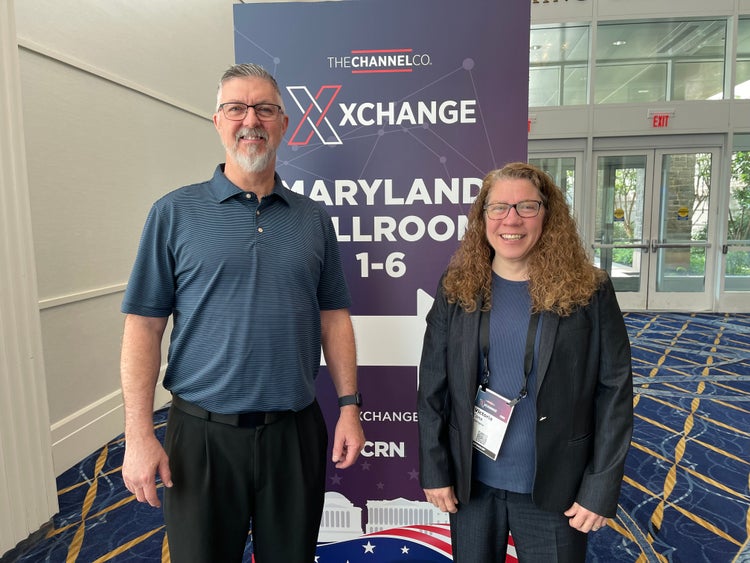
Opengear Remote Out-of-Band Management Appliance
Opengear used XChange August 2026 to discuss the company’s appliance technology for helping businesses remotely access data centers, branch offices, or anywhere they have racks of infrastructure, said Jeff Blyther (left in photo), Opengear’s channel sales engineer.
“We allow them remote access into those facilities to be able to access the console port of all the infrastructure here,” Blyther told CRN. “All routers or switches or firewalls have this little RG45 port with no IP address. It’s not part of the network. It’s really an out-of-band port that lets someone walk up with a laptop, plug a cable into it, and ‘talk’ to it if there’s something wrong with that device. You can’t talk to it over the network.”
What went wrong could be a configuration issue, an IP address was lost, somebody “fat-fingered” the access control list, or there was an attack, all of which might require connecting to the control port, Blyther said. If the Opengear appliance is plugged into the control port, the issue can be fixed remotely instead of sending some on-site to fix it, he said. Opengear also provides cellular connectivity in case ISP connectivity is lost, he said.
“Now you can immediately look at the firewall and see if the network was attacked or if a core router went bad,” he said. “You have the capability of getting in and mitigating the problem or figuring out what the problem is.”
Opengear’s differentiator is that its appliance works with all switches, routers, firewalls, load balancers and even servers, Blyther said.
The company complements that with its Opengear Lighthouse centralized management software, said Victoria Zona (right in photo), director of channel sales.
“It gives you a central pane of glass to access all of your devices, everything that’s connected at the node level,” Zona said. “So you have an aggregated central pane of glass to open whether it’s your router, your firewall, and all that. People have a full view of where all your devices are, whether it’s all at a bunch of branch locations or all at the data center.”
While channel partners can sell the Opengear appliances outright, MSPs can build services around it, Zona said.
“We are starting to see more and more MSPs latch onto the idea because there’s so many smaller customers or medium-sized customers with no IT person in a building,” she said. “And they want to be able to service customers without driving to their location.”
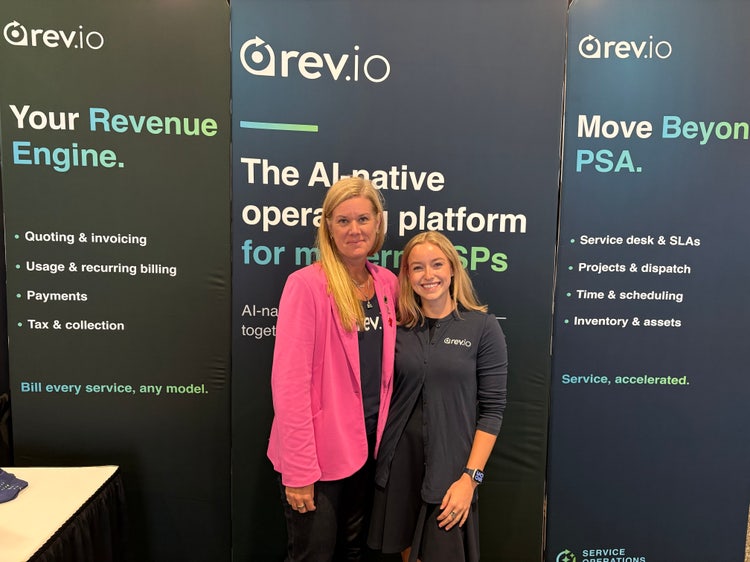
Rev.io: AI-First Billing Platform
Rev.io is expanding beyond communications billing into an AI-first platform to help MSPs scale more efficiently. Today the company is investing in a unified system that brings together PSA, billing, payments and service-delivery workflows.
For MSPs, Rev.io can help with revenue growth without head-count increases and operational bottlenecks through automation and AI capabilities. By connecting quote-to-cash, customer data, financial transactions and service delivery, Rev.io reduces manual work to free teams to focus on customer growth, recurring revenue and services-led business models.
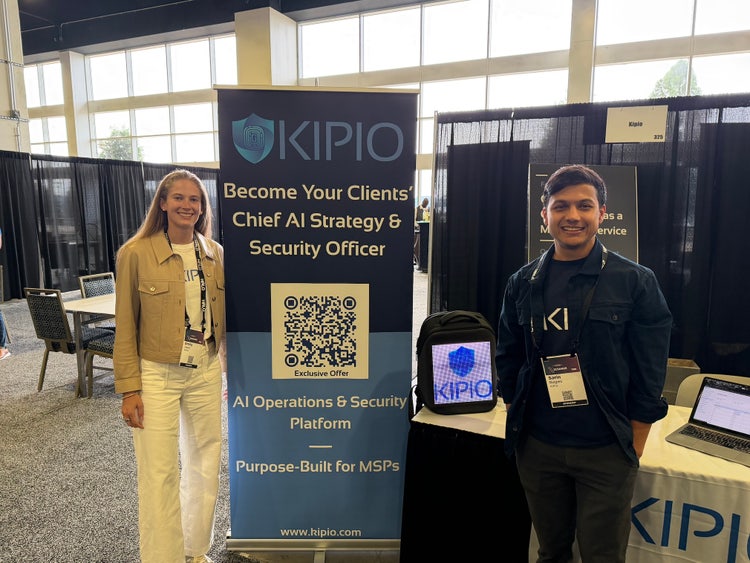
KIPIO: AI Operations And Security Platform
KIPIO offers an AI operations and security platform aimed at helping MSPs secure and govern the usage of AI tools on behalf of customers. The platform provides MSPs with “complete visibility into their clients’ AI usage”—across browsers, desktops and AI agents, said KIPIO co-founder and CEO Emily Hock.
KIPIO has now also added real-time enforcement functionality to block unsanctioned shadow AI as well as entering or uploading sensitive data, Hock said. In addition, the platform can prevent users from logging in with personal credentials, she said.
Ultimately, “our whole goal was to build this foundational layer that was rooted in security and governance—but also taking into account that MSPs weren’t just going to be this security provider—as it relates to AI for their customers—but also help them drive adoption,” Hock told CRN. “We’ll give you the guardrails to do it safely—so that you, as a company, can actually adopt AI faster and unlock more gains from it.”
Crucially, KIPIO is also focused on providing MSPs with insight and analytics related to AI, “so they can actually provide AI as a managed service that brings them recurring revenue,” said KIPIO co-founder and CTO Sarin Regmi.
Apto: IT Asset Disposal
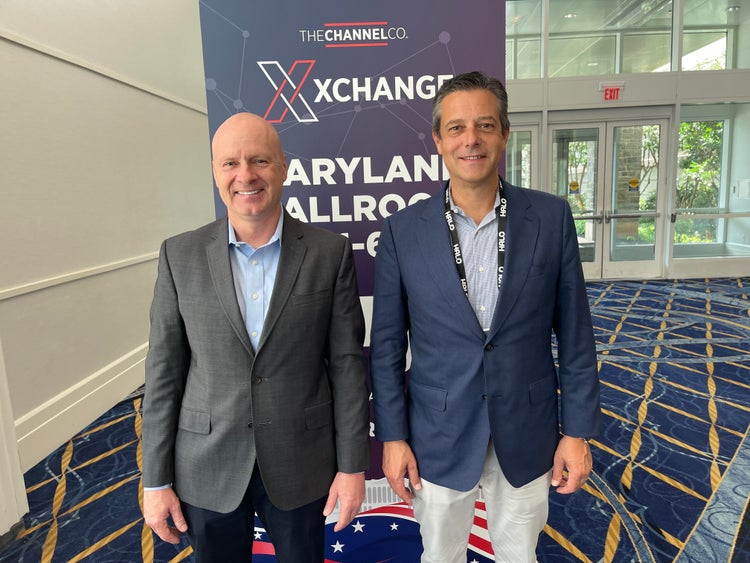
Apto used its time at XChange August 2026 to introduce MSPs to its IT asset disposal services. The company facilitates the return and resale of retired IT assets, conducting weekly auctions with 450 vetted participants.
Grant Burton (left in photo), senior vice president of programmatic takeback at Apto, told CRN that business end up leaving tens of billions of dollars of value on the table relative to retired hardware assets.
“We believe the way that gap gets solved is by enabling MSPs and VARs to manage asset takeback, incentivized takeback, and we power them to do that,” Burton told CRN. “We enable them to do that.”
Unlike many asset disposal companies that focus on recycling retired hardware, Apto wipes all data on the hardware, provides certificates that prove the assets were wiped, and then resells the working hardware, Burton said.
“We’ve been in business for 25 years doing that, working with the biggest computer OEMs and lots of other large companies,” he said. “Our difference is we take care of all the foundational stuff, but we provide value. A lot of that gear, as soon as it’s retired, has pretty good value, and so we monetize those assets. The goal is to get them to a second life.”
Apto does a weekly auction with about 450 participants who are registered and vetted selling strategic lots of equipment, which could be client assets, data center assets or components, said Chris Re, senior vice president of Apto’s client relationships. Those participants bid against each other for about 95 percent of the equipment, while niche equipment may be sold to known buyers, Re told CRN.
Most of the buyers are break-fix companies with warranty or support contracts. while others are white-box server builders, Re said.
“For instance, working on a project with servers, we have 24 64-GB memory DIMMs in a server that sold for about $30 a year ago,” he said. “These should depreciate about 2 [percent] to 3 percent every single month routinely. It just works that way. But they recently hit a high of $800 each and sell for about $550 to $575 currently. So exponentially [there’s] huge value in that, and it’s driving a lot. When the OEM is selling into a customer, we’re taking that that refresh product out, and partners are using that to discount the new hardware sales. It’s a sales tool.”
Some larger businesses are holding on to older equipment longer than before because of higher prices, but they can only wait to make new purchases for so long, Re said.
“A lot of our customers are big, big customers that just can’t hold hardware that is coming out of support or may cause security risks,” he said.
Apto does not charge for the asset disposal service, Re said.
“We’re monetizing that so there’s no cost for us to go in there,” he said. “We’re going to take that equipment back, resell it, and share the sales with either the customer or the MSP. In my opinion, it should go to the MSP, and they decide what to do. They could potentially take some margin off that, apply it as a credit to new hardware, or simply send a check back to the customer.”
Spectra: Cyber-Risk Platform
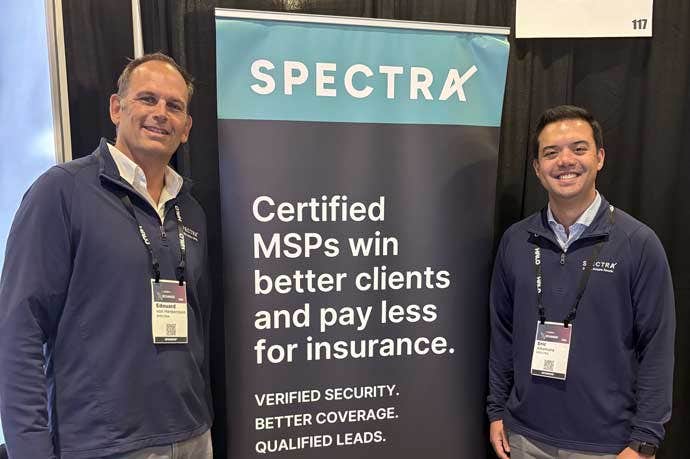
Spectra is a cyber-risk platform that allows MSPs to turn cybersecurity performance into an insurance and business advantage. Its model combines certification, cyber-resilience warranties and insurance access. Its certification validates an MSP’s security outcomes, while its insurance partnerships help customers qualify for more competitive coverage.
For MSPs, the value goes beyond risk reduction. The insurance vendor can help differentiate their services, strengthen customer trust, and create a sales advantage by connecting cybersecurity controls with financial outcomes.
Petra Security: ITDR Platform
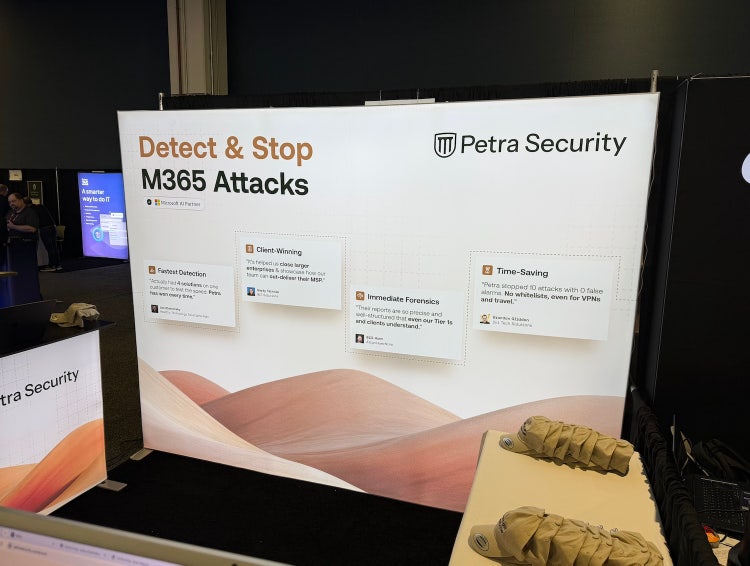
Petra Security offers an “MSP-only” ITDR (Identity Threat Detection and Response) platform that aims to prevent widespread business email compromise (BEC) attacks, Petra Security co-founder and CEO Cooper Edmunds told CRN. A major, growing source of BEC attacks is the threat actor tactic of using “residential proxies,” Edmunds said. The tactic allows the attacker to appear to log in from a home or business in the target victim’s city as a way to bypass traditional, location-based attempts at detection, he said.
Petra Security is highly differentiated in offering advanced capabilities for preventing residential proxy attacks, according to Edmunds. In contrast to typical methods that depend on spotting unusual IP addresses or “some other easy slip-up that attackers are no longer doing,” Petra can detect account compromises without relying on those traditional signals, he said.
“That’s where Petra shines,” he said. “So we catch the easy stuff—but we also catch the more sophisticated, AI-era attacks that use these new mechanisms that are much more advanced.”
StorMagic: Virtualized Infrastructure
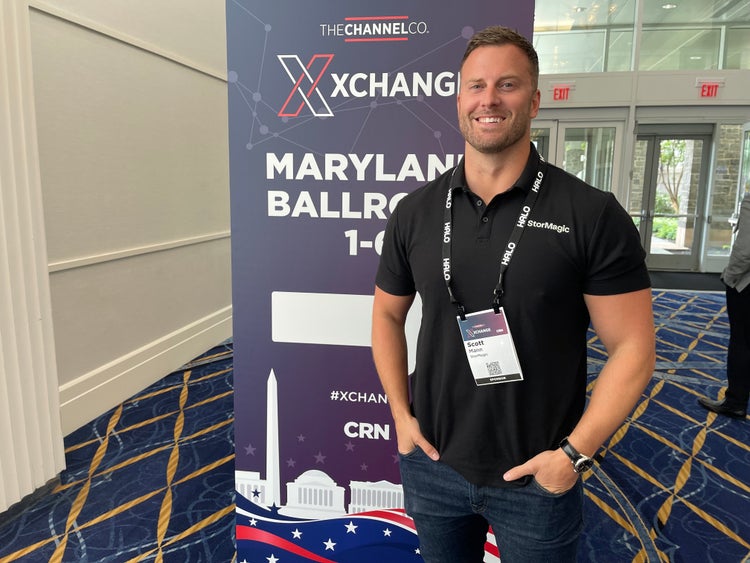
StorMagic is postioning its SvSAN software-defined storage and SvHCI hyperconverged infrastructure technologies as a flexible way for customers to lower virtualization and hardware costs without giving up infrastructure choice, said Scott Mann, global senior vice president of sales.
Mann said StorMagic’s software-only approach is a key differentiator because it can run across a wide range of Intel x86 platforms, giving partners more flexibility than offerings tied to narrower hardware requirements.
“We have a software-only solution that will run on pretty much any Intel x86 platform, and that’s truly agnostic,” Mann said. “I haven’t had somebody come to me and say, ‘I have this piece of hardware. Can the software run on it?’ and us have to turn it away.”
StorMagic’s foundation is SvSAN, a software-defined storage product Mann said dates back about 20 years. The company later added its own hypervisor, SvHCI, giving customers another option alongside VMware, Microsoft Hyper-V and Proxmox, Mann said. That added hypervisor flexibility also improves StorMagic’s economics, he said, particularly for customers looking for alternatives to higher-cost VMware deployments.
Mann said StorMagic is seeing pricing that puts its hypervisor technology at about one-third the cost of VMware while still preserving partner margin.
“The big play for the partners is that we’re one-third of the price without eliminating their margin potential,” Mann said. “We still have a healthy margin profile for them, and it’s a mature product set. We have to incentivize partners, promise they’ll make more money selling us, period.”
Because StorMagic can run on new or existing servers, Mann said partners can help customers modernize without forcing unnecessary infrastructure replacements. StorMagic can also complement other virtualization technologies. For instance, Mann said, SvSAN can help make the hyperconverged technology of Proxmox, a longtime StorMagic partner, viable in a two-node configuration, and help VMware customers shift some workloads to SvHCI with SvSAN underneath while keeping VMware where needed.
StorMagic’s current SvSAN focus is low-cost two-node infrastructure, though Mann said the company is looking to expand into larger clusters. He said the two-node model has become more attractive as customers focus on hardware costs and resilience.
“That two-node configuration has always been competed against,” Mann said. “But now two-node has never been so interesting because of the cost of hardware. But the way we do two-node, it’s just as redundant as anybody’s three-node solution.”
Looking ahead, Mann said StorMagic’s future is centered on its edge control solution, designed to manage and run a customer’s full infrastructure while complementing, rather than necessarily replacing, existing hypervisors.
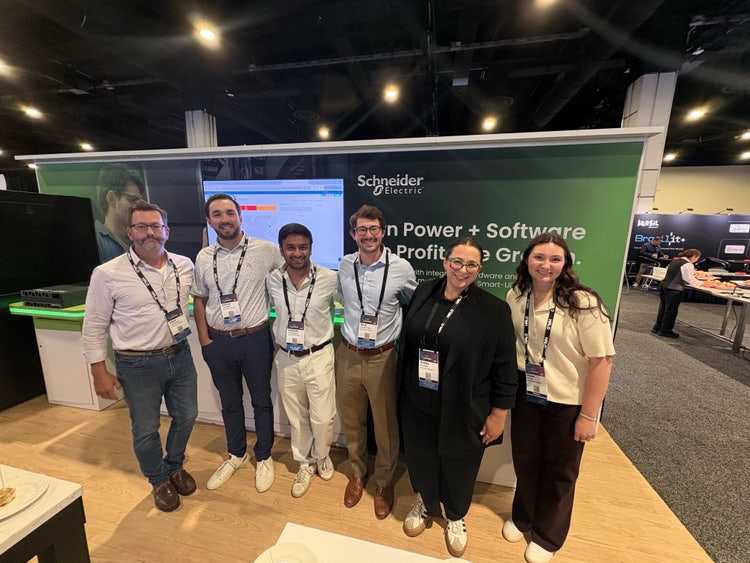
Schneider Electric: EcoStruxure
Schneider Electric is a major player of power, cooling, automation and data center infrastructure, with a growing focus on helping MSPs deliver managed infrastructure services. Through EcoStruxure IT and its partner programs, Schneider gives MSPs tools to remotely monitor customers’ power, cooling, environmental conditions and other physical IT infrastructure.
For MSPs, the opportunity is to expand beyond traditional IT management into managed power and infrastructure services. Partners can use EcoStruxure IT to create recurring revenue through monitoring, assessments and service offerings.
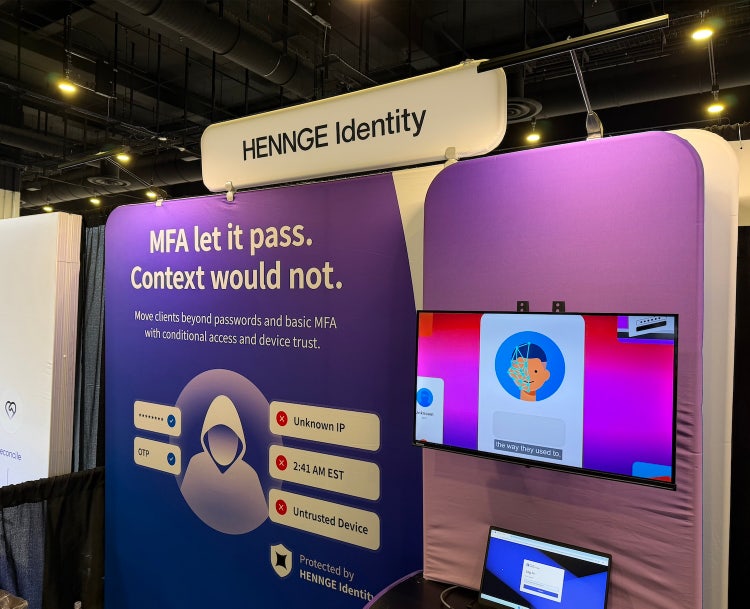
Hennge One Identity Edition
With its Hennge One Identity Edition, Hennge is seeking to bring smaller companies crucial identity protections such as conditional access, according to company CEO Robert Sharp. Similarly to how Okta is a third-party IDP (identity provider) for large enterprises, Hennge offers a third-party IDP for SMBs, Sharp told CRN.
Hennge also recognizes that for many MSPs looking to serve SMB customers, adoption is more of a commercial challenge than a technical one, Sharp said. For MSPs whose SMB customers are not accustomed to having a product for identity protection, “the No. 1 thing is, ‘How am I going to sell this?’” Sharp said.
Hennge is therefore focusing on helping MSPs to articulate the security risks addressed by the product and communicate its value to smaller customers that may be unfamiliar with identity protection, he said.

Monjur: MSP Contract Management
Monjur was busy at XChange August 2026 showing off its contract intelligence platform for MSPs. Co-founder and CEO Robert Scott told CRN the company provides a cloud-native platform that lets MSPs dynamically update their customer contracts through integrations with their PSA and configure-price-quote tool.
“When AI became available and accessible, we turned those cloud-based templates into AI knowledge bases and enriched them with things like plain English and alternative clauses,” Scott told CRN. “Now we have legal assistants that are helping MSPs with questions about contracts or automating routine legal workflows like redlining. Because when you go from legal template to AI knowledge base, you can enrich each clause with alternatives. So now our agreements have four limitations of liability in them, each ranked in terms of protection for the MSP.”
The platform lets MSPs select their services, develop their catalog, choose their vendors, and choose their jurisdictions from a regulatory perspective, and the system will build their agreements and on-board them to the Monjur platform in hours or minutes instead of 30 or more days, Scott said.
“We do this through a combination of software and AI,” he said. The contracts are built deterministically. We take all the things that you to tell us in order to make you new contracts.”
Monjur knows that MSPs are reluctant to move quickly to on-board to Monjur unless and until they are convinced their current agreements don’t protect them, Scott said.
“They have this strange attachment to these terrible contracts,” he said. “So one of the things that help us go from 30-plus days of on-boarding to hours or minutes is we do a complete MSA [master services agreement] review before the on-boarding. They already understand how we’re going to protect them better because we have an MSA scorecard that we make available to any MSP who wants to benchmark where they are against not only our model but also relative to their peers who have submitted.”
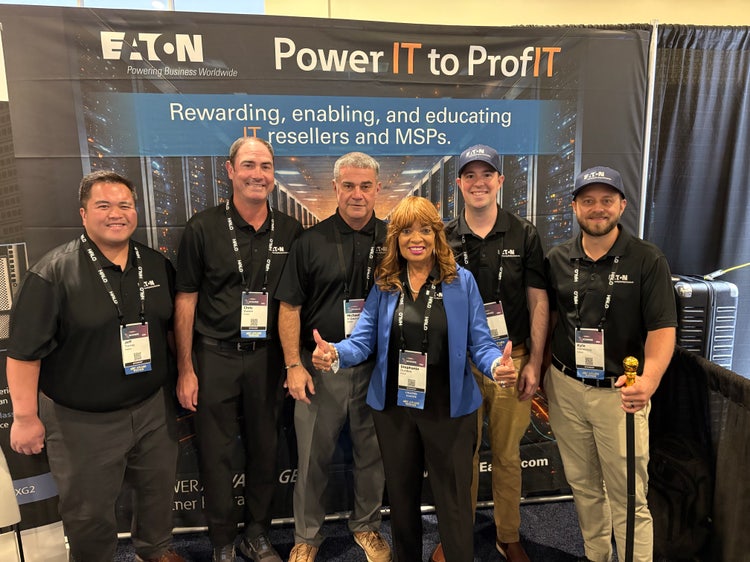
Eaton: Power Management Recurring Revenue
Eaton is increasingly positioning itself as a strategic technology partner for MSPs by helping them build recurring revenue services around power management. Its cloud-based platform and ConnectWise integration allow partners to remotely monitor and manage customers’ power infrastructure, turning power visibility and uptime into a managed service opportunity.
Its PowerAdvantage Partner Program further supports MSPs with training, sales resources, deal registration, marketing funds and partner support. Together, these help MSPs reduce downtime for customers, differentiate their offerings and create new recurring revenue opportunities around critical power infrastructure.
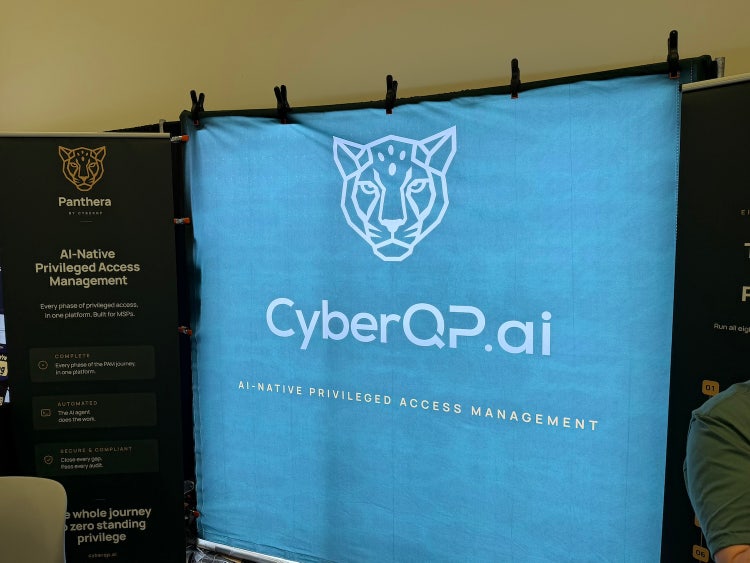
CyberQP Panthera
CyberQP is relaunching its privileged access management platform as Panthera, which unifies its QDesk and QGuard offerings, according to CyberQP co-founder and CEO Mateo Barraza.
The platform is now being deployed to internal customers and is expected to become generally available in September, Barraza told CRN.
A key advancement with the offering is its prompt terminal capability, which Barraza described as “a hybrid between a terminal window and traditional prompting.” The capability allows technicians to utilize privileged access capabilities and perform identity governance tasks right from the prompt terminal, he said.
Panthera is ultimately “an AI-native” privileged access management tool, which leverages an AI model that CyberQP has fine-tuned itself rather than depending on frontier models, Barraza said.
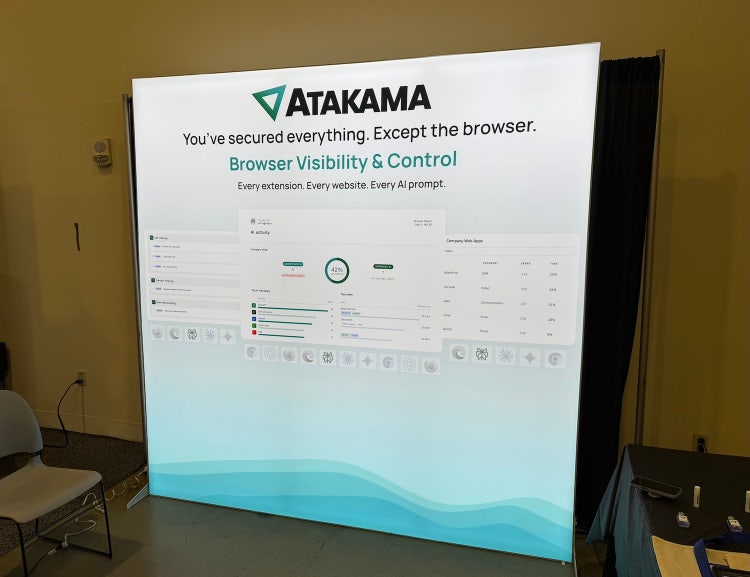
Atakama: Browser Security Platform
Atakama offers a browser security platform built specifically for MSPs, addressing a major gap in endpoint protection, according to CRO Scott Glazer.
“The browser running on the device is truly the new endpoint,” Glazer told CRN. “The gap that we solve for is, noting users spend 90-plus percent of their time in a web browser—that’s the same browser they use at home—and they have no visibility.”
Atakama provides visibility around user activity, risk, undesired usage and non-business usage, Glazer told CRN. The same platform also offers remediation capabilities such as blocking websites through DNS as well as data loss prevention (DLP) through restricting uploads, downloads and clipboard actions, Glazer said.
Ultimately, “if we don’t have any controls or visibility, then we’ve got this governance policy that’s not [effective],” Glazer said. “It starts with visibility.”