HPE’s Channel Strategy Evolves At XChange LATAM 2026 As Partners Move Closer to Customers
At XChange LATAM Southern Cone 2026, HPE networking leader Ramiro González explains how the channel model is evolving toward deeper collaboration, flexible consumption models and value-driven selling beyond price.
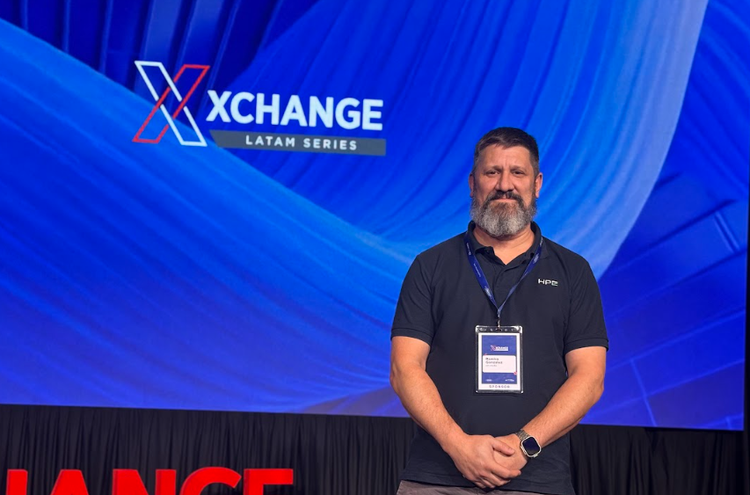
Vendors and partners at XChange LATAM Southern Cone 2026 agreed that the channel model is not breaking, but rather evolving toward more collaborative, value-driven frameworks.
Organized by The Channel Company and ITSitio Group, the event brought together key players from across the Latin American IT ecosystem, with discussions centered on how vendors and partners can generate tangible business outcomes in a changing market.
One of the clearest perspectives came from Ramiro González, business manager for Hewlett Packard Enterprise’s HP Networking unit, who outlined how HPE’s predominantly indirect model continues to adapt to new customer and partner demands.
“Basically, Hewlett Packard has a go-to-market strategy that is — we could say — 95% channel-driven, indirect, under our distributor ecosystem,” González said. “An event like XChange allows us to get closer to the ecosystem through which we are used to addressing end-customer projects.”
From Distribution to Joint Strategy
While HPE’s channel-first philosophy is well established, González stressed that the nature of those relationships is intensifying. The focus is no longer simply on enablement, but on coordinated execution.
“Always with the same approach that HP has: first doing the branding work, so that later, together with the distributor and the partner, we go after the accounts,” he said.
That model reflects a clearer division — and complementarity — of responsibilities, where vendors, distributors and partners operate as a unified team rather than isolated actors.
A Channel Model in Evolution
Debate over whether the traditional channel model is under threat has become common across the industry. González offered a measured response.
“I believe the channel model is evolving,” he said.
That evolution is evident in how HPE has simplified and consolidated its partner programs. González pointed to Vantage, HPE’s unified partner framework, which replaced numerous business-unit-specific programs.
“We used to have around 10 different programs per business unit, each with its own goals, and today everything is consolidated into a single one,” he said.
The shift, González emphasized, is being driven as much by end customers as by vendors themselves.
“I’m seeing that it is evolving based on how the end-customer business evolves,” he added, underscoring demand as the primary catalyst for change.
Partners Move Closer to the Customer
Another theme recurring throughout the event was ownership of the customer relationship. In an increasingly competitive market, partners are emerging as the primary interface with end customers.
“Today, the relationship with the customer is held by the partner, supported by the brand,” González said. “The partner is there every day and often solves end-customer problems that the vendor cannot solve.”
That day-to-day proximity reinforces the partner’s role as a trusted advisor rather than a transactional reseller, elevating its strategic importance within the ecosystem.
Selling Value Beyond Price
Despite the opportunities, challenges remain, particularly around how IT projects are scoped and evaluated.
“What concerns us most in the short term is trying to properly address projects and see them as such,” González said. “We are sometimes used to looking at cost line by line, peso by peso, and we don’t see the evolution of the business.”
To address that mindset, consumption-based models are becoming increasingly important. González pointed to HPE GreenLake as an example of how flexible pricing can help shift conversations away from upfront cost.
“It allows you to have pay-per-use costing so you don’t make an excessive upfront IT expenditure, and you can do it gradually as you consume the technology,” he said.
These models not only change how customers buy technology, but also how partners sell it — requiring new skills in financing, services and long-term consulting.
A Maturing Channel Ecosystem
More than signaling disruption, the first day of XChange LATAM Southern Cone 2026 highlighted a maturation of the region’s IT ecosystem. Partners are gaining strategic relevance as consultative players closer to the customer, while vendors like HPE are refining their partner models to support that evolution.
The result is an ecosystem operating under new rules, where collaboration is no longer optional — it is essential to capturing real business opportunities.
Desirée Jaimovich is Editorial Director of ITSitio.