Lenovo: Why Adding Services Is Key To Sustaining IT Channel Profitability
At XChange LATAM Mexico, Cecilia Szklowin explained how Lenovo supports its partners’ transformation through training, incentives, and sales tools. According to the executive, more than 85% of the company’s route to market goes through channel partners.
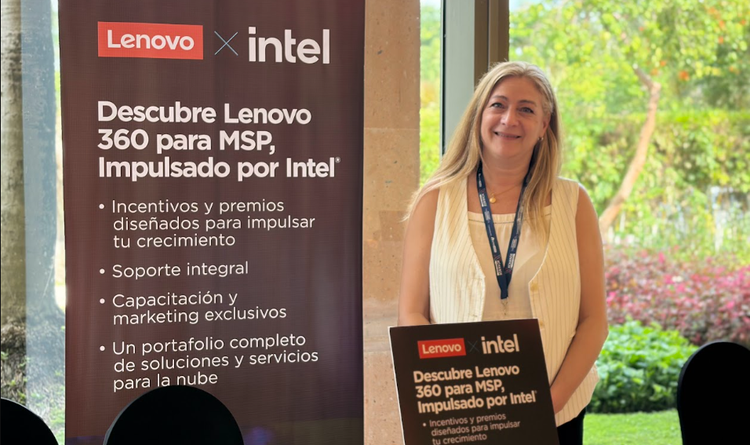
Device sales will remain part of the technology channel’s business, but adding services will be critical to sustaining profitability and competitive positioning. That was the message from Cecilia Szklowin, Senior Manager T2 Channels LAS Region & MX at Lenovo, during an interview with ITSitio at XChange LATAM Mexico, taking place October 7–9 in Riviera Maya.
The event brings together manufacturers, distributors, integrators, and managed service providers for business meetings, strategic discussions, and networking. In this context, Szklowin argued that technological change requires partners to reassess their commercial offerings and capabilities.
“I believe channel partners need to move toward a more services-oriented model, with everything this can offer both the end customer and the channel partner itself,” she said. Her assessment links this transformation to the need to address increasingly diverse demands and deliver added value.
Services to Protect Profitability
For Szklowin, adding artificial intelligence to the portfolio is not enough on its own. The opportunity also lies in providing support and services that help end customers.
“Device or box sales will continue to exist, but if channel partners do not evolve—especially with the development of technologies such as artificial intelligence—and do not start adding layers of services and different types of support for the end customer, they will not be able to maintain the same profitability or the same position relative to their competitors.”
This warning puts the business model at the center of the discussion: how to expand a product-based offering to build relationships that continue after the sale. From this perspective, training, support, and financing options are among the tools that help partners serve their customers.
Lenovo’s global strategy also follows this direction. Its Lenovo 360 for Services framework aims to help partners attach services to sales and transition toward recurring revenue models. It includes training, sales tools, and incentives to develop these capabilities.
Incentives Tailored to the Business Model
Szklowin is responsible for Lenovo’s Tier 2 reseller strategy, two regional incentive programs, and the Lenovo Channel Center, which serves approximately 9,000 channel partners across Latin America, she explained.
This diversity calls for tailored support. “However, as the market evolves and the different pathways we manage globally change, we understand that each channel partner has different needs.”
The executive said Lenovo designs incentives according to each partner’s profile and business model. She mentioned Lenovo 360 Engage, aimed at value and volume partners, and Elevate, launched in April of the current fiscal year. She also highlighted initiatives for specialists in workstations and collaboration products. In addition, she mentioned Lenovo 360 Boost, which, she explained, is aimed at MSPs, or managed service providers.
The goal is to offer tools suited to each business. During the interview, Szklowin focused on team training, faster quoting, and shorter delivery times.
Training and Long-Term Relationships
Among the examples, she mentioned Top Choice Express for infrastructure and AI PCs as sources of business opportunities. She also highlighted training sessions for partners’ sales teams and LEAP, an incentive program for their salespeople.
Developing these capabilities rests on a relationship Lenovo considers central to its business. “More than 85% of our route to market goes through channel partners; hence the importance we place on this relationship and on growing together.”
For next year, the priority will be to expand the network and grow alongside its members. This means addressing both commercial needs and the readiness of the people who bring solutions to customers. In her view, trust and person-to-person interaction are essential to building medium- and long-term business relationships as technology, trends, and market demands change.
XChange also offers an opportunity to meet new partners and companies specializing in particular areas. For Szklowin, these interactions help identify how to combine available solutions and programs with each partner’s capabilities.
“We have solutions and programs: the challenge is how to start a relationship of mutual value so we can pursue more business opportunities together.”
Desirée Jaimovich is Editorial Director of ITSitio.