PartnerTECH At XChange LATAM Mexico 2026: The Channel Is Accelerating Toward Managed Services
Alma Ortiz, CEO of PartnerTECH de México, discussed how customer demands are changing, why financing is becoming increasingly important, and which business model could shape the channel's direction in 2027.
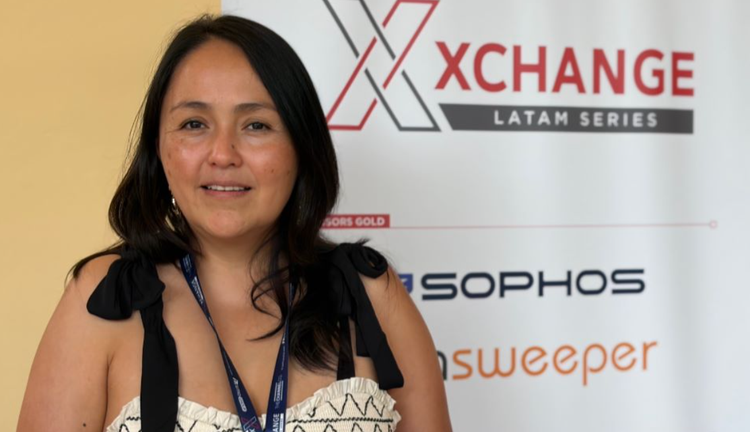
Mexican customers are entering business discussions better informed, with higher expectations and a growing need to access technology without making large upfront investments. During XChange LATAM Mexico 2026, PartnerTECH México focused on how this shift is forcing channel partners to rethink their business models and move toward offerings built around services, financing, and long-term relationships.
ITSitio spoke with Alma Ortiz, CEO of PartnerTECH de México, about the challenges currently facing the ecosystem and the opportunities emerging as businesses look ahead to 2027.
The company describes itself as a technology partner for organizations, with an approach focused on addressing each company's specific needs rather than simply selling products. “Our goal is to provide each of our customers with the knowledge and solutions they need to drive their businesses forward,” Ortiz explained.
This perspective captures one of the key changes affecting the channel: technology remains essential, but differentiation increasingly comes down to how solutions are built around the customer.
Better-Informed Customers Are Changing Channel Dynamics
The relationships between vendors, distributors, systems integrators, and end users are evolving. Companies now have access to more information about technologies, trends, and available alternatives, forcing channel partners to speed up their processes and raise the bar on their offerings.
Ortiz believes this transformation must involve the entire value chain. “Today, more than ever, our customers are well-informed and at the forefront of technology. If we bring all of this together to create value and build strong synergies, we achieve our goal: helping every business grow with what it actually needs,” she said.
For PartnerTECH, the opportunity is not about adopting technology simply to follow a trend. The challenge is to identify what each organization truly needs and develop a solution that can support its growth.
This also requires more agile processes. When customers are better informed and can easily compare solutions, response times and the ability to integrate different offerings become an increasingly important part of the customer experience.
AI Is Growing, but Financing Remains a Key Challenge
Artificial intelligence dominates much of today's technology conversation, but Ortiz sees a more immediate obstacle that continues to influence purchasing decisions: access to financing. “There's a lot of talk about AI, but I still see financing as the biggest challenge,” she said.
Adopting new solutions requires investment, particularly as companies seek to keep their infrastructure up to date without committing large amounts of capital.
In response, the technology ecosystem is developing new alternatives to make technology more accessible.
“There are financing companies providing us with greater financial leverage so our customers can access the services they need,” Ortiz explained.
This helps explain why As a Service models are gaining traction. Rather than making traditional upfront purchases, organizations can access infrastructure, devices, and technology capabilities through more flexible consumption models.
According to the executive, these options make more advanced products and services accessible to companies that might otherwise face barriers under conventional purchasing models.
From Selling Technology to Building Services
For PartnerTECH, the shift toward service-based models represents much more than a new way of selling.
This approach allows organizations to start with a given technology foundation and add capabilities as their needs evolve. For partners, it also creates opportunities to develop longer-lasting customer relationships.
Ortiz identifies managed services as one of the main opportunities for 2027. “The business model needs to be based on managed services, because that's what our customers are asking for,” she said.
The executive also highlighted the potential financial and tax advantages these models can offer companies.
The key difference from traditional sales lies in continuity. Instead of closing a one-time transaction, partners can support customers as their technology environments evolve and introduce new solutions on top of an existing foundation. “It allows us to keep adding layers of solutions to build a robust foundation that customers can then use to drive their businesses forward,” she explained.
This reflects a broader trend across the channel: recurring revenue and ongoing customer support are becoming increasingly important compared with purely transactional business.
The Value of the Ecosystem and Partnerships
Another point Ortiz highlighted during XChange LATAM Mexico 2026 was the opportunity to connect stakeholders who typically occupy different positions in the market.
For the executive, bringing vendors, partners, and other ecosystem participants together makes it easier to discuss what is happening in the market and identify end users' actual needs. “When you can spend time with different people who face the same challenges, those conversations become easier. What I really like is that they bring vendors and partners like us together to talk about the market itself, what's changing, and what our end users need,” she said.
Beyond providing opportunities for commercial networking, these events can serve as a platform for identifying complementary capabilities, uncovering business opportunities, and learning about new offerings.
Ortiz also highlighted the participation of vendors that had not attended previous editions and the growth of the community surrounding the event. “The XChange community is growing, and we really appreciate that as a channel partner because it also gives us an opportunity to network in a safe, high-quality environment,” she added.
2027: More Services and Long-Term Relationships
PartnerTECH's perspective points to a scenario in which the channel's main challenge is not simply adopting new technologies.
Customers expect speed, expertise, and flexibility. At the same time, budget constraints make it necessary to find ways to make technology transformation financially viable.
Against this backdrop, financing, As a Service models, and managed services are becoming part of a unified strategy.
The opportunity for partners lies in using these tools to build more adaptable offerings and establish relationships that evolve alongside each organization's needs.
Desirée Jaimovich is Editorial Director of ITSitio.