Service Providers In Latin America: More Complexity, More Automation, And New Risks
Agustín Beveraggi, General Manager for Spanish-speaking Latin America at Acronis, explained during XChange LATAM Mendoza that one of the biggest challenges for service providers is the growing attack surface and the diversity of technologies they must manage.
Today, the technology business in Latin America is going through a turning point. The combination of artificial intelligence, cybersecurity, and service-based models is reshaping not only the offering, but also the role of partners, distributors, and service providers across the region.
According to estimates from firms such as IDC, the IT services market in Latin America continues to grow steadily, driven by cloud adoption, automation, and cybersecurity solutions. However, this growth also comes with increased operational complexity, which has become one of the main challenges for the ecosystem.
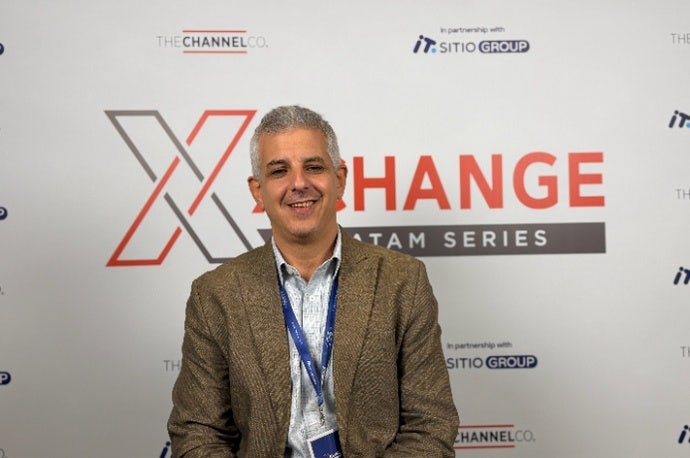
Agustín Beveraggi (pictured above), General Manager for Spanish-speaking Latin America at Acronis, explained during XChange LATAM Mendoza that one of the biggest challenges for service providers is the growing attack surface and the diversity of technologies they must manage.
As he detailed, clients now operate in highly fragmented environments, with multiple clouds—public and private—hybrid infrastructures, and various management tools. “Typically, a client has multiple operational stimuli, multiple cloud infrastructures… a very high level of heterogeneity,” he said.
This reality is amplified when service providers manage multiple clients simultaneously, exponentially increasing complexity. Added to this is a traditional approach based on accumulating tools: backup, security, and management solutions that are not always integrated.
“The result is a heterogeneous set of tools that is very difficult to manage: multiple alliances, certifications, knowledge requirements, and licensing models,” Beveraggi explained. At the same time, cybersecurity threats continue to evolve, fueled by artificial intelligence and models such as ransomware-as-a-service.
Consolidation and automation: what the market demands
Faced with this scenario, market demand is aligning around a key concept: simplification. Beveraggi noted that service providers are increasingly looking to consolidate tools and operate on integrated platforms that allow them to scale.
“What they are looking for is to consolidate fewer management tools that can address that heterogeneity, powered by artificial intelligence and automation,” he said.
This shift responds not only to technical needs but also to business logic. Operational efficiency has become a key differentiator in a market where margins are tightening and competition is intensifying.
Beyond technology, Beveraggi emphasized that transformation also depends on talent development. He highlighted the importance of enablement and training as part of supporting partners.
“We work a lot on training, expanding their knowledge, and helping them stay on top of trends and new threats,” he explained. This approach aims not only to improve solution adoption but also to strengthen the channel’s value proposition.
According to the executive, the challenge lies in ensuring that technology, knowledge, and teams work together to solve real customer problems in a constantly evolving environment.
Artificial intelligence: opportunity and risk
Artificial intelligence stands out as one of the main drivers of change, but also as a source of new risks. Beveraggi warned that AI is transforming not only solutions, but also threats.
“Artificial intelligence has reached not only solutions, but also the threat landscape,” he said. This forces the entire value chain—from vendors to partners—to adapt quickly.
From the channel’s perspective, the shift is also evident. Liliana Elizabeth Buso, Sales Director at LicenciasOnline, explained that technology consumption in Latin America is moving toward a service-centric model.
“The market has changed, is changing, and will continue to change. Today, consumption is driven by three factors: integrated security, service quality, and process optimization,” she said.
This transformation directly impacts the traditional business model, where on-premise license sales are losing ground to managed services, subscription models, and cloud-based solutions.
As a result, the relevance of service providers, integrators, and Everything-as-a-Service (XaaS) models continues to grow, enabling companies to adapt more quickly to market demands.
Creativity as the new margin
For Buso, differentiation now lies in creativity applied to services. “Today, margins are in the creativity you can add to the service you provide,” she said.
This creativity can take the form of process automation, solution integration, or improvements in customer experience. The key lies in building more comprehensive value propositions, where technology is only part of the equation and service becomes the true differentiator.
However, not all market players are moving at the same pace. One of the main risks, according to Buso, is failing to adapt to new trends.
“The risk today is not keeping up with artificial intelligence and process automation,” she warned. This is compounded by a lack of maturity in some segments of the channel when it comes to integrating these capabilities into their offerings.
In many cases, there is still a gap between what is sold—concepts such as AI or cloud—and what is actually implemented operationally.
What’s next: efficiency, platforms, and new revolutions
Looking ahead, efficiency is emerging as one of the most important values in the technology business. In this context, companies are increasingly investing in platforms that centralize management and optimize service consumption.
Buso noted that her organization is working on evolving its online ERP and smart hub to improve business management. “Efficiency is one of the most important values of this era, and it will continue to be,” she said.
At the same time, emerging technologies such as robotics are beginning to consolidate as the next wave of transformation, although they are still evolving.
In this context, strategic partnerships play a fundamental role. Beveraggi highlighted the joint work with LOL as an example of how vendors and distributors can drive channel development in the region.
It is a model based on proximity, training, and support, with the goal of helping partners build stronger offerings tailored to current market needs.
How to participate in XChange Latam
For those looking to be part of this ecosystem and take advantage of networking and business opportunities, XChange LATAM is aimed exclusively at professionals in the technology channel, including distributors, resellers, integrators, and service providers with decision-making power or influence in purchasing technology solutions.
The process begins by completing the official application form, where interested participants must provide information about their company and professional profile. Once submitted, the organizing team evaluates each application to ensure participants meet the event criteria and to maintain a high-value environment.
For technology partners, this step is essential, as it allows the XChange team to align their profile with event objectives, participating brands, and key networking spaces such as boardrooms. The process is fully confidential and designed to ensure a personalized and strategic experience.
If you are part of the technology channel and have influence over purchasing decisions, you can apply by completing the form. The team will evaluate your profile to integrate you into the most relevant networking spaces.
Desirée Jaimovich is Editorial Director of ITSitio.