StorMagic CEO On ‘Massive’ VMware Migration ROI, Revamped Partner Program and Needed AI Kill Switch
StorMagic CEO Susan Odle talks about the company’s strategy of migrating VMware customers to StorMagic, the supply chain and hardware crisis, innovation, a revamped partner program ahead and much more.
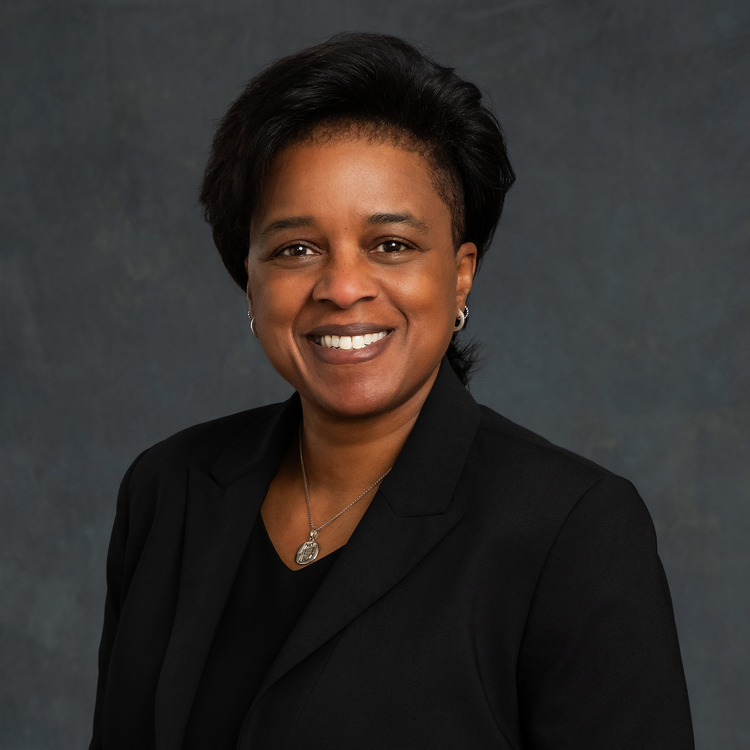
StorMagic CEO Susan Odle is bullish about migrating more VMware customers over to StorMagic as the edge computing superstar doubles down on innovation and partner investments.
“When Broadcom acquired VMware, we saw an opportunity to help the market with an HCI alternative that’s built on the same IP as our SvSAN storage solution,” said Odle during an on-stage interview with CRN during the company’s 2026 XChange Best of Breed event Monday in Atlanta.
“We’ve been around for 20 years, purpose-built from day one for edge virtualization,” the StorMagic CEO said. “We were ahead of our time for years. The market has finally caught up to us.”
[Related: 11:11 Systems CEO On Buying IBM Cloud Customers For VMware Charge]
When asked what percentage of VMware vSAN customers she thought would be better served by StorMagic, Odle said, “All of them.”
In a riveting onstage interview with CRN Executive Editor Jennifer Follett and Executive News Editor Steven Burke, Odle explains StorMagic’s VMware migration strategy, revamping its partner program for the new year, the company’s biggest growth opportunities and StorMagic’s plan to combat the market’s hardware price increases and supply chain issues.
What’s your assessment of the VMware customer sentiment right now, and how open are customers to moving off of VMware?
The customer sentiment is concern for predictability.
So even if they negotiate a good renewal this time around, they know it’s not going to be the same next time around.
So I think there’s a lot of fear out there about continuing on through another cycle of renewal, especially when they’re getting no breaks on the multiple that they’re being presented with.
Even if they are OK and they can find a budget for this VMware renewal, what’s going to happen the next time?
That uncertainty is really troubling for a lot of CIOs, and those are the conversations that we’re in.
If people are still on the fence or if they’ve got time to think about it a little bit longer, then great. But between now and the end of 2028 is when the vast majority of those that made the decision to leave will be leaving.
Within your own partner base, are a lot of the partners that you’ve picked up still maintaining their VMware relationships, or are they out of it?
Most of them have been deauthorized [VMware partners].
Click through to read more from Odle’s on-stage interview with CRN.

What do you think are going to be the real game-changing growth opportunities for StorMagic as we look ahead?
This is an important thing right now because of the cost of hardware and the lack of supply today.
For hardware resellers, how many times have you had to go back and requote to customers because of the 300 percent or 700 percent increase?
We’ve got customers that had a typical server that they would buy again and again and again for $7,000 a server [now go] up to $21,000 a server for the same box. I mean that’s insanity, right?
So right now, on the hardware side, you can have a software sale with StorMagic—getting them off of VMware on the existing hardware. We run any x86 hardware.
So there’s an opportunity for you to help your customers avoid the new multi-year renewal on the existing fleet, which then positions you to get the fleet refresh when that happens. That’s happening everywhere within our customers.
[American convenience store chain] Sheetz, as an example, that’s exactly what they did. And that helps you build trust by being able to help them now, even though you’re not getting that fleet refresh right now.

Talk about the ROI and cost savings you’re seeing for customers. For Sheetz, you replaced VMware across 830 Sheetz retail locations. Can you just talk a little bit about the ROI and the economics of that deal?
What I will say is they were an existing SvSAN customer, so obviously good trust with us as a vendor. But they had a couple of requirements. One was remote deployment and remote replacement, and that was huge.
If you’ve got 830 stores, setting a technical [requirements] and physically doing that migration is very expensive.
So we were able to automate. We did a lot of lab testing with them, and the investment up front to make sure we understood the migration what was needed. We enabled those stores to be migrated in four months. We did 200 stores per month—100 percent remote.
So the ROI is massive.
On top of that, if you think about the cost savings over the cost of VMware at the edge—that’s a piece as well. So you’ve got the reduction in licensing costs as well as the time to deploy and maintenance.
They were a very happy VMware customer, though, in the data center. It’s a good example of coexistence. VMware in the data center. StorMagic at the edge. That works.
It’s about the deployment of the right technology at the right place.

Can you just talk about the cost savings that you’re seeing when you bring StorMagic to the edge versus a VMware licensing?
So at minimum, the third node. So VMware running on two nodes with high availability is not common. It’s super rare.
So if you have to run on three physical nodes—I gave you the example before [of a typical] $7,000 [server] that turned into $21,000. If you don’t have a third physical node, that’s a third of savings just on that level.
Our high availability has a virtual witness, it can live anywhere.
So just on the hardware front alone, there’s a 30 percent savings.
We’ve heard there’s a multiple increase of the VMware costs as well.
So you can do the math in your head, if you take away the third node and you take away the inflationary cost of VMware, the ROI is significant.
Since Broadcom acquired VMware and overhauled its partner strategy, changed prices and pared down their offerings, walk us through the impact it’s had on StorMagic?
Well, it’s generated a brand-new opportunity for us because two and a half years ago, we didn’t have an HCI solution, and now we do. I’m extremely proud of our engineering team.
Number one, we didn’t come to market with a brand-new product and brand-new IP, because it would take quite a long time for our channel partners and customers to trust that code. So it’s built on top of our SvSAN, 20-year-old code that’s just been tried and tested in the market for a long time. … It’s just ridiculously reliable.
So we built our hyperconverged solution on top of that.
So it opened up a whole new market for us, which we needed to do because I think if we had stayed in just storage, we would have a problem right now.
It’s a growing business, but we’ve built trust in market with the quality of our code and the fact it’s tailor-made for the edge.
If people need an air-gapped virtualization platform where there’s no connectivity to the outside network, we are just tailor-made for that.
We’ve got edge control as our fleet management tool. So it’s one single pane of glass to manage your fleet. We’re releasing an ‘anywhere edge control’ next month to manage availability, which means you can manage your fleet on-box, in the network, on the cloud.
No one else has that right now—other than our friends at Nutanix, who have a similar solution. But from an edge-specific point of view, we’re the only one that has it on-prem. That’s huge flexibility.

What percentage of VMware vSAN customers do you think would actually be better served by StorMagic?
All of them.
I think Broadcom has made clear the customers that they want to retain.
There was an article that came out last week that just talked about the percentage of [current VMware customers who] are seriously looking at making the move, and the percentage is pretty high. And Broadcom’s OK with that. So we’re all in it together.
The ones that are really considering or have made the decision to move and are evaluating, need to just evaluate based on their requirements. If a potential customer likes a fixed appliance because it’s easy, then there are vendors out there that only sell fixed appliances. If that’s a good fit, go in that direction.
Our niche is edge, purpose-built, small footprint, any form factor, flexibility of all the components that surround it. Let’s have that conversation.
---

What investments is StorMagic making in partner incentives and go-to-market model as we head into the new year?
Our biggest investment under my leadership is Scott Mann.
He’s just gold. He’s been a Channel [Madness] champion two or three years over the last five. So bringing him in and running global sales has been a major change for us. He’s well-known globally in the industry.
We’re also keeping our PR budget stable, and we’re moving more money into MDF funds for our partners.
I do have a long background in channels. I’m not just a CEO saying it.
I spent 10 years dedicated to channel. So we believe that the funds need to go to our partners who are invested in us and invested in the edge market, in particular, and we will continue to plow more and more money into MDF.
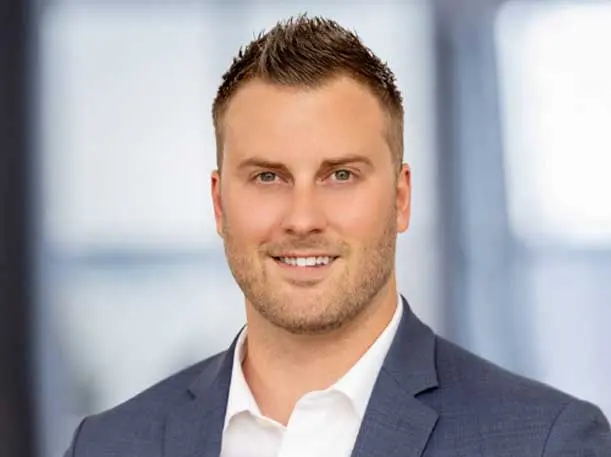
Talk about the impact Scott Mann has had and what goals did you put in front of him?
I did a really bad job as an interim CRO. I was wearing two hats at the same time until Scott came in. So I think he just understands where the results happen again. He brings with him a ton of relationships and trust. That’s huge.
But then he also knows how to get the noise out of operations within the sales team. So he’s revamped the mindset of our field sellers to be focused on the right things, the right activities, which are very different in Germany than they are in the U.S., than they are in Canada, than they are in the U.K. So really getting the team focused on the right activities and making sure we’re prioritizing the partners that are in the same space and care about the same goals that we do.
So you will see a revised channel program for the new year.
If you’re interested in working with us now, the time to have those conversations and influence where it’s going.
What would you say are going to be the high-level areas of focus with the revised channel program?
So more tiering where there’s more MDF based on achievement of goals over time.
Like you can’t have five-year targets for a channel partner when they’ve just come on board. But are they making the right steps through the onboarding process, and are we working collaboratively together?
So I think you’re just going to see clearer tiering and benefits and rewards based on those tiering.

Why is the edge so important right now?
AI is driving a lot of that. You can’t have latency between the data center and the operations at the edge.
So the biggest one right now is computer vision—whether it’s retail and surveillance or manufacturing and productivity on the line.
Workplace safety, for example, AI being able to say, “Does that person have steel-toe shoes on? Are they wearing their helmet at the right distance to a conveyor belt?”
You can’t have a lag of 30 seconds up to the data center and then that person ends up injured, right?
So that is why AI and the edge go hand in hand.
You need to have that data security, that ability to make decisions at the point of operations has definitely moved edge into its prime as a market segment.
The rise in memory prices and the supply chain crisis is hitting everyone. What are you seeing at the edge when you’re bringing StorMagic’s solutions to customers?
Well, the pressure has always been crazy at the edge because it’s not the data center, so it’s always been like the poor child. You know, “Well, how much tech do you need at the edge? You don’t really need that much. There’s no IT people there.”
So the edge has always had to stay up and running, but at lower price points. So that foundational cost pressure remains.
Now on top of it, they can’t do the refresh cycles that would pull innovation to the edge. So typically, you’d have, “We’ve got a three-year refresh or a five-year refresh. We’re now going to deploy this new workload. It might be a POS in retail. It might be computer vision for surveillance and manufacturing.” Whatever it is. Now, those systems are being installed.
So people need to think about, “How can I leverage my existing fleet so that I don’t have to slow down innovation?”
The other thing that’s happening again, back to Broadcom-VMware, those customers that are looking to move off of VMware should be looking at the data center and what technology is right for the data center versus what might be right for the edge.
And not necessarily think about one vendor. What’s purpose-built and is going to solve problems in one environment versus the other. It’s typically not the same, and I would argue it’s not the same technology in both places. So there’s economies of scale.
If you have a blended solution, number one, you’re not locked into one vendor. And number two, your budget overall is probably going to be better. So you can take the delta and maybe invest in some new innovation in different areas.

So this economic pressure is acting as a tailwind for StorMagic? Have you seen that?
Yes, 100 percent.
Again, the rip and replace on existing hardware.
Or another scenario is modernization where VMware isn’t.
So there are still customers out there that haven’t standardized in a virtualization way. So if you want to help them mature, then you can get to a hyperconverged infrastructure solution on existing hardware.
That’s an entry point without having to look at a server being upgraded—and that’s SMB all the way to enterprise. It doesn’t really matter.
You could have a mom-and-pop shop that’s got literally one physical node running the cash register, running on some operating system that’s not secure. If you want to move them to something that is secure and scalable, maybe they’re going to grow and even on two nodes. We can help deploy on that one-node very small and scale over time.
So flexibility, optionality, that’s a bread-and-butter StorMagic.
We’re lucky because we’re 20 years old ahead of our time.

Microsoft CEO Satya Nadella recently called for an emergency-brake control that lets humans stop an AI agent, almost like an AI kill switch. What’s your opinion of this emergency brake or an AI kill switch? Do you think it’s needed?
I would say, why the hell didn’t they think about that earlier on in the process?
I’m serious.
With the [race] to build this technology, why didn’t they think about that before now. But I’m glad. I mean, if they are now going to finally address it, that’s a good thing.
The technology is very much advanced.
I think that there are very smart individual people that can do pretty powerful things with the tools that are out there. But it’s better late than never.
I’m always forever an optimist, but I think this should have happened a long time ago.