SUMaTO At XChange LATAM Mexico 2026: AI Enters A More Demanding Phase
Andrés Lozada, CEO of SUMaTO, explained why Mexican companies can no longer treat artificial intelligence as a simple technology experiment and what they need to bring AI into production and achieve tangible results.
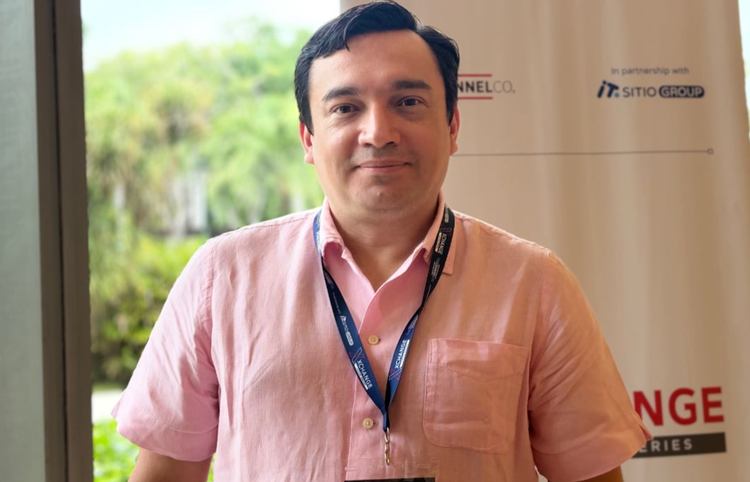
Artificial intelligence has become a central topic in technology discussions among Mexican companies, but the challenge is beginning to shift. After an initial phase of experimentation, the focus is now on turning those initiatives into projects that can operate at scale, deliver results, and remain economically viable.
During XChange LATAM Mexico 2026, SUMaTO focused precisely on this transition. ITSitio spoke with Andrés Lozada, the company's CEO, about the market's maturity, the obstacles still holding back adoption, and the opportunities emerging for the channel.
SUMaTO was founded in Colombia ten years ago as a technology consulting firm and began operating in Mexico two years ago. Its offering spans strategic planning, design, and architecture, as well as support throughout the implementation process. “We specialize in strategic technology planning and support customers from understanding the problem and developing the design and architecture through the entire implementation process,” Lozada explained.
The company's expansion into Mexico was a strategic decision. In Lozada's view, the country offers some of the most attractive conditions in Latin America for developing larger-scale technology projects.
Mexico Raises the Complexity of Technology Projects
SUMaTO's first two years of operations in Mexico have exposed the company to a market that differs from others across the region.
The difference is not simply the size of organizations, but also the sophistication of their processes and the infrastructure they need to manage. “Mexico is definitely Latin America's technology hub in terms of capabilities, company size, expertise, and capital,” Lozada stated.
This environment creates more complex projects and requires providers to understand local market dynamics before replicating models used in other markets.
According to the executive, SUMaTO has spent these two years learning about and getting to know the Mexican market, while also identifying significant growth potential.
“Because of their size and structure, companies in Mexico have a much higher level of maturity in technology and processes, along with greater complexity,” he added.
AI Dominates the Agenda, but Preparation Comes First
Within this more sophisticated market, one trend stands out above the rest: artificial intelligence.
Lozada says that over the past two years, virtually every technology project has begun incorporating some form of AI. However, he cautions that enterprise adoption requires much more than purchasing a tool with intelligent features. “Everything is revolving around AI, from implementation to end-user adoption. But the most important factor is adoption in corporate environments,” he said.
Before deploying these projects, companies must address issues related to data exposure, security, governance, and data sovereignty.
This groundwork is what allows artificial intelligence to deliver automation and genuine productivity improvements rather than simply becoming another layer of software.
Buying AI-Powered Software Doesn't Mean Having an AI Strategy
One of the problems SUMaTO identifies in the market is the gap between adding artificial intelligence features and developing a genuine project built around the technology.
Many companies have already purchased applications with AI capabilities, but that does not necessarily mean they have defined what they want to achieve or how they need to prepare their data. “Many customers are buying software with some artificial intelligence capabilities, but that doesn't make it an AI project,” Lozada explained.
In his view, the process needs to start with more fundamental questions: What information will be used? What risks are involved? What specific problem needs to be solved? And what results does the organization expect to achieve?
Specialization is also becoming increasingly important.
“Today, there's AI for everything, but what we're looking for is AI with specialized knowledge of a particular niche or industry. That can deliver tremendous value to customers,” he said.
The difference lies in moving beyond general-purpose solutions toward models capable of understanding the specific processes of each business.
The Challenge Is Turning Expectations into Concrete Use Cases
Another obstacle arises when companies expect a single implementation to solve too many problems at once.
Lozada explained that part of the consulting process involves turning those expectations into more specific, measurable objectives. “When you talk to customers about AI, they often want it to do everything: implement things automatically, automate processes, and handle all kinds of tasks. Our goal is to help them develop specific processes and achieve specific results,” he said.
Defining the scope in this way can be critical to avoiding projects that are difficult to manage and to measuring return on investment more clearly.
It also helps pave the way for the next phase of enterprise AI: agentic systems, which can do more than answer questions. They can also execute tasks and actively participate in business processes.
Costs Can Sink a Technically Successful Project
Financial viability is another critical factor.
A project may work from a technical standpoint and still fail if its resource consumption exceeds what the organization can economically justify. “We've seen many projects fall apart because the financial implications weren't properly understood. The technology works, the processes work, but in the end, you get a huge bill for tokens, credits, or software usage that simply kills the project,” he warned.
That is why financial evaluation must be part of the design process from the outset.
The challenge for 2027 will be to move toward more mature adoption, with strategy, data, infrastructure, and costs all considered as part of the same assessment.
XChange LATAM Mexico and the Opportunity to Combine Expertise
For SUMaTO, another key takeaway from XChange LATAM Mexico 2026 concerns collaboration among channel partners.
Systems integrators often work across multiple industry verticals and technologies, but few can specialize in all of them. Partnerships can help the ecosystem fill those gaps. “There are areas where we aren't experts, and here we have the opportunity to meet companies that are,” Lozada said.
These relationships can turn opportunities that might otherwise be lost due to a lack of in-house capabilities into projects developed jointly.
“Those partnerships and synergies can make it possible to develop business opportunities that would otherwise be lost because of a lack of knowledge or the absence of a nearby strategic partner,” he added.
For SUMaTO, growth in the Mexican market in 2027 will therefore depend on two parallel developments: moving artificial intelligence from expectations to concrete projects and strengthening an ecosystem capable of bringing different areas of expertise together. Technology will continue to advance, but the real advantage will belong to those who know how to turn it into sustainable business results.
Desirée Jaimovich is Editorial Director of ITSitio.