What’s Next For AI, Security And The Channel: 10 Expert Takes
Vendor executives reveal the AI, cybersecurity and infrastructure trends reshaping the market—and the biggest opportunities they see ahead for solution providers.

AI might be changing the rules of the game, but the channel winners will be the solution providers that can translate that disruption into real business outcomes for customers.
That’s according to vendor executives speaking this week at the 2026 XChange Best of Breed conference in Atlanta, who focused on both the promise and the risk that AI brings for partners as well as customers. AI is transforming markets, compressing the value of routine work and forcing companies to rethink how they secure applications and data. At the same time, the need for the infrastructure that is foundational to AI—from distributed data centers and liquid cooling to modern compute, storage and cloud platforms—is creating new opportunities for savvy partners.
Security and resilience were also prominent themes. Executives called on solution providers to help customers govern AI usage, contain applications, protect identities and prove they can recover clean data after an attack.
They also argued that solution providers need to become strategic advisers, bring new services such as virtual CISO offerings to market and focus pricing conversations on outcomes rather than tools or hours.
From new AI trends to views on the competitive landscape, here’s a roundup of some of the most prescient ideas shared at CRN parent The Channel Company’s 2026 XChange Best of Breed conference.
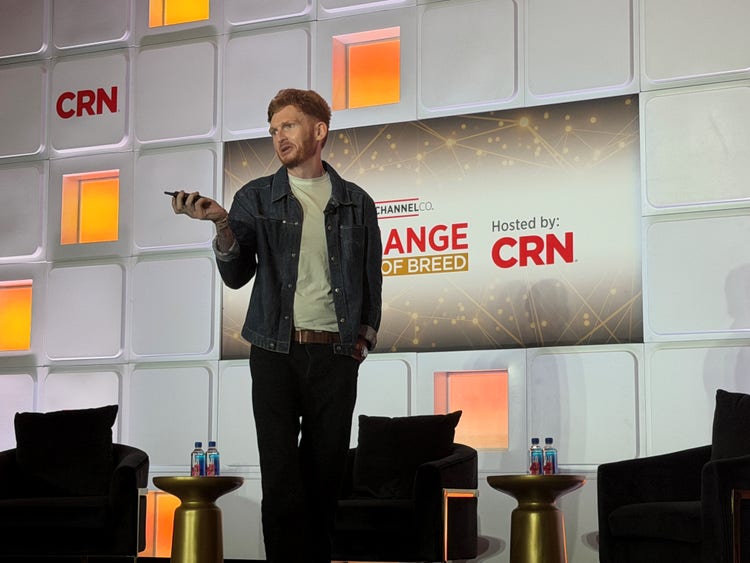
Halo: Tim Barton-Wines, CCO
“Our main competition is ServiceNow. I haven’t really thought about the others really in the last 12 months, and we’ll do 100 percent feature parity of ServiceNow. The depth of the application, what you can do as a smaller team through to a large team, for the level of automation and service, and just care and feel that you can deliver to customers at a comparable price with not much resource needed is just unprecedented. … I was working with a team who was about 300 staff who moved to Halo. You could be a five-man team or 1,000-person team, but they had about a 90 percent reduction in cost, and they didn’t lose any functionality, which is basically aimed at solution providers and what they’re trying to achieve.”
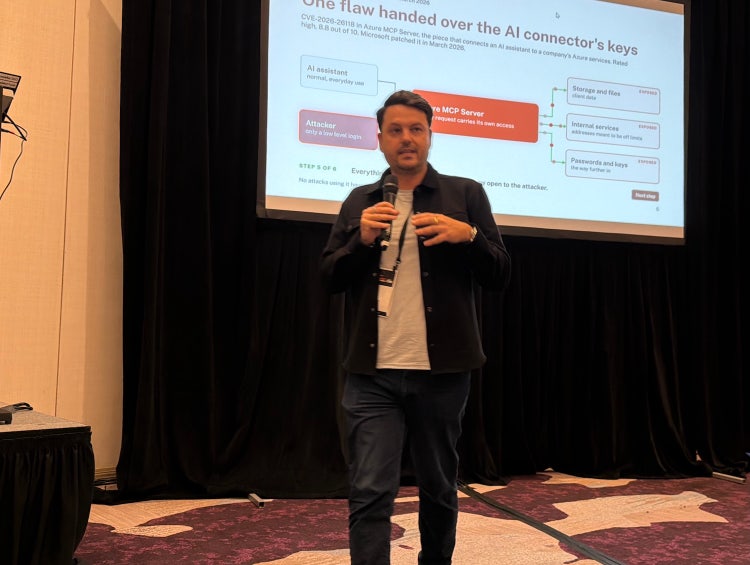
Cavelo: James Mignacca, CEO
“When it comes to software vulnerabilities, we haven’t seen that many in the AI world yet. But there are going to be many, many more in the next six to eight months, where it’s going to allow bad actors to gain access to whatever LLM you’re using. Well, guess what? If they get access to it, then all that data that is [in the LLM], those bad actors have access to it. I always like to say, ‘As soon as you use a public LLM, assume the data [is now public]’ because there are going to be different malicious exploits we’re not even aware of today. And so, if you do that, then you’re going to go off the premise of the data that is going in there, someone can access it—it’s public.”
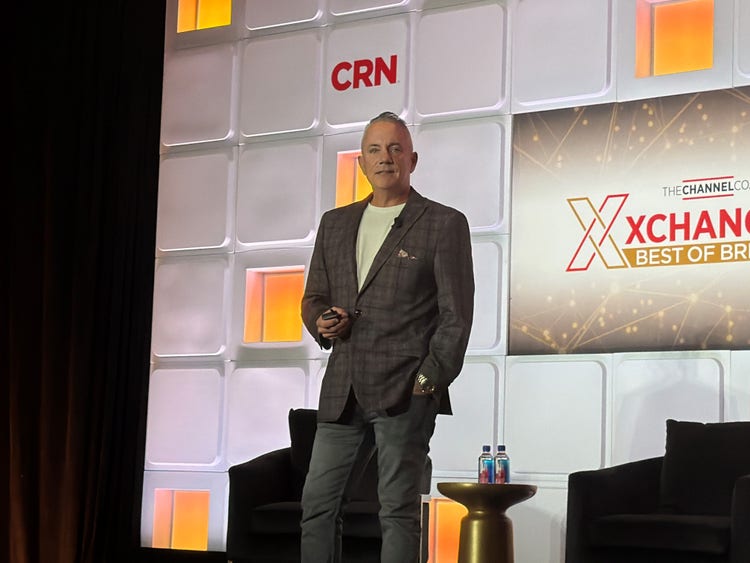
Sophos: Scott Barlow, Chief Evangelist, Global Head of Community
“Now you have to be the strategic partner. You need to have a seat at the board of directors when they’re putting the budget together for the implementation of technology in order to help scale their business. We also see a lot of disruptors, and this is happening in the next 12 to 18 months, and it’s happening today. But that transition to becoming a strategic advisor is happening today. We see AI compressing labor value. What you could do in four hours, you can now do in 15 minutes. AI is the first technology as well, where the customer is learning it and embracing it and adopting it as fast as you, as an MSP is. Agents have identities. Security shifts to resilience. Tools for all gets it exposed. You might be using 20 different security products. That’s insanity, right? Scaled competition and the flat price gets questioned, and so we see a lot of growth in cyber-resilience, vCISO (virtual Chief Information Security Officer), AI readiness and governance. This is low-hanging fruit for you to go and talk and implement it with your customer, and then outcome-based pricing, which is incredibly interesting. So the window is open today, massive market momentum. You know, we see 98 percent of MSPs not offering vCISO services but acting as the vCISO for their end customers. And so, the provider who builds this first is going to own [it]. Everybody else will be catching up.”
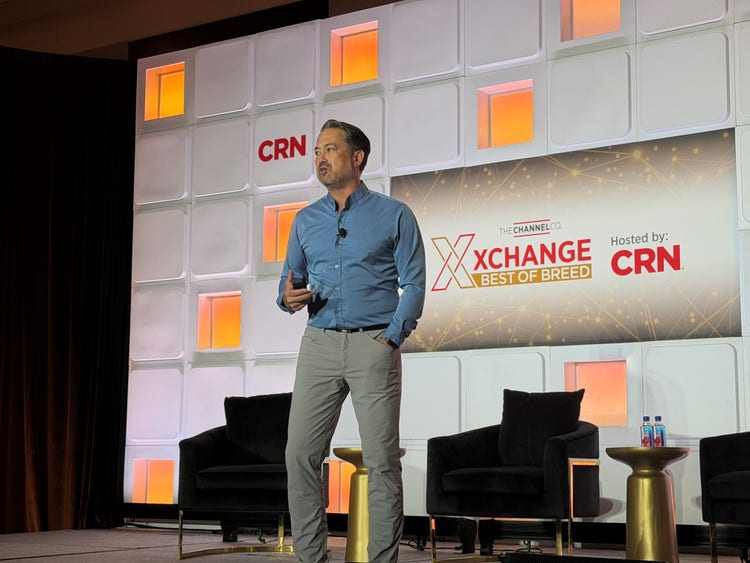
Schneider Electric: Jonathan Gould, Director, Business Development, Software
“Power availability is biggest limiting factor in how fast and where we can build data centers. So instead of seeing gigawatt campuses everywhere, you’re going to start seeing maybe a one megawatt or a two megawatt pod go in where there is power available. There’s power available in distributed areas more so than centralized tier one, tier two, tier three data center areas. So we’re all going to see this; you are going to encounter this, and because of liquid-to-the-chip architecture, the people who are buying the GPUs are going to be buying CDUs (coolant distribution units), meaning those decisions that typically used to be facilities-based are going to be more IT-based now, all those personas we’re very, very familiar with. So it’s going to open up a whole new round of opportunities for the channel. I fully believe in that.”
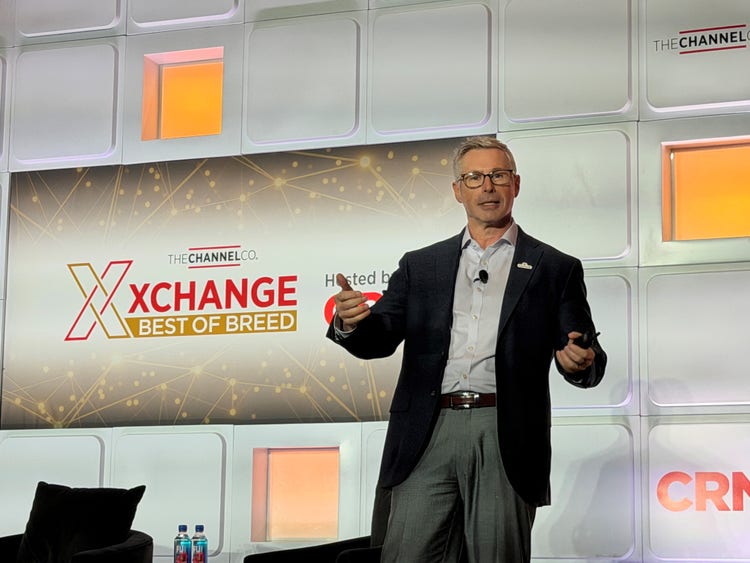
Commvault: David Langley, Sr. Director, Sales Engineering, Channels, North America
“We cannot recover data until we prove, forensically, that it’s clean. That’s a step that a lot of our customers are missing. So please, please, please—ask your customer the last time they tested a cyberresilient recovery. It’s different than [disaster and recovery]. And the nuance there is absolutely critical. And it’s a value you all can provide back to your customers—truly meaningful.”
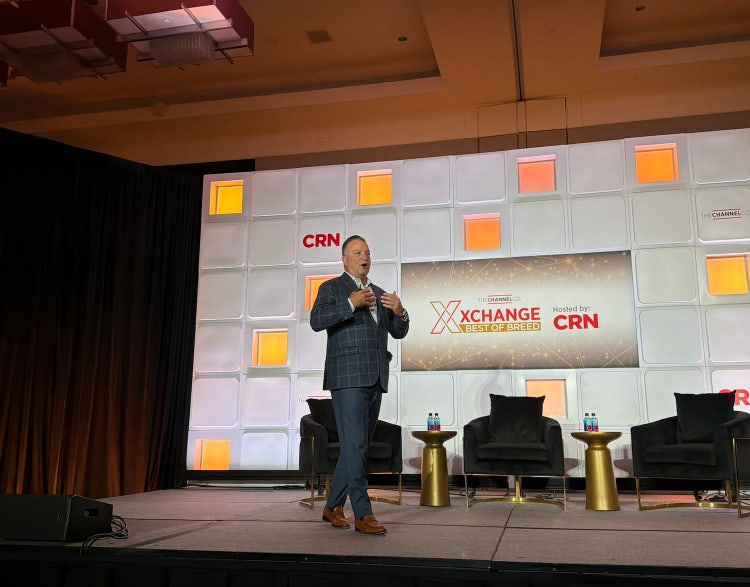
Ingram Micro: Bill Brandel, EVP, President, North America
“A lot of people are so nervous of AI, [thinking], ‘What does it mean for me?’ You’ve got to get in front of it. You’ve got to stand right in front and say, ‘This is what it looks like.’ Every single job that exists today is going to transform. It’s going to be very different in the future. I don’t care what it is. Every job will be impacted by the technology we are all working to deploy right now. And so, it’s very important to be transparent with your teams—and let them see what’s coming. Because otherwise they’re going to be locked up with fear, and they’re not going to embrace where you want to go as an organization.”
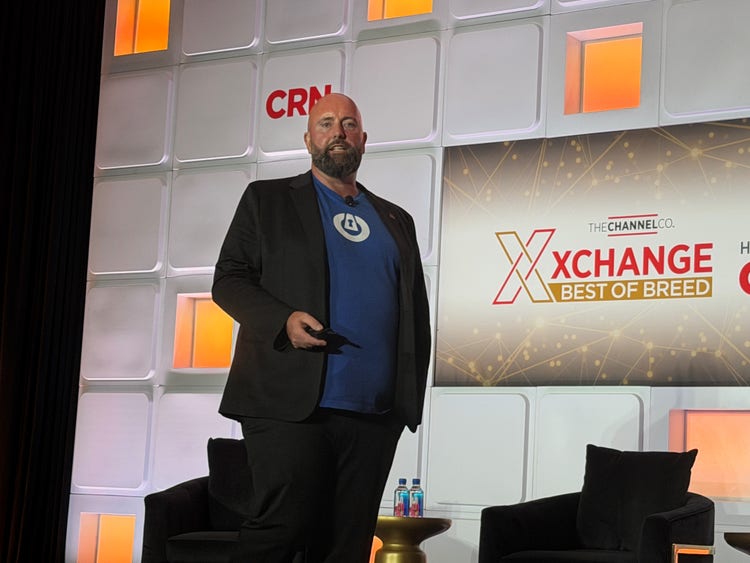
ThreatLocker: Rob Allen, Chief Product Officer
“The fact is, organizations want to run these [AI] tools now. People are being put under pressure to run these tools now, and security departments and MSPs are being put under pressure to allow it to happen or to run securely. So that’s where ringfencing comes in: Application containment stopping things from stepping out of their lane. I want this software to run on my computer, but I don’t want it to access my document folder, my network shares, any of those sensitive locations. I want it to run, but I want to control what data it has access to.
Now, granted, some of these tools do have controls built into them. They’re little ‘yes or no’ prompts. Anybody who uses them knows what I’m talking about here. ‘Claude wants to run this PowerShell, Claude wants to access data from this location. Yes or no?’ The fact is, it may as well just be an OK button, because nobody is going to click ‘no’ when Claude says it needs to access data to perform a task. The point is, even if I say, ‘Yes, Claude should have access to our file share, ringfencing is going to step in and say, ‘You can’t have access to that location.’ It’s going to be denied by default. So it’s about controlling what applications can do when they’re running.
Certain things need to run in our environment. Do they need to reach out, do they need unfettered access to the entire internet? No. Do they need access to all of my data in my organization? No, they do not.”
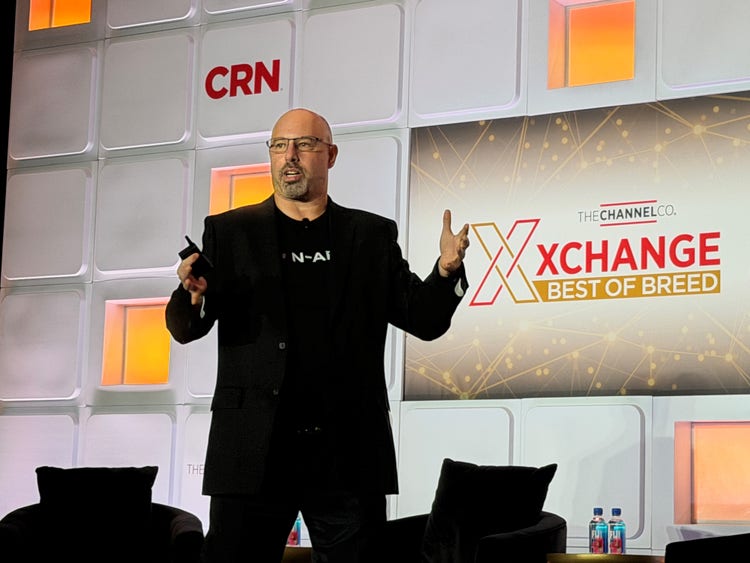
N-Able: Mike Adler, VP, Chief Technology, Product Officer
“Yes, AI gets injected into all the products. Yes, AI gets injected into all the workflows. But that is just yet another technology-driven revolution. We’ve been through those before. The technology patterns, the workforce patterns—they’re all going to keep changing. The conversation that we need to instead be having is, ‘How do we make better outcomes?’ I’d argue the outcome that we believe is most important to small and medium-sized businesses is around resilience.”
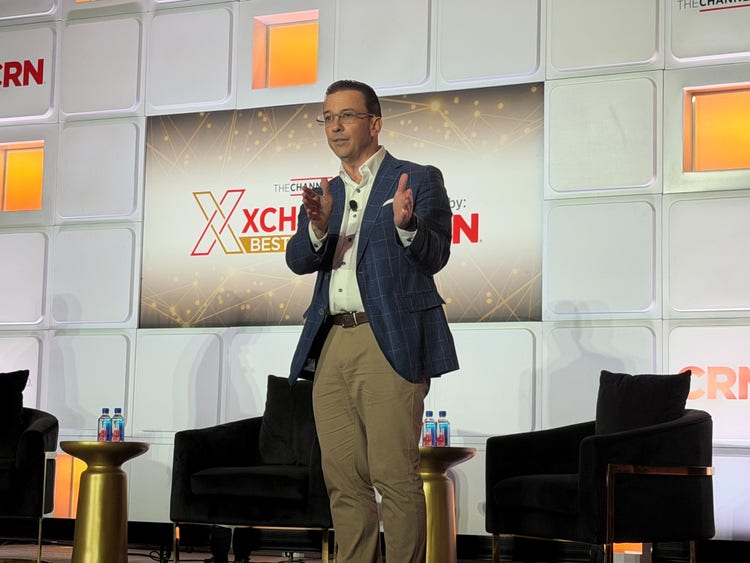
Nutanix: Christian Goffi, VP, Americas Channel Sales
“What I want you to take away from here is Nutanix is a platform company for AI workloads. That’s the current horizon that we’re in as a company, and I’m so excited about it for very valid reasons. It’s turned what used to be competing vendors or just maybe adjacent vendors into friends, so now we’re showing up in front of customers together. So it’s very normal for a Nutanix deal now, which usually starts with just giving an alternative to a hypervisor; that’s the tip of the iceberg. But when it ends up, it’s a solution where there’s Nutanix, there’s Cisco, there’s Everpure; there’s Nutanix, there’s NetApp, there’s [Amazon Web Services], and throughout it all, really the glue that keeps us all together is the integrator. It’s you guys. It’s the partner. So platform to me is a big word, and the best part about it is that it brings the need for modernization forward in a way that not just the partner can eat quite a bit, but so can a whole mess of other vendors, right? More storage, more compute, more processing. So we’re working together like we never have before, and that’s probably the biggest difference. I haven’t seen this in 30 years that I’ve had in this industry. It’s exciting to be able to show up together in the market, and not just in a way like it’s a product-to-product API interaction; it’s true go-to-market integration.”
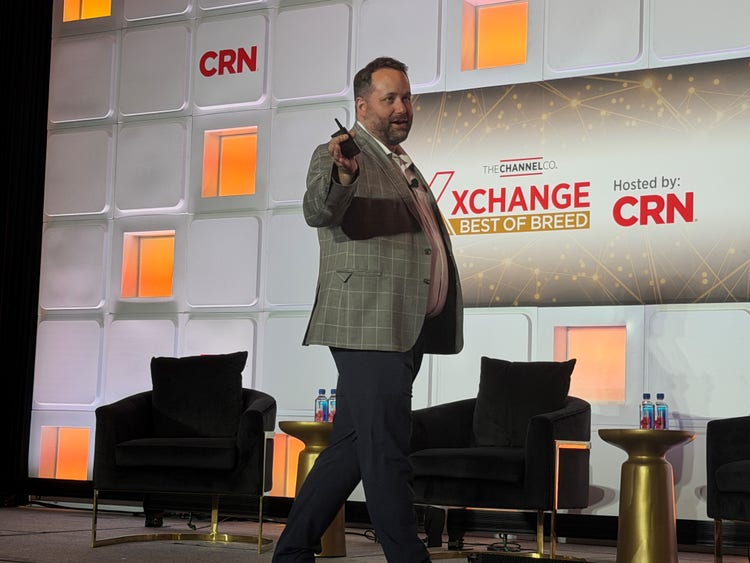
Proofpoint: Andy Syrewicze, Principal Security Advocate
“We now have this cyber criminal supply chain where you’ve got your initial access brokers, people who are selling credentials, people creating ransomware, malware, hosters hosting tools like PyPhisher, operators that are doing, ‘Here’s your package dea,l we’ll do the work for you’ ultimately for that monetization, and so we’re seeing the cybercriminal ecosystem start to scale. You know, that entry point has come way down. Malicious AI use? We’re seeing that go up. Correlation there, right? But what’s interesting about all of this: If you look at this whole picture, the attack paths really stay the same as we’ve always seen them. Email is always a target. Identities are always a target, and access rights, either that initial access or trying to achieve privilege escalation within a particular environment. And so the thing here is that MSPs, you’re uniquely positioned to handle this particular issue. A lot of this you’re probably already doing in some way, shape or form for your customers. You’re protecting comms. Most organizations have some sort of email security in place for them. You’re controlling access. You’re managing Entra ID. You’re making sure they have MFA enabled. You’re more security-conscious organizations. You’re implementing pass keys and FIDO2, things like that. You’re protecting people, either through security awareness training or other methods. You’re protecting data so when all fails, you can actively recover and get the business back on their feet. And you’re probably starting to tinker with the idea of automating security.”