XChange LATAM 2026: The Channel Shifts Toward Solutions And Trust
Executives from HO Tecnología and Legamaster say partners and vendors are redefining their value propositions as customers increasingly prioritize measurable results and business impact.
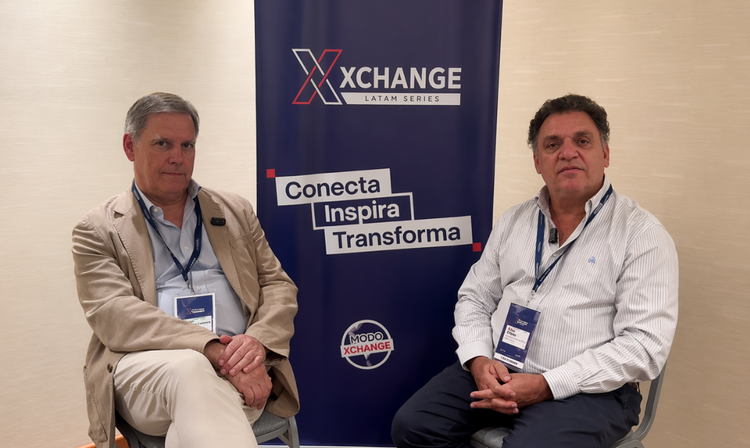
The IT channel in Latin America is undergoing a significant transformation, one that is reshaping the role of partners, vendors and the broader ecosystem. During XChange LATAM Southern Cone 2026, executives agreed the business is moving away from transactional models and toward delivering outcomes and solving customer problems.
The event, organized by The Channel Company in partnership with ITSitio Group, brought together channel leaders who pointed to trust, consultative engagement and value-added solutions as defining factors in the next phase of the market.
Diego Di Bello (pictured above right), co-founder of HO Tecnología, and Ricardo Castro Lechtaler (pictured above left), CEO of Legamaster, offered insight into how these shifts are influencing partner-vendor relationships and customer expectations.
HO Tecnología, which will mark its 30th anniversary next year, has evolved its portfolio to address the changing demands of the market.
“We are a company that commercializes IT products and services across multiple verticals,” Di Bello said, noting that its offerings now range from hardware and software licensing to data center services and video surveillance.
From the vendor side, Castro Lechtaler described Legamaster — part of Germany-based Edding Group — as a provider focused on visual communication and collaboration technologies.
“We commercialize all types of visual communication solutions, such as interactive displays, whiteboards and writing surfaces,” Castro Lechtaler said.
The partner’s evolving role
As customer expectations change, so does the profile of the ideal channel partner. Castro Lechtaler said the future belongs to partners that move beyond product sales.
“I imagine the ideal partner as one focused on selling solutions and on solving specific problems for their clients,” he said.
That shift reflects a broader change across the channel: Partners are no longer expected to simply distribute products or deploy standalone technologies. Instead, they are being asked to understand customer challenges, assess business context and deliver integrated, outcome-driven solutions using multiple technologies.
Vendors under pressure to build trust
From the integrator perspective, expectations of vendors have also evolved. Di Bello said pricing and margin protection are no longer the primary differentiators.
“We expect presence and support,” Di Bello said. “Today it’s no longer so much about price or protection, but about trust.”
He added that vendors must demonstrate a commitment to comprehensive solutions, not just competitive pricing.
“It’s about supporting us with an end-to-end solution,” Di Bello said.
That trust, executives said, extends beyond the partner-vendor relationship and plays a critical role in building credibility with end customers, particularly in competitive sales environments.
Customers demand measurable returns
Both executives agreed that customer expectations are the primary driver behind the channel’s transformation. Organizations are increasingly focused on return on investment and measurable outcomes.
“Customers are asking for results — that for every dollar they invest, they get a return,” Di Bello said.
Castro Lechtaler said purchasing decisions are now centered on problem-solving rather than technical specifications.
“They don’t care if a device has four, five or 10 ports,” he said. “They care about solving a problem.”
As a result, the channel must move away from product-centric messaging and toward value-based conversations that emphasize business impact rather than features.
From hardware sales to services
The shift toward solutions is also changing how offerings are structured across the region.
“The IT business in LATAM is moving from moving boxes to delivering services and customer care,” Di Bello said.
That evolution requires new capabilities, including consulting, integration and ongoing support, as well as a change in how partners engage with customers. Relationships are becoming longer-term and more strategic, rather than transactional.
Di Bello also noted that customers are more informed than ever, with access to tools that allow them to independently research and compare solutions.
“Customers have much more information and better tools to decide,” he said, adding that price is no longer the primary factor in purchasing decisions.
Technology, AI and new competitors
Castro Lechtaler said access to information — and the growing use of artificial intelligence — is also reshaping the competitive landscape.
“Customers now have access to enormous amounts of information, and they can even rely on AI to understand exactly what they need,” he said.
That accessibility is lowering barriers to entry and opening the market to new competitors, he added.
“Technology is becoming easier to implement, so customers are more willing to engage with different providers,” Castro Lechtaler said.
As a result, traditional boundaries between verticals are blurring, allowing companies to expand into new areas as long as they can articulate a clear and consistent value proposition.
Desirée Jaimovich is Editorial Director of ITSitio.