XChange LATAM 2026: The IT Channel Becomes More Consultative And Value-Focused
Attendees at XChange LATAM 2026 say that price pressure, the rise of artificial intelligence, and the need for closer customer relationships are redefining the channel’s role across the region.
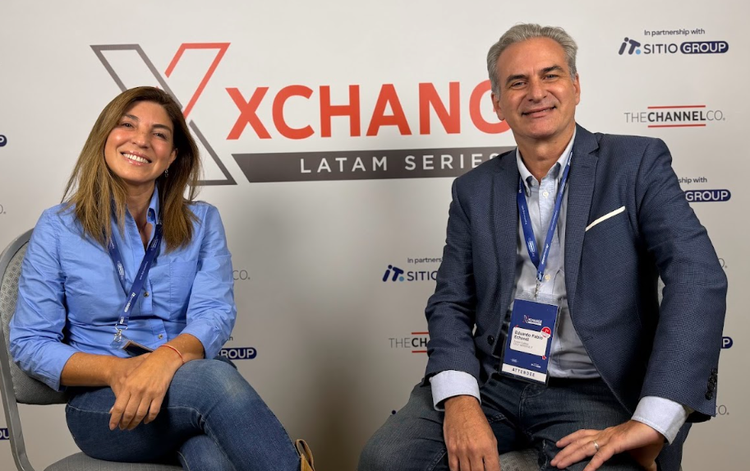
At the opening of XChange LATAM Southern Cone 2026, the message that emerged from the first meetings between vendors and partners was clear: the IT business is undergoing a profound transformation, where value no longer lies in the “box,” but in the ability to build comprehensive solutions. In a context shaped by pricing pressure, the emergence of artificial intelligence, and the need for greater customer proximity, the channel is once again positioning itself as a strategic player.
The event, organized by The Channel Company together with ITSitio Group in Mendoza, Argentina, brings together more than 50 regional partners with an agenda focused on concrete business opportunities. Within this framework, the voices of vendors and channels are beginning to align around a shared idea: collaboration is more critical than ever.
Proximity and Co-Creation: The New Axis of the Vendor–Channel Relationship
From the vendor side, HP is placing proximity at the center of its competitive differentiation. María Cecilia Santa María (pictured above left), Manager EUS & VARs at HP Argentina, summed up this market demand.
“What customers are asking from brands today is for us to be closer, to act as consultants, and to share our perspective on this highly challenging environment,” she said.
This request resonates strongly within the channel. Eduardo Echandi (pictured above right), CEO of Fusion Cubica, emphasized that such proximity is not only desirable but necessary to close deals.
“What we also ask from vendors is that they stand by our side, that we approach the end customer together, that they support us and show why their brand is the right fit—above all, by offering services alongside the sale of equipment,” he said.
Price Pressure and the Need for Differentiation
However, the current landscape is not without tension. Pricing pressure—driven in part by demand for AI-related components—is reshaping the rules of the game.
“The main challenges we see today are, first, intense competition on hardware pricing due to artificial intelligence, memory, and storage”, Echandi explained. “We need to add value on top of that—services that complement the offering and lead to a strong outcome and a solid solution”.
Santa María agrees with this assessment and adds other critical factors.
“Today, the challenge lies in supply, pricing, and differentiation,” she said.
In this environment, differentiation is no longer optional—it is a condition for survival. That differentiation, according to both executives, is directly tied to the development of services.
“Today, margins are in services—in becoming increasingly professional, in truly understanding what the customer needs, and in ensuring our proposal translates into ROI for them,” Santa María said.
A More Consultative and Customer-Centric Channel
This paradigm shift is also deeply impacting the channel’s role. Far from being a simple intermediary, it must now act as a consultant, integrator, and above all, a close partner to the customer.
“The channel’s role is essential for retaining customers and keeping them aligned with the brand,” said Echandi, who also stressed the importance of face-to-face interaction. “In-person engagement remains essential to reaching solid business agreements and delivering effective solutions.”
From the vendor’s perspective, the ideal partner reflects this same collaborative mindset.
“Our ideal partner is one that returns to the basics—being together, staying close, and truly listening. A partner who is open to the brand’s proposals, who also brings their own initiatives, and who is constantly willing to innovate and continue learning,” Santa María explained.
Artificial Intelligence: Opportunity Still in Development
Finally, artificial intelligence stands out as one of the main drivers of opportunity, albeit with nuances. For Echandi, its real potential is still unfolding:
“The true opportunity with artificial intelligence at this moment will depend greatly on each customer,” he said. “They use ChatGPT or Copilot and think they are using AI as a solution to all their problems (when in reality) it requires development and the implementation of agents across different roles within the organization.”
Santa María, meanwhile, highlighted varying levels of adoption depending on the industry.
“It also depends on each business vertical and how they are implementing it,” she said.
While some sectors are advancing toward more sophisticated models with agents and automation, others are only just beginning the journey.
On this first day of XChange LATAM Southern Cone 2026, the message is clear: the IT business is no longer defined by hardware sales, but by the ability to create value. And in this landscape, the partnership between vendors and channels will be the decisive factor in capturing the opportunities ahead.
Desirée Jaimovich is Editorial Director of ITSitio.