XChange LATAM Mexico 2026: The New Challenge Is Integrating Security, Cloud, And AI
Mariluz Jiménez, Head of Business Development at Genesys Informática, discussed how Mexican companies' priorities are changing and why data protection, cloud, partnerships, and artificial intelligence are becoming increasingly important as businesses look ahead to 2027.
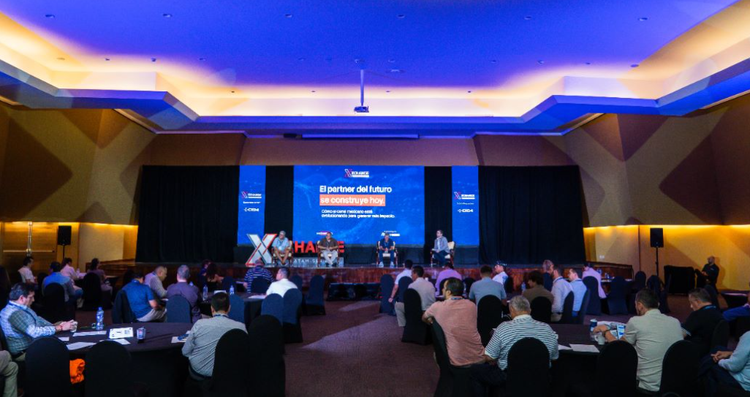
Information security, data protection, and the search for more flexible infrastructure are reshaping the priorities of Mexican companies. During XChange LATAM Mexico 2026, Genesys Informática shared its perspective on these trends and how the channel must prepare to integrate artificial intelligence, data analytics, and cloud services.
ITSitio spoke with Mariluz Jiménez, Head of Business Development at Genesys Informática, about customers' main needs and the opportunities emerging as businesses look ahead to 2027.
Based in Monterrey, the company primarily serves enterprise customers and has experience in data centers, virtualization, backup, and cloud services. At the same time, it has begun expanding its offering into new technology areas. “We specialize in data centers, virtualization, backup, and cloud services. Recently, we have started venturing into artificial intelligence and some Internet of Things solutions,” Jiménez explained.
Data Protection Is Becoming a Higher Priority
Among the main demands Genesys Informática is seeing today is data protection.
The growing threat landscape, combined with the value of information to organizations, is prompting many companies to strengthen their backup and recovery strategies. “Our customers are primarily looking for data backup and immutability services to help prevent information from being damaged, held hostage, or stolen,” Jiménez said.
Immutability makes it possible to preserve copies of data that cannot be modified or deleted for a specified period. This capability is particularly important in the face of ransomware attacks and other incidents that can compromise backup systems.
For organizations, maintaining protected copies of their data is therefore no longer merely an operational task. It has become part of a broader business continuity strategy.
Security and Cloud Are Reshaping Infrastructure
Jiménez also sees changes in how companies approach their technology infrastructure.
Security concerns remain central, but they are increasingly accompanied by a desire for greater flexibility, technology modernization, and cost reduction. “The main concern is keeping information protected, having security barriers in place, and using the tools available to migrate to cloud platforms,” she explained.
In many cases, this shift involves reducing dependence on physical infrastructure and moving toward models in which some technology resources are consumed as a service.
According to the executive, this transformation is also linked to the need to improve competitiveness.
“Companies want to work with the most up-to-date technology possible while also reducing the costs of acquiring infrastructure,” she added.
Cloud, virtualization, and managed services are thus emerging as alternatives for modernizing technology environments without relying exclusively on large upfront investments.
Partnerships Are Becoming More Valuable Across the Channel
The growing complexity of technology projects is also changing how systems integrators operate.
Jiménez acknowledges that no company can master every technology or independently meet every customer requirement. In this environment, partnerships and networking are becoming increasingly important. “Like everyone else in the channel, we can't be specialists in everything. Depending on our customers' requirements, we look to build partnerships and network with other companies,” she said.
The goal is to combine complementary capabilities and develop more comprehensive solutions.
For Genesys Informática, the process starts with understanding what the customer needs and what each partner can bring to the table.
“We analyze our customers and our own company, then determine how we can offer them a comprehensive portfolio of solutions,” she explained.
This approach enables the company to participate in projects requiring different areas of expertise without having to develop every capability in-house.
Data Centers, AI, and Data: Priorities for 2027
Looking ahead to 2027, Genesys Informática plans to maintain its focus on several areas that are currently driving demand.
Data center security, backup services, and immutability will remain part of its strategy, but the company also aims to develop new capabilities related to artificial intelligence and data analytics. “We will continue working on data center security, backup, and immutability. Our goal for next year is to explore how to integrate all the new developments in artificial intelligence and data analytics,” Jiménez said.
This evolution involves more than simply adding new solutions. It also requires developing in-house expertise and preparing teams to meet emerging demands.
“We are working to align our company, our capabilities, and our people with the skills needed to prepare for these new areas,” she explained.
For Jiménez, artificial intelligence is no longer an optional trend. “AI needs to find its place in the market, and we want to be ready for it,” she stated.
Nearshoring Creates Additional Opportunities
Another trend shaping the company's strategy is nearshoring, which can generate new demand for infrastructure, connectivity, security, and technology services from companies expanding their operations in Mexico.
The combination of this trend with cloud adoption and artificial intelligence creates opportunities for providers capable of supporting broader technology transformation initiatives.
For systems integrators, the opportunity lies in combining traditional infrastructure expertise with new capabilities in data, automation, and services.
XChange LATAM Mexico and a More Global Perspective on Business
Conversations held during XChange LATAM Mexico 2026 also reinforced the importance of building relationships beyond local markets for Genesys Informática.
Jiménez noted that the presence of vendors, providers, and partners from different markets reflects an increasingly global business landscape. “The market is definitely moving toward the globalization of both solutions and partnerships,” she said.
In this environment, location matters less than the ability to create value, build relationships, and participate in projects with a broader reach.
“It doesn't matter what country or location you're in. What matters is the impact your solutions and relationships have on a global scale,” she stated.
Genesys Informática's perspective reflects several of the changes affecting the channel: growing demand for security, greater cloud adoption, the expansion of artificial intelligence, and projects that require collaboration among different players.
Looking ahead to 2027, the ability to combine specialized expertise, emerging technologies, and strategic partnerships will be essential to meeting the needs of customers seeking more comprehensive solutions and ongoing support.
Desirée Jaimovich is Editorial Director of ITSitio.