From Boomers To Gen Z, Women In IT Differ On Stress, Leadership, Success
‘Boomers helped women get into leadership. Gen X learned how to survive difficult systems. Millennials pushed workplaces to become more human. And Gen Z is questioning why work has to consume your entire life,’ says Amy Wilde, director of data and research at The Channel Company.
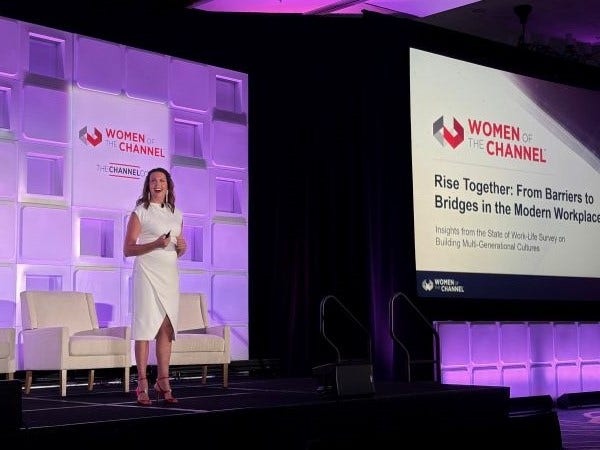
Baby Boomers, Gen X, Millennials and Gen Z women in the IT channel may be chasing the same goal—better careers and better workplaces—but new research shows they are arriving there with very different frustrations, expectations and definitions of success.
The research, which was presented during CRN parent company The Channel Company’s Women of the Channel event in Carlsbad, Calif., this week, included 604 responses.
Amy Wilde, director of data and research at The Channel Company, said the study focused on work-life balance and women in tech leadership but instead showed how these generations of women were approaching work, ambition and leadership in different ways.
[Related: Women Of The Channel 2026: Power 80 Solution Providers]
The survey highlighted generational differences in how women view work, leadership and career development. Of those surveyed, 7 percent represented Baby Boomers, 43 percent represented Gen X, 42 percent represented Millennials and 6 percent represented Gen Z. Wilde said the survey revealed each generation’s varying strengths and frustrations in the workplace.
“Millennials told us their No. 1 stressor is managing other people’s emotions,” she said. “And the second biggest stressor? Meetings. Meetings of any kind. Basically don’t bother the Millennials.”
When it comes to other generations, Baby Boomers prioritized communication, authenticity and long-term vision from leadership. Gen X focused on compensation and financial stability, and Gen Z emphasized flexibility, mentorship and transparency.
“They are saying very clearly that they want support, flexibility and mentoring,” she said of Gen Z. “And organizations need to pay attention to that.”
As for Millennials, they reported some of the highest stress levels in the study, particularly around emotional labor and workplace interactions.
“The Millennials were very vocal in this data,” Wilde said. “Their biggest stressor was taking care of everybody else’s emotions.”
But there was a common theme among all four generations: mentorship.
According to the study, 86 percent said they currently mentor others, while 79 percent said they have mentors themselves. But another number stood out to Wilde—63 percent of women surveyed said they have never formally had a mentor.
“A mentor is somebody advocating for you when you’re not in the room,” she said. “That changes careers.”
Workplace culture also remained a major challenge. While about half of respondents said they are currently in the best role of their careers, 27 percent said they are actively looking for new jobs—and compensation and company culture were the top reasons. “There’s still tension in the workplace,” Wilde said. “There’s still work we need to do.”
Gen Xer Stacy Whitley, director of strategic memberships at the Global Technology Industry Association, was surprised by the statistic that only half of women are happy in their role.
“Fifty percent shocked me,” Whitley told CRN. “And 50 percent are looking for more money. Money is a big thing for us; we need to start asking for more money.”
Her biggest takeaway, however, came from Gen Z employees and their approach to relationship-building across organizations.
“My favorite one was building micro-mentorships across the organization,” she said. “They’re already networking and doing it better than the older generations. We need to start building relationships within different departments and divisions. Cross-bridge a lot of these departments, that’s what I’m going to take with me.”
Wilde closed the keynote by bringing up members of the audience from each generation, even her high-school-aged daughter representing Gen Alpha. Each shared advice they’d give to their younger self.
“Boomers helped women get into leadership,” Wilde said. “Gen X learned how to survive difficult systems. Millennials pushed workplaces to become more human. And Gen Z is questioning why work has to consume your entire life.”
And while women across generations are facing different versions of the same challenge, she said the goal is still the same: to build sustainable careers while continuing to push for better workplace environments.
“When women support each other, mentor each other and advocate for each other … that’s when real change happens,” she said.