Techmedics CRO: Getting Creative With MDF Could Include A Cyberthreat Wine Pairing
This is just one innovative way solution providers can get creative with MDF provided by vendor partners—and they should never be afraid to ask vendors for MDF, says David DeCamillis, CRO of Techmedics.
Pairing five wines with five cybersecurity threats. Sending gift boxes that instruct recipients not to open them until they attend an upcoming webinar.
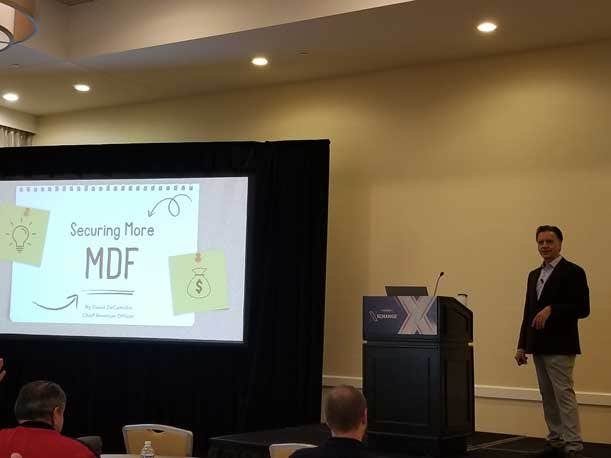
These are just two ways solution providers can get creative with MDF provided by vendor partners—and they should never be afraid to ask vendors for MDF, David DeCamillis, CRO of Pasadena, Calif.-based Techmedics, told a crowd this week at CRN parent The Channel Company’s XChange March 2024 conference.
“I've never written a check for an event,” said DeCamillis, whose company is a member of CRN’s 2024 MSP 500 with partners including Cisco Systems, Microsoft, Amazon Web Services and IBM. DeCamillis raised about $100,000 in MDF last year.
[RELATED: MSP Marketing Expert: 7 Steps To A Better Brand Story]
Techmedics CRO’s Guide To MDF
Zac Paulson, director of product and strategy at ABM Technology Group—a Fargo, N.D.-based MSP500 member—asked DeCamillis during the talk about a reasonable MDF amount to request based on solution provider spend with the vendor. DeCamillis said that there isn’t a formula—sometimes the vendors his company spends little with provide the most MDF.
Paulson told CRN that the talk made him rethink his strategy. “I want to take an inventory of my current vendors and then see if I can get some events planned,” he said.
DeCamillis broke down his planning for the audience, including a long spreadsheet with days, the social media and other platforms involved. He starts planning the upcoming year in November, preparing a budget and talking to vendors in December and throughout the first quarter, he said.
“You want to show them [vendors] that you're a good marketer,” he said. “You have a plan. You have a campaign. You have a good list that you’re going after. And more importantly, that you’re generating leads to convert to customers to show them ROI. I mean, it sounds pretty simple, right? But you have got to do it. It takes a lot of work.”
DeCamillis said he shares everything with vendors to build trust and show expertise. He shares budgets, plans, marketing, landing pages, email text, social media post text, menus, flyers, early attendee lists and more before the event.
He also shares final presentations, gift bag materials and the final attendee list from the day of the event. And he shares post-event sales follow-up calls and emails, final invoices, surveys and an updated ROI.
He’s brought together as many as five vendors to pay for an event, he said. And vendors don’t always request that an employee of theirs attend the event—sometimes they just want their logo visible, he said.
DeCamillis said to expense as much as possible for the event to the vendor, including his month-plus use of marketing tools such as MailChimp for the event, a poster printed for the event and a service for handwritten thank-you notes post-event.
“You’re going to build a good lead list—you’re going to show them that,” he said. “But how you’re going to touch those leads to get them to come to the event to get them to convert and become a customer—it’s accountability. … Getting the money from the vendor is a lot easier if you list and show all your costs. And I mean everything. And they’re willing to pay.”
Getting to the wine tasting and cyberthreat pairing event, for example, was a six-week process, he said.
He sent out messages before the event teasing the pairings, which included ransomware with an Italian prosecco and phishing attacks with a South African red blend. At the pairing event, as he discussed each cyberthreat, he talked about the cybersecurity service that would mitigate the threat and awarded points to attendees with that service already in place.
“Based on their score, we’ll then disclose at the end, ‘You’re seriously [at risk for a cyberthreat]. You have got to talk to us,’” he said. “And odds are, most of the people are going to be scoring low. … The key thing here is I’m not selling—I'm educating. Not only educating them on how they can protect their customers and their business through cybersecurity, but they’re also learning about wine in France compared to Spain.”
DeCamillis likes to have a list of 100 companies in a market he’s interested in. He finds three or four decision-makers within the company and starts getting the word out about his events.
“We go after on LinkedIn too to connect to, but we never sell,” he said. “You want to connect and then like their stuff, compliment their articles, send them thought leadership, then invite them to one of your events.”
He estimated that an event could cost $5,000 to $10,000, with webinars between $3,000 and $7,000.
Other tips from DeCamillis included:
- “No” isn’t always final—a “no” in January can become a “yes” by March. And even if a representative says “no,” a higher-up might say “yes.”
- “Keep in touch to make sure you don’t get caught off guard by employee turnover at the vendor.
- Lean on distributors—they have MDF and can help find a resource within a vendor
- Within the MSP, you need at least one person managing the vendors and process, including items to pick up and one sales lead focused on attendees.
- He aims for about 15 attendees, with the goal of one new customer.
- Usually you have to put down a deposit of 50 percent for an event, and if vendors take longer than 90 days for reimbursements, he contacts them.
- Ask the vendors for swag—DeCamillis has gotten branded whiskey classes for past events
- If a vendor representative attends the event, he limits them to one slide to keep the event from getting stale.
- In the lead-up to the event, he teases it with social media posts but doesn’t invite everyone online to it to maintain control over high-value attendees .