Pax8 CEO: AI Agents Are Creating A New ‘Managed Intelligence’ Opportunity For MSPs
Pax8 CEO Scott Chasin says the rise of AI agents is creating a new managed services category as SMBs grapple with growing complexity around AI security, governance and management.
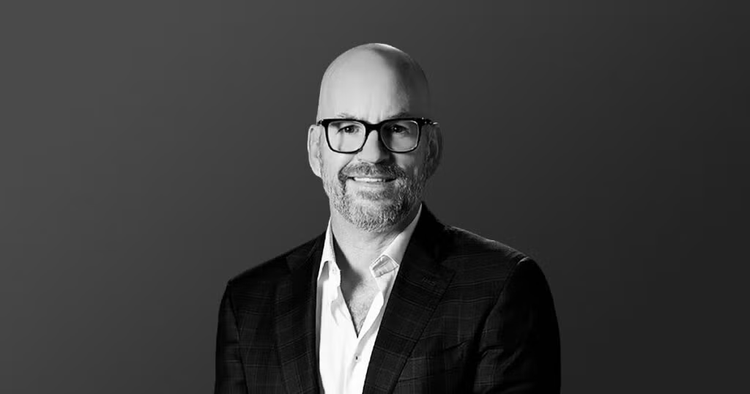
Pax8 believes the MSP market is entering its next major evolution, as AI agents create a new category of “managed intelligence” services for partners.
At Pax8 Beyond EMEA 2026, CEO Scott Chasin told CRN UK that growing complexity around AI agents, security and governance could open up a new managed services opportunity for partners.
“We’ve been given this opportunity to harness AI for good, and what we're trying to do at Pax8 is supercharge this new industry so that every small business has the opportunity to be a big business, and to tap into this agentic workforce that can drive them at the speed of their ambition.
“That is the moment we're in, and that is the golden era of AI and its promise.”
In conversation with CRN UK, Chasin discussed Pax8’s role in the agentic era, what major AI vendors have misunderstood about the channel and the opportunities and risks facing MSPs as they move toward managed intelligence.
In the agentic era, what role does Pax8 want to play in the channel ecosystem?
“We think there is a new industry that’s forming, we call it managed intelligence. It represents an opportunity in terms of small businesses becoming agentically wired.
“The usefulness of AI has arrived. We have crossed over from chatbots to reasoning to now agents taking action. What we've seen over the last six weeks is the consumerization of agents and bots, and that's clearly evident with the success of platforms like Meta Muse, Grok Bot and others.
“However, those solutions weren't built for the MSP SMB opportunity, and so we believe that that usefulness in the agentic context is an opportunity for service providers to create a business model around managing intelligence inside of a small business, and that's really represented by two real needs that are becoming very apparent. One is that supply is going to be highly diverse. In addition to that, you have management complexity, the need for agents and bots to be governed, secure and resilient.
“We believe that the combination of supply diversity, along with the need for management and governance, creates this new industry and this new opportunity. It's something that we've seen time and time again in technology. Whether you're talking about on-premises to cloud or cyber with managed security, when supply becomes diverse, when operational complexity becomes evident, you start to see the industrialization that creates new channels, so we believe that managed intelligence represents that.
“We believe, as the largest marketplace for managed service providers in the world, we have a responsibility to bring that future forward to the MSP, to show them not just that AI is coming, but to give them the marketplace of the future, which enables them to solve the supply complexity problem and the management and governance problem.”
Is managed intelligence a shift, or is it a whole new category for MSPs?
“I think it’s already here. I think MSPs’ customers are going to demand it.
“One of the things I pay very close attention to is what happens in the consumer space, and when you start to see the consumerization of technology, that is generally followed by SMB consumption. Why is that? Well, it's because in our personal lives, when we find something that improves our lives, we have that expectation set at work. We've seen this time and time again, whether it was web-based email or instant messaging or video calling, you get to the office and wish you had that there.
“I believe that these consumer bots that are proliferating today are making it into the SMB, but they don't have governance, and they don't have control, and they need to be managed appropriately, and that's a difficult thing for any small business to try to tackle themselves. And certainly, those consumer platforms don't offer the controls, the security, and the management layers that are required to even have them managed.
“This is a massive opportunity for managed service providers, or what we now call, managed intelligence providers.”
What does a successful managed intelligence provider look like three years from now?
“We believe that the representation of the new agentic usefulness that we’re seeing is going to be represented as an agentic workforce. We believe that every business will have personal agents that are assigned to every employee.
“These agents are always on. They're proactive. They understand the employee and their context. They have access to the inbox and to the calendar. They're not just about knowledge retrieval. They're actually capable of doing work.
“We believe that the personal assistant era for agents has arrived, and for any small business employee, this gives them a new capability, and a new superpower to make them more efficient. So this is the main driver and entry point for any service provider to start to rinse and repeat a managed service model in terms of governing those personal agents.
“But we also believe that every major function or domain inside of a small business is going to be represented by one of these persistent, always-on agents. Most of what we have seen in AI has been built for the enterprise, and we’re now seeing consumer adoption. The SMB is next, and that moment is here.”
Most AI platforms have been built for the enterprise. What have the major AI vendors misunderstood about the channel?
“It’s a different form of complexity, and it starts with a lot of the architecture that’s represented by the enterprise AI solutions. For the most part, these are solutions that are single-tenant, and we know in the case of a managed service provider or managed intelligence provider, they have lots of smaller end customers.
“What works in the enterprise does not always scale down and work in the SMB. Feature sets are different, management needs are different.
“What we've always done is we've curated a supply of capability that's really been tuned to the needs of both the MSP and the SMB. That’s really one of our superpowers, and so this is no different.
“We believe that in order to build a very successful managed intelligence business that is scalable, you have to have not just that multi-tenancy, but you've really got to have the contextual knowledge of how a service provider operates, how they manage that last mile of trust, how they govern their existing customer's IT stack, and that's something that we've done for a very long time.
“It’s a very different model. We've seen many companies try to take an enterprise product and bring it down not just to the MSP but to the SMB, and it’s often the case that they realize they have the wrong product taste, and that's a big deal to both the service provider and the small business.”
Where are MSPs struggling with AI transformation?
“We started talking about AI three years ago, and specifically AI transformation. What we realized is that transformation is hard.
“In some cases, it requires an MSP to do something they didn’t normally do, which is have the intimacy in business consultancy around specific processes and workflows inside of their clients. In addition to that, it often requires automation engineering expertise. People are looking for the easy button.
“What we’ve introduced is a platform [8os] for the MSP industry that gives them that easy button, gives them the ability to deploy agents or bots inside of their customer environment, where now they can create a recurring revenue model as a managed service, and they don't have to have, you know, advanced skilling in terms of automation engineering or business consultancy.
“They can simply deploy these personal assistants to every employee and every customer that they have, and see the benefit and the capabilities that are given to those businesses in terms of additional productivity and the magic that's represented when an employee can have a bot or an agent work for them. We think that 8os is the platform that's going to allow service providers to scale that business across their fleet of customers.”
What concerns you most about the current direction of the AI market?
“In terms of a wider aperture in the industry, there’s a lot of concern to be had around cybersecurity. The frontier models and even the open weight models today are very capable in terms of vulnerability discovery, and we're starting to see the weaponization of those capabilities. We have to be very sensitive to that.
“It's all too easy for a bad actor to leverage an open weight model and discover a zero-day that they can then weaponize into an exploit. That's a big concern, and for most MSPs, that means it is a critical time for us to really go back to basics with exposure management and being extremely vigilant in your customer base.
“Leveraging AI from an attacker perspective is just one side. The other side, the defenders, also have the opportunity to use AI. We're entering this world where machine speed attack is going against machine speed defense, and there are thousands of cybersecurity companies that are working on solving this problem.
“I’m very much an optimist, and I believe that we'll be able to solve this machine speed attack problem with machine speed defense. However, it's going to be turbulent on the path to getting there.”
This article originally appeared on CRN sister website CRN UK.