Wasabi CFO: AI Growth And Adoption Is ‘The Most Exciting Sea Change In My Career’
Wasabi Technologies CFO Michael Bayer has been in the technology industry long enough to see the internet, mobile and cloud have their disruption moments but says AI is bigger than all of them.
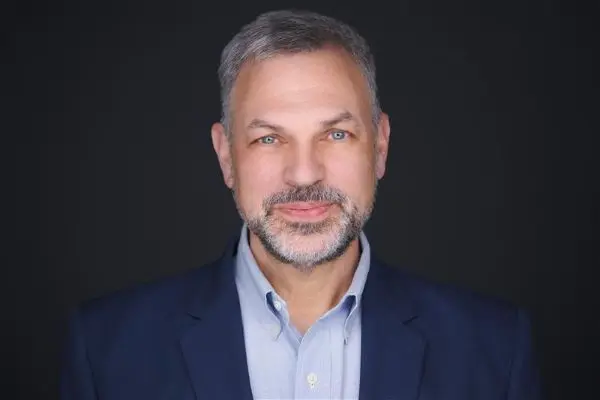
For Michael Bayer, CFO at Wasabi Technologies, the growth and adoption of AI is something he has never seen before in his life.
“This is among the most exciting sea changes I’ve seen in my career,” he told CRN Australia exclusively.
Bayer (pictured) has been in the technology industry long enough to see the internet, mobile and cloud have their disruption moments, but AI for him is bigger.
"This one is more exciting than all of those put together,” he noted. “[AI] is going to fundamentally transform how we as humans interact with systems, and I think it’s exciting.
“I don't think this is going away. I think this is a fundamental shift in how things work.”
He added, “Just like the PC market was disrupted by laptops and then mobile devices. I don’t need my PC anymore when I have [my phone] sitting right next to me.
“It is going to get that much more exciting as AI capabilities are everywhere, and they’re in my car and in my phone and in my laptop and in my refrigerator. It’s going to transform how we do everything.”
As AI capabilities and adoption increase, this puts pressure on data needs. Craig Stockdale, country manager ANZ at Wasabi Technologies, said speaking to partners and customers about their data requirements is “continuing to explode.”
"It’s an ongoing challenge,” he explained. “How do I store this data? How do I go about doing it cost-effectively in a predictable cost regime? It’s something that’s on the tip of everyone’s tongue.”
No Sign Of Slowing Down
Looking into the future, Bayer doesn’t see any sign of excitement around AI and data slowing down.
He believes that 2026 is the year when every company will turn into an AI company. For Wasabi, the company has started on that journey.
"We just had an exciting development in our own internal systems where we had our first completely autonomous sales transaction happen,” he said. “We told our inside system, ‘Hey, do this’, and it created a sales quote. I was excited about that happening because it’s the first [sale] but so much more is going to come after that. What I mean by that is we are an AI company [and] now we’re fundamentally changing the way that we code, the way that we go to market, the way that we run our internal operations.”
As Wasabi heads into 2027, the company is going to get out of experimentation and begin thinking about the real hard ROI on its AI investments.
“Right now, the outcomes are too unclear; we don’t even know what to measure. But we’re busy thinking about a year from now what are we going to be asking ourselves about these AI investments,” he said. “We’re now instrumenting the business so that a year from now, when we have questions about what’s working and what’s not, we’ll be able to answer those questions.”
He added, “It’s super exciting, and I don’t see it slowing down. It’s not a bubble. It’s transformative.”
Supply Chain Shortage A ‘Perfect Storm’
As the memory shortage continues, vendors are trying out new methods and ways of working to ensure their partners and customers aren’t severely impacted.
Bayer said Wasabi is facing a “supply chain constraint period.”
“It’s not just the normal cycles that we go through of waxing and waning demand that is traditional for every part of the IT supply chain,” he said.
Bayer said the company’s focus is making sure it can accommodate customer demands.
“We want to make sure we’re always available and always have capacity for [our partners]. We think quarters ahead as to what our customers are going to need, and then we make sure that we’re delivering that,” he said.
Stockdale calls this supply chain shortage the “perfect storm”.
“It’s creating confusion, it’s creating supply chain issues for a lot of our channel partners,” he said.
“It's requesting our channel partners to look at being more innovative and creative. Rather than a hardware-led approach, they’re now looking at a services-led architecture to be able to go and combine some good technologies.”
Stockdale also explained some of the initiatives Wasabi is undertaking to educate and enable partners.
"[We are] doubling down on hybrid and multi-cloud enablement. That is an important thing for our partners to understand,” he said.
“If you can’t get disk drives and you can’t get memory and you can’t get what you need, we need to rearchitect the solution or we need to think differently about how we service that customer. In that case, that’s an opportunity for Wasabi.”
Stockdale said that this is a “real opportunity.”
“That’s why I call it the perfect storm because we’re at the right place at the right time with the right product, and we can really make an impact for Australian businesses and Australian partners,” he said.
This article originally appeared on CRN's sister site, CRN Australia.