Microsoft Q4 2025: CEO Nadella Claims Title Of AI Infrastructure Leader
‘We continue to lead the AI infrastructure wave and took share every quarter this year,’ Microsoft CEO Satya Nadella said.
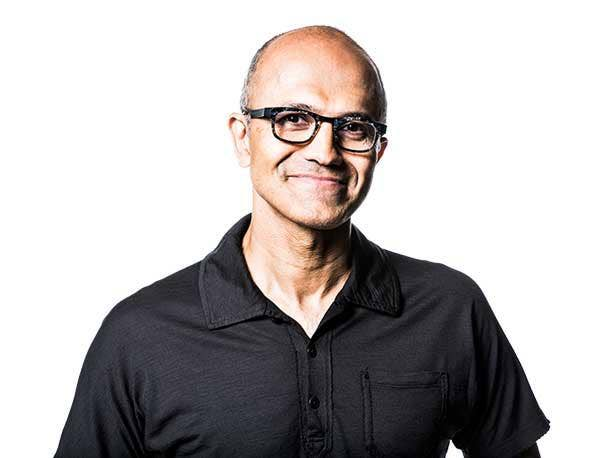
Artificial intelligence and cloud sales continued to surge for Microsoft as it closed out its fiscal year, with executives pointing out VMware and SAP migration activity as a factor in Azure usage growing and continued experimentation of how to monetize new AI offers.
Satya Nadella, CEO of the Redmond, Wash.-based tech giant with a 500,000-plus-strong partner ecosystem, told analysts on Wednesday’s quarterly earnings call that his company is “building the most comprehensive suite of AI products and tech stack at massive scale.”
“We continue to lead the AI infrastructure wave and took share every quarter this year,” Nadella said on the call, which covered results for its fourth fiscal quarter, ended June 30.
[RELATED: Microsoft Is ‘Investing More In VMware Migrations This Year,’ Dezen Says]
Microsoft Q4 2025
Wednesday’s call was the first since Microsoft revealed a variety of more investments in its partner program earlier this month, investments meant to aid solution providers in standing up AI products with customers, a sign of the channel’s importance in bringing the AI era into the mainstream.
During Wednesday’s call, Nadella appeared to take a shot at AI rivals’ investments in gigawatt and multi-gigawatt data centers, saying that Microsoft “stood up more than 2 gigawatts of new capacity over the past 12 months alone, and we continue to scale our own data center capacity faster than any other competitor.”
Although Nadella didn’t call out any particular AI vendors, a multi-gigawatt data center called Prometheus is expected to come online in 2026 for Facebook parent Meta, CEO Mark Zuckerberg said in a post on his Threads social media platform this month. And database juggernaut Oracle plus Microsoft-backed OpenAI continue to work on multi-gigawatt data center capacity as part of their Stargate project.
Microsoft has more than 400 data centers across 70 regions, more than any other cloud provider, Nadella said.
On the AI model front, Nadella said that Microsoft continues to find ways to improve AI efficiency and performance, including delivering 90 percent more tokens for the same graphics processing unit (GPU) for the GPT-4 family of models compared to a year ago.
When asked on the call about monetizing AI, Microsoft CFO Amy Hood said to expect models such as per-user, tiers of per-user, consumption tiers and, perhaps, even a blending of payment models as AI capability grows.
“You’ll end up with ways that teams are going to want to throttle that usage, use the best models for the best job,” she said. “I think the blending of these models will continue to be something we see.”
Azure Catalysts, New AI Product Milestones
Nadella pointed to migrations as a source of Azure’s high growth, particularly with customers moving SAP and VMware instances and Microsoft server products. “It turns out that we’re still not anywhere close to the finish line–at best, maybe in the middle innings of that,” Nadella said.
Other factors are new AI workflows and continued scaling of cloud-native applications, he said. Some of those Microsoft cloud apps customers are newcomers to Azure.
As the Microsoft CEO typically does on quarterly earnings calls, Nadella updated listeners on milestones for a variety of Microsoft products during the call.
In data and AI products, Microsoft saw:
- Revenue up 55 percent year over year for Microsoft Fabric, which has more than 25,000 customers and is Microsoft’s “fastest growing database product in our history,” with Nadella calling it “the best source of knowledge and grounding for AI applications and context engineering”
- Azure AI Foundry Agent Service now has 14,000 customers, including Nasdaq
- 80 percent of the Fortune 500 use Foundry
- Foundry application programming interfaces (APIs) processed over 500 trillion tokens this year, up more than sevenfold
- Copilot apps have surpassed 100 million monthly active users across commercial and consumer customers
- Microsoft has more than 800 million monthly active users of AI features across all products
- Customers continue to adopt Copilot at a faster rate than any other new Microsoft 365 suite, with strong usage intensity measured by a week-over-week retention
- Microsoft saw the largest quarter of Copilot seat adds since launch, with a record number of customers returning to buy more seats
- Tens of thousands of organization organizations have already used Microsoft researcher and analyst deep-reasoning AI agents in the first weeks of availability
- This year, customers created 3 million agents using SharePoint and Copilot Studio
- Customers used Microsoft’s Dragon Copilot and ambient AI products to document more than 13 million physician patient encounters this quarter, up nearly sevenfold year over year
Security product milestone updates included:
- Defender secures nearly 2 million generative AI apps
- Purview is used by three quarters of Microsoft 365 Copilot customers
- Microsoft has nearly 1.5 million security customers and continued “to take share across all major categories we serve,” Nadella said
And updates to Microsoft’s GitHub developer tools include:
- 20 million GitHub Copilot users
- GitHub Copilot enterprise customers increased 75 percent quarter over quarter
- 90 percent of the Fortune 100 now use GitHub Copilot
- AI projects on GitHub more than doubled over the last year
- The code review agent performs millions of code reviews each month
Q4 In Depth
Microsoft reported $76.4 billion in revenue from its most recent fiscal quarter, up 17 percent year over year ignoring foreign exchange.
It saw operating income of $34.3 billion, up 22 percent year over year. Net income was $27.2 billion, up the same percent.
Azure surpassed $75 billion in revenue this year, up 34 percent year over year. Microsoft Cloud saw $46.7 billion during the quarter, up 25 percent year over year.
The vendor’s productivity and business processes segment–which includes Microsoft 365 Commercial, M365 Consumer, LinkedIn and Dynamics–saw $33.1 billion in revenue, up 14 percent year over year ignoring foreign exchange. M365 Commercial products and cloud services revenue grew 15 percent. M365 Commercial cloud revenue grew 16 percent. M365 Commercial seats grew 6 percent year over year.
Dynamics products and cloud services grew 17 percent. Dynamics 365 revenue grew 21 percent.
Microsoft’s “intelligence cloud” segment brought in $29.9 billion, up 25 percent year over year. Server products and cloud services revenue grew 27 percent year over year. Azure and other cloud services revenue grew 39 percent.
Enterprise and partner services revenue increased 6 percent year over year, with growth in enterprise support services partially offset by a decline in industry products and services, Hood said.
Microsoft’s “more personal computing” segment–which includes Windows devices, Xbox and search–brought in $13.5 billion during the quarter. That marked an increase of 9 percent year over year. Windows original equipment manufacturer (OEM) and devices revenue grew 3 percent year over year.
Commercial bookings for Microsoft passed $100 billion for the first time for the vendor, Hood said on the call. That marked an increase of 30 percent ignoring foreign exchange.
Commercial remaining performance obligation (CRPO) increased to $368 billion, up 35 percent year over year. Microsoft expects about 35 percent of that to become revenue in the next 12 months, up 21 percent year over year.
FY2025 In Detail, FY2026 Expectations
For fiscal year 2025, Microsoft saw revenue of $281.7 billion, up 15 percent year over year. Microsoft Cloud brought in more than $168 billion in annual revenue, up 23 percent year over year, according to the vendor.
The vendor saw operating income of $128.5 billion, up 18 percent year over year ignoring foreign exchange. Net income was $101.8 billion, up 15 percent year over year.
Hood said to expect another year of double-digit revenue and operating income growth in fiscal year 2026. The first fiscal quarter should see revenue of $32.2 billion to $32.5 billion in the productivity and business processes segment, which would mark growth between 13 percent and 14 percent year over year ignoring foreign exchange. M365 commercial products revenue should grow in the mid to high single digits.
For the intelligent cloud segment, Microsoft expects revenue of $30.1 billion to $30.4 billion, growth year over year of 25 percent to 26 percent. It expects Azure to grow 37 percent year over year in the first quarter.
Microsoft expects its on-premises server business to decline in low to mid-single digits for revenue due to more customers choosing the cloud.
In the more personal computing segment, Microsoft expects revenue to be about $12.4 billion. Its Windows OEM and devices revenue should decline in mid to high single digits. Elevated inventory levels seen at the end of the fourth fiscal quarter should come down through the quarter, Hood said, “although the range of potential outcomes remains wider than normal”—perhaps a reference to the uncertainty global tariffs will play in the hardware market.
Microsoft expects to spend more than $30 billion in the first fiscal quarter of the new fiscal year in capital expenditures, with the vendor still seeing strong demand.
Microsoft’s stock traded at about $560 a share after market close Wednesday, up about 9 percent.