Snowflake Q2 Earnings: CEO Ramaswamy Defends Frontier Models Amid OpenAI GPT-5 Reception
“AI is an emergent and increasingly powerful force,” Snowflake CEO Sridhar Ramaswamy said.
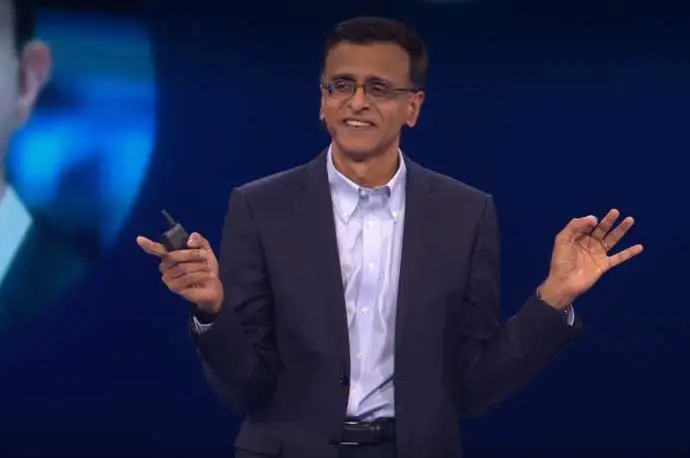
Mixed reaction to Microsoft-backed OpenAI’s release of the GPT-5 frontier artificial intelligence model has not stymied Snowflake CEO Sridhar Ramaswamy’s enthusiasm and optimism for the AI market, which helped fuel a better-than-expected quarter for his company and an increase in Snowflake’s revenue forecast for the fiscal year.
The CEO (pictred) for the Bozeman, Mont.-based data and AI cloud service provider told industry analysts on Wednesday's quarterly earnings call that past predictions of frontier models plateauing have been proven wrong in around six months.
“I don't think it's quite the case that these models have plateaued along every dimension,” he said. “If you think about the increase in code quality that these models have been able to demonstrate, even over the last six months, it's been a pretty remarkable transformation.”
[RELATED: Snowflake Acquisition Expands Postgres Capabilities Of Its AI Data Cloud]
Snowflake Q2 Results
Snowflake released the financial results of its fiscal 2025 second quarter, ending July 31. During the analyst call, Ramaswamy touted the vendor’s investment in partnerships, including his company taking the channel ecosystem from 600 partners in 2022 to more than 12,000 partners worldwide. “We're scaling our go-to-market engine while staying tightly aligned across engineering, product, marketing and sales,” the CEO said on the call.
Snowflake’s 2025 channel goals include increasing the overall percentage of company revenue that comes through the channel and enabling partners to develop an AI strategy and sell AI solutions, according to data in CRN’s 2025 Channel Chiefs list.
He also held up Snowflake’s ability to launch the latest frontier models at the same time as leading AI vendors, including OpenAI, as a win for the company and its users.
“AI is an emergent and increasingly powerful force,” he said. “I can speak to it with personal experience.”
AI Boon
More customers are recognizing that the AI components of Snowflake’s data platforms can deliver enormous value, making the vendor a recipient of budgets allocated from large customers for AI projects, Ramaswamy said.
AI influenced nearly 50 percent of new logos won in the second fiscal quarter, Ramaswamy said, and AI powers 25 percent of all deployed use cases. More than 6,100 accounts use Snowflake’s AI products weekly.
Snowflake’s ease of use, data governance and authorization capabilities and the trustworthiness of Snowflake AI products separate the vendor from the pack, the CEO said. “That is a trend that we expect to see both continue and accelerate,” he said.
The Snowflake Intelligence agentic AI offering can save time on customer briefs writing and produce cross-cutting analyses in some of the use cases that are proving popular in workplaces, he said.
Ramaswamy told analysts on the call that organizations see data modernization as more important today because of AI transformation of workflows and how organizations interact with customers depends on getting data AI ready.
“Data modernization is just the beginning of the journey,” he said. “We are very much in the beginning of the journey where data indeed does more for our customers.”
Legacy systems have trouble scaling workloads and data, with more AI use cases unlocked once customers move to Snowflake, he said. Enterprises are still in the early days of applying AI to complex business use cases such as mergers and acquisitions, anomaly detection, regulatory reporting, and insurance claims processing.
“You're going to see situations in which every complicated task that humans are involved in is going to have agentic solutions that are human assisted, where the model using tools does some of the work, and then the human guides the model to be able to be a lot more productive,” he said. “From that perspective, it's still very, very early innings. … There is, honestly, years of work ahead in terms of the value that we can get from AI.”
Although Snowflake’s consumption business model has led to some sales forecasting variability, with the company’s CFO even expressing surprise in the quarter’s performance, the company’s executives stood by the model for AI because customers don’t have to make large commitments to projects before they have delivered value.
Growth In Core Data Business
Alongside growing interest in Snowflake’s AI capabilities, the company’s core data business still has a wide market to address, Ramaswamy said on the call.
On Snowflake’s work with hyperscalers, company CFO Michael Scarpelli said that Microsoft Azure was the fastest growing cloud for Snowflake, growing 40 percent year on year, although Amazon Web Services remains the biggest cloud contributor to Snowflake revenue.
He attributed the growth “to better alignment between our field and Microsoft.”
Snowflake has been collaborating with the Azure team at the infrastructure level, but also at the end-user product level with Office, Copilot and Power BI, Ramaswamy said. “We see these as long-term benefits for both [of] the companies,” he said. “You'll see more and more results come out of it in the future.”
The vendor reported a net revenue retention rate (NRR), a measure used by analysts to gauge Snowflake’s software-as-a-service business, of 125 percent.
Fiscal 2026 Q2 In Depth
Snowflake reported the highest sequential growth in product revenue in almost three years and an acceleration, year over year, in the number of additional customers spending more than $1 million.
Scarpelli credited the growth with new workload migrations, contribution from recent acquisition Crunchy Data, plus its core data analytics business.
Snowflake Executive Vice President of Product Christian Kleinerman told listeners on the call that the integration from Crunchy Data to Snowflake Postgres “is progressing extremely well” with “very strong” customer interest.
The company has also been on a hiring spree, bringing on about 500 new employees, including 360 in sales and marketing, during the quarter. The vendor added more employees in the first six months of this year on a net basis than in the prior two years combined, Scarpelli said. He anticipates a lower hiring count in the second half of the year.
Snowflake reported about $1 billion in product revenue during the second fiscal quarter, up 32 percent year over year. The vendor saw $1.1 billion in total revenue, up the same percent year over year.
Net-new customers added in the quarter grew 21 percent over the same period one year earlier. Snowflake saw about 650 customers with trailing 12-month product revenue greater than $1 million. Fifty of those customers crossed that threshold during the quarter, a record for the vendor.
Snowflake ended the quarter with $6.9 billion in remaining performance obligations (RPO), representing 33 percent growth year on year. About 40 percent of Snowflake customers are now data-sharing on Snowflake. And more than 1,200 accounts now use the open-source Apache Iceberg table standard Snowflake champions.
Q3 2026 Forecast
Snowflake increased its forecast for the fiscal year, telling analysts to expect product revenue of about $1.1 billion in the fiscal third quarter, which represents about 25 percent year-over-year growth. Snowflake expects about $4.4 billion in product revenue for the 2026 fiscal year, up 27 percent from fiscal 2025.
CFO Scarpelli pointed out that Snowflake has raised its revenue guidance by more than the amount it beat expectations over the last six quarters. “We just went GA this year with 250 new features,” he said. “All these features drive new revenue for Snowflake. And we anticipate continuing to have that type of delivery of new features going into the future.”
Snowflake’s stock rose about 13 percent Wednesday after market close, trading at about $227 a share.