Windows Migrations, PC Refresh, AI Era: Solution Providers Step Up Their Game To Meet Technology Trifecta
“It’s beyond just a refresh. It’s really around enterprise productivity transformation,’ says Clutch Solutions President Jasen Meece.
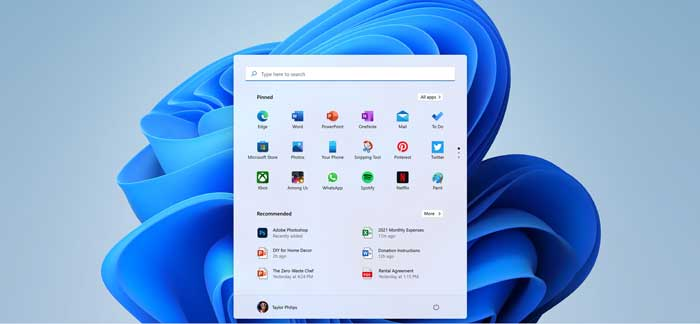
The trifecta of a PC refresh cycle to replace old machines—some dating back to the height of the global pandemic—new artificial intelligence-powered devices on the market and a Windows operating system update with an end-of-support date now just six weeks away has solution providers looking to separate themselves from the competition with more holistic approaches to client hardware.
Solution provider executives have told CRN in interviews that the perfect storm of factors has them talking to current and prospective clients about more than just buying new PCs—the conversations center around a client’s entire business strategy to make the most of the AI era while also showcasing how they have evolved to meet a client’s needs.
“It’s beyond just a refresh,” said Jasen Meece, president of Mesa, Ariz.-based Clutch Solutions, No. 259 on CRN’s 2025 Solution Provider 500. “It’s really around enterprise productivity transformation.”
[RELATED: HP CEO Enrique Lores Sees ‘Good News For The Channel’ With PC Refresh Into 2026]
Windows 11 Migration, Device Refresh
All of the solution provider executives who talked to CRN said that AI PCs are by no means dominating device sales, but a large number of clients are buying AI PCs in smaller batches to continue experimenting with AI use cases and deciding which employees should receive the more expensive and more powerful machines compared with traditional PCs.
“They’re being thoughtful about it, and we’re helping them be thoughtful about where it makes sense to invest,” Brian Lewis, vice president of U.S. growth sales at Fort Mill, S.C.-based CompuCom—a member of CRN’s 2025 MSP 500—told CRN in an interview.
Lewis estimated that about 35 percent of the devices CompuCom manages are AI PCs. He said he could see the numbers hitting 70 percent in two years but still predicts there will be job roles that don’t require that level of horsepower.
The executives largely held optimistic views on the role AI PCs will play in their clients’ businesses, even with Gartner’s Aug. 28 report that reduced its forecast for the share AI PCs will represent in the total PC market by the end of 2025.
In September, Gartner predicted AI PCs will represent 43 percent of all PC shipments by 2025. The research firm has now reduced that share to 31 percent, blaming global tariffs and market uncertainty for the slowing rate of AI PC adoption.
The firm still predicts growth year over year in AI PCs’ share of various segments of the PC market. Gartner forecasts AI laptops reaching about 36 percent share of the laptop market in 2025 and then 59 percent of the market in 2026. The firm predicts AI desktops representing 16 percent of their market this year and then hitting about 42 percent in 2026.
AI PCs represented about 16 percent of shipments in 2024, according to Gartner. AI laptops represented 19 percent of the total laptop market, the research firm said, and AI desktops represented about 4 percent of the total desktop market in 2024.
HP Inc. President and CEO Enrique Lores told CRN recently that the PC refresh will continue past the Windows 10 end-of-support date and that only about half of the PC install base has converted to the new OS. For HP, sales of AI PCs grew double digits quarter over quarter and now make up 25 percent of personal systems sales, which he called “good news for the channel.”
The AI PC Killer App
The lack of a killer AI application making AI PC purchases an immediate need is one factor in clients continuing to be in the experimenting stage with the devices, solution providers told CRN. Clients also continue to share concerns around data security and data governance with AI devices, in addition to the higher price point.
The solution providers had different ranges for the share of AI PCs their clients are buying. Clutch Solutions, for example, sees about 20 percent of client workforces get an AI PC. AI-enabled devices make up about 50 percent of new PC and laptop sales for the company, Meece said.
“We’re ahead of the wave on that,” he said. “I don’t think this is going to slow down over the next 12 months. I see it picking up.”
Jason Dugger, co-founder and CTO of Tampa, Fla.-based solution provider DGR Systems, told CRN in an interview that he’s had clients dedicate about 5 percent of their new PC orders to AI PCs, mostly for experimentation by IT departments.
AI PCs may never get a single killer app that appeals to all PC users, Dave Gruver, field CTO at Somerset, N.J.-based SHI—No. 12 on CRN’s 2025 Solution Provider 500—told CRN in an interview. Instead, clients may be won over by the overall AI PC performance compared with traditional machines, even in more basic measures such as self-healing capabilities, battery life and speed. One of the value-adds solution providers like SHI can provide is to help customers decide whether they need an AI PC or even a new PC, laying out myriad factors, he said.
One way Gruver breaks down the math on AI PCs for customers is figuring out whether the extra money spent on an AI PC is offset by the extra productivity time from an employee using the device over at least four years.
For specific employee roles that need AI PCs in the short run, Gruver pointed to the devices’ improved handling of video and audio editing as an example. One potential area where AI PCs can outshine traditional machines with broader workforces includes the accessibility space, Gruver said. He’s seen applications that voice-enable apps, which could make remote workers more productive.
Another area is in security, with AI PCs showing that they can more efficiently manage power used by security tools and enable faster responses. Plus, they can provide an improved digital employee experience. “That might be a tipping point because that [affects] everybody in the enterprise,” Gruver said.
An Easier Windows Migration
As for Windows 11 migrations, research firm StatCounter shows that the new OS finally overtook Windows 10 in the share of desktop Windows versions in July 2025. The data for August shows that about 49 percent of desktops worldwide use Windows 11 compared with 46 percent that use Windows 10.
The solution provider executives described most of their clients as already having migrated to Windows 11 with some customers planning to purchase Microsoft’s extended security updates (ESUs) that became sellable for members of the vendor’s Cloud Solution Provider program Sept. 1.
Customers that aren’t ready for the migration usually have legacy applications and more complex setups. They still plan to move off of Windows 10 eventually due to end of support, the solution providers said. The ESUs can only be purchased for up to three years, according to Microsoft. The ESUs are $61 per device for one year, doubling every consecutive year.
ESUs only support license activation, installation and possible regressions of the ESU itself. They won’t include new features, design change requests and other items, according to Microsoft. ESUs are available for no additional cost for Windows 10 virtual machines (VMs) in Windows 365, Azure Virtual Desktop, Azure VMWare Solution and similar services.
The solution providers told CRN that the lift from Windows 10 to Windows 11 is easier compared with other OS migrations due in part to more web-based applications leading to less data on an employee’s machine itself, not to mention better Microsoft tools used in migrations such as Intune and Autopatch.
“A majority of our install base has migrated to Windows 11 already,” said Adam Reiser, senior director of end-user compute at SHI. “Somewhere between 25 [percent] and 30 percent is probably what's remaining,” he said.
The solution providers all agreed that Microsoft doesn’t need to extend the Oct. 14 end-of-support deadline for their clients, but it wouldn’t surprise them if the tech giant did allow more time for migrations as the date nears. And all of the solution providers expressed confidence in helping clients with last-minute decision-making.
“The conversations around ‘How do I help you get there’ from a planning perspective have slowed down,” CompuCom’s Lewis said. “Now it's about pure execution.”
Partners Differentiate Through Intelligent Fleet Management, AI PC Benchmarking
All of the solution providers who spoke with CRN said that the combination of device refresh, Windows migration and AI PC availability has allowed for more holistic conversations around how clients should think of their device fleets and what the partner brings to the table.
SHI has set itself apart through an “intelligent refresh plan,” its executives told CRN. Part of the plan includes leveraging SHI’s Next-Gen Device Lab for endpoints, AI and cyber labs for the data center side of the equation and its internal AI PC benchmarking tool BenchSmart, which measures device performance against specific AI workloads.
SHI measures everything from the impact of AI workloads on tokens per second and model processing to even battery life, with SHI a neutral adviser in the final decision.
The solution provider also helps clients test and validate hybrid workloads and experiment with digital employee experience tools, an area where SHI is expanding its portfolio of partnerships, the executives said. SHI is working on deeper integration with the GenAI and cyber labs for full end-to-end experiences, including on-OS AI features and customized testing for customers’ device images and AI workflows.
“It’s a data-driven approach so that these customers are making these choices not just by whatever logo is on the box, but by how it performs within their environment to the utmost potential,” said Reiser. “How do you take advantage of AI not just on the device, but in the full spectrum of use? It can start from the data center, it goes up into the cloud, and all the software in between, and the device in the end. There's AI built into all of that.”
Bringing SHI information around device releases as soon as possible is one of Reiser’s asks for OEMs, as is explaining differentiators for AI and newer PCs. “When you come at me with speeds and feeds, everybody’s got the same thing,” he said. “What else are you doing that’s going to make you different?”
CompuCom, in another example, has used the “perfect storm” to educate customers on smarter ways to manage device fleets, including leveraging the solution provider’s Full Lifecycle Observability Framework for data points around the client’s environment.
With the framework, CompuCom sees clients’ entire digital estates, the age of assets, which ones are underperforming, which ones are out of warranty and which ones are unused and can go to another employee, Lewis said.
“It’s not about flipping you over to Win11 and selling a bunch of AI PCs,” Lewis said. “There’s more to the story that we tell beyond that. … The insights, the actionable types of data-driven decision-making is where the industry is going, and I feel like we’re ahead of the curve.”
Positioning device management as part of the data capturing that will fuel AI insight, even AI insight that leads to revenue opportunities, is an opportunity to help clients think about device management as more than a cost of doing business, he said.
“It’s a lot easier to ask for money when you’re growing the top line,” Lewis said.
DGR, for its part, has been leaning into client education around AI literacy, showing clients how to use AI tools better, Dugger said. Like the other solution providers, DGR sees itself as customer zero for finding AI use cases and case studies to demonstrate to clients.
Dugger pointed to an AI agent for his salespeople that aims to answer a customer’s questions in a matter of seconds and removes the need for the salesperson to reach out to someone at DGR for an answer.
“We see the results,” he said. “These things have very short ROI periods to them when you sit down and do it very intentionally. … If you’re not an AI business, you’re not going to be around in 10 years.”