10 AI Startups Catching The Channel's Eye
Anthropic, Fireworks, Openlayer and GovDash are among the list makers.

AI startups are turning to channel partners to reach enterprise customers, deliver implementation services and build managed offerings around emerging technology.
Their products span AI infrastructure, governance, cybersecurity, government contracting, workplace automation and voice AI.
For this list of 10 AI startups that are catching the channel’s eye, CRN focused on startups founded after 2020 and gave additional weight to companies with partner programs and those that raised capital within the past year.
[RELATED: Wipro CEO: We’ll Keep Investing In AI Despite Near-Term Margin Pressure]
In September, Gartner put forecasted 2026 worldwide spending on AI at $2.7 trillion, up about 50 percent year on year. The research firm credited demand for AI-optimized Infrastructure as a Service (IaaS), AI-optimized servers AI network fabric, AI processing semiconductors and other AI infrastructure as reasons for the growth.
AI infrastructure demand has resisted memory-related pricing increases that have hit data centers and the channel, according to Gartner. It put 2026’s AI services spending at a projected $576 billion.
The firm predicts total AI spending to hit $3.6 trillion in 2027, with $746 billion in AI services. And $86 billion should go toward AI cybersecurity, up about 40 percent year on year.
Read on for some of the most interesting AI startups for VARs, MSPs, systems integrator and other members of the channel.
And be sure to check out CRN’s other AI Innovators Week articles running through Friday.

Anthropic
CEO: Dario Amodei
Headquarters: San Francisco
Anthropic’s channel investment and expansion into workplace technology have garnered plenty of headlines for the Claude maker this year, with the vendor creating what it means to have a partner program for the AI era.
The startup announced a $100 million investment into its Claude Partner Network and partner access to a new certification program in March. It rolled out a services track for partners in June.
In October, Anthropic rolled out a $100 million investment into a Claude Frontier Academy program to train people at solution providers and customer organizations on the artificial intelligence product, with a goal of training 10,000 engineers by the end of 2027 through a 12-week residency program.
The vendor also disclosed that it has issued more than 175,000 Claude certifications to professionals across 46,000 companies.
The company also raised a $65 billion Series H round in May, valuing the company at $965 billion post-money.
CEO Dario Amodei co-founded Anthropic in 2021 with fellow former employees of ChatGPT maker OpenAI, including his sister, Anthropic President Daniela Amodei. He previously worked at OpenAI for about five years, leaving with the title of vice president of research. He also worked at Google for about a year as a senior research scientist, according to his LinkedIn account.
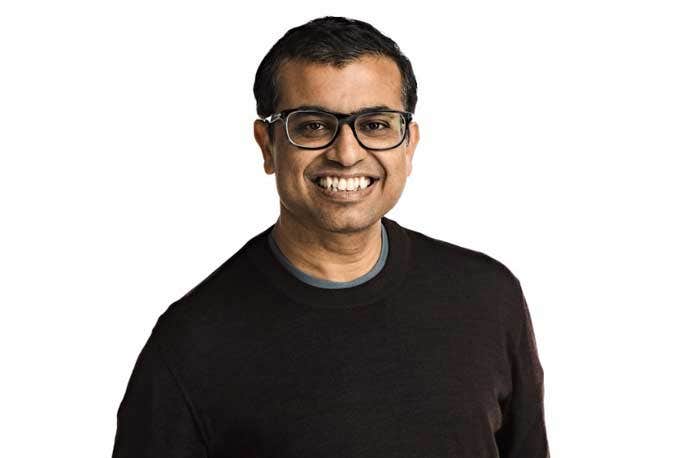
Ema
CEO: Surojit Chatterjee
Headquarters: Mountain View, Calif.
Ema’s partner network aims to help solution providers, resellers, consultants and other business models unlock agentic AI employees for human resources, IT and finance use cases.
The company bills its agentic AI platform as simple to use and maintain with secure handling of personally identifiable information (PII) and protections against bias designed to preserve recruiting integrity, according to Ema.
The company’s EmaFusion offering aims to maximize accuracy at the lowest possible cost and allows users to integrate custom-trained language models. Users can also build and import new agents, tools and integrations, according to Ema.
Ema also offers more than 50 prebuilt AI employees in areas ranging from AI research, document generation and analytics, employee assistance, sales assistance and more.
Ema’s partner program brings solution providers technical enablement, licensing management, co-delivery, co-selling and ways draw down committed spending and cloud credits with the hyperscalers, according to the vendor. The company works with Wipro and NTT Data among other heavyweights in the channel.
Its agents handle 5 million annual queries and promise an average of eight hours per week saved per employee, according to Ema. Its technology has caught the eye of major investors, with the company closing a $77 million Series B round of funding in September. Creaegis led the round with Accel, S32 and Prosus all increasing existing investments.
Ema plans to use the money toward go-to-market expansion and growth in Asia-Pacific and Europe, the Middle East and Africa among other geographies.
CEO Surojit Chatterjee co-founded Ema in 2023, according to his LinkedIn account. He previously served as Coinbase’s chief product officer for about three years, helping to take the company public in 2021.
His resume includes more than 11 years on and off with Google. He left the vendor most recently in 2020 as the vice president of product management for Google Shopping.
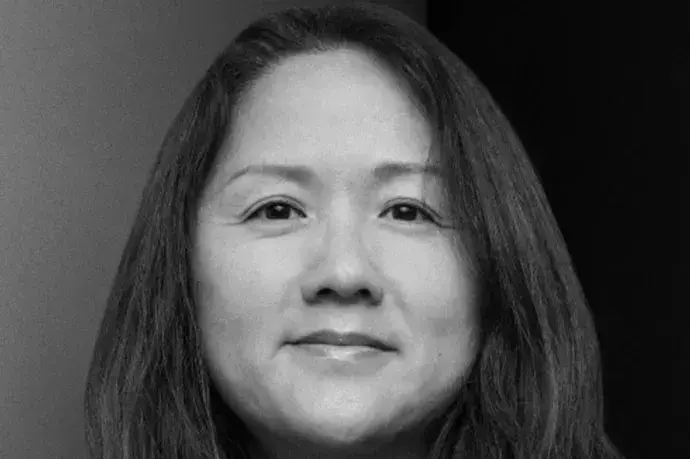
Fireworks AI
CEO: Lin Qiao
Headquarters: San Mateo, Calif.
Fireworks’ partner ecosystem includes consulting and services solution providers including Turing, Deloitte and Boston Consulting Group, according to the vendor’s website.
The company has focused on rolling out new offerings to the market and building partnerships with some of the biggest technology companies in the channel.
In March, it revealed with Microsoft that Fireworks AI is available on Microsoft Foundry, giving Azure users another option for high-performance, open-model inference.
Building on a $1.5 billion Series D funding round that closed in July at a $17.5 billion valuation, Fireworks has continued to expand its products and partnerships. The company also disclosed that it had surpassed $1 billion in annualized revenue run rate and was serving more than 40 trillion tokens a day.
In August, it made its Training API generally available, giving users a way to connect custom training loops to Fireworks-managed distributed training and rollout infrastructure. Fireworks also made its Lab offer generally available for users looking for forward-deployed researchers and engineers who can help define the capability, baseline, success criteria and scope of a project before moving into a time-boxed implementation built backward from the target date.
In September, Fireworks introduced its Specialized Intelligence Index for comparing model performance on domain-specific benchmarks, along with its Ember-1 specialized model and an updated FireRouter.
It also introduced its Ember-1 specialized model that promises to deliver Kimi K3 quality with 40 percent fewer tokens and introduced a version of its FireRouter cache-aware router optimized for Anthropic’s Claude Opus AI model family.
CEO Lin Qiao co-founded Fireworks in 2022, according to her LinkedIn account. She previously worked at Facebook parent Meta for about seven years, leaving with the title of senior director of engineering.
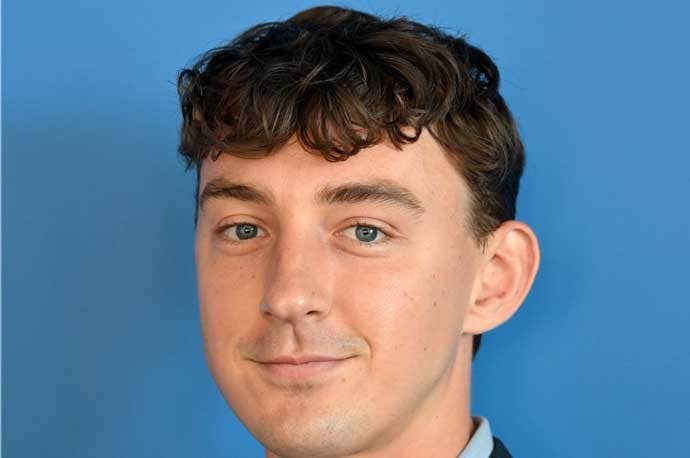
GovDash
CEO: Sean Doherty
Headquarters: New York
GovDash started the year with a $30 million Series B funding round, going on to advance its AI platform for government contractors through Pricer, its pricing-data modeling tool and new integrations with the Microsoft 365 productivity application suite.
The company also rolled out an opportunity forecast capability for surfacing federal contracts before formal solicitation, introduced probability of winning scoring and achieved a U.S. Federal Risk and Authorization Management Program Ready designation in May.
GovDash’s road map includes new reporting and pre-pipeline agents, competitive intelligence, agentic proposal generation and more granular access controls.
Its Dash AI platform promises users the ability to find opportunities, build capture plans, price bids, draft compliant proposals and manage contracts. It can organize past performance and data, grounding work in auditable records.
The platform can also scout the U.S. General Services Administration’s eBuy procurement platform.
GovDash’s partner program serves systems integrators, consultancies and other business models, according to the company’s website.
CEO Sean Doherty co-founded GovDash in 2023, according to his LinkedIn account.

Hatz AI
CEO: Jimmy Hatzell
Headquarters: New York
A new voice mode for making requests and hearing responses aloud, support for agents that act in Microsoft 365, and improved shadow AI scanning are among Hatz AI’s recent platform enhancements for MSPs.
The New York-based company aims to transform manual MSP workflows into automations to save hours of work, with supported activities including project-brief generation, lead generation and file analysis, according to Hatz AI.
MSP partners receive personalized guidance, AI implementation and optimization support, enterprise-grade security protocols, compliance guidance, training programs, training modules, scalable margins, not-for-resale packages and other benefits, according to Hatz.
CEO Jimmy Hatzell co-founded Hatz AI in 2024, according to his LinkedIn account. His resume includes about two years at CyberQP, serving as the vice president of revenue during that time.
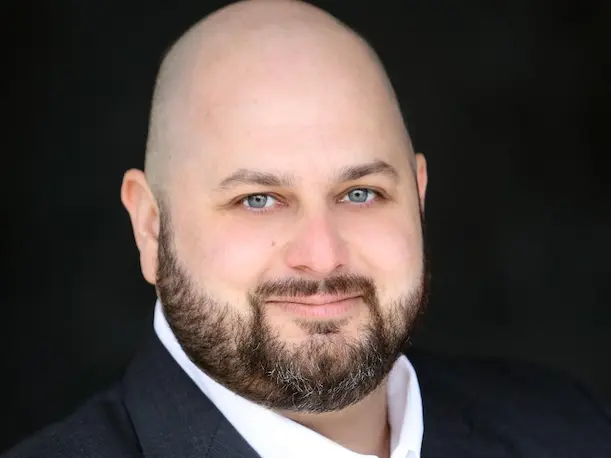
HiddenLayer
CEO: Chris Sestito
Headquarters: Austin, Texas
HiddenLayer offers an AI security platform aimed at VARs, systems integrators and other partners serving enterprise, public sector and federal customers.
The company’s technology protects agentic, generative and predictive AI applications across their life cycles. The platform can validate model integrity and AI supply chains before deployment, simulate attacks and provide visibility into shadow AI.
In September, HiddenLayer raised a $100 million Series B round of funding with participation from Microsoft’s M12 venture fund and Booz Allen Ventures, among others. The company disclosed that its annual recurring revenue had grown tenfold and that it signed more than 50 new platform customers over the year.
The money will go toward improving its enterprise platform and agentic runtime security capabilities, as well as developing a new agent-harness security product that extends runtime security to AI coding agents and better protects enterprises adopting autonomous coding agents.
CEO Chris Sestito co-founded HiddenLayer in 2022, according to his LinkedIn account. He previously worked at Qualys for about a year, leaving with the title of vice president of data science engineering.
Modal
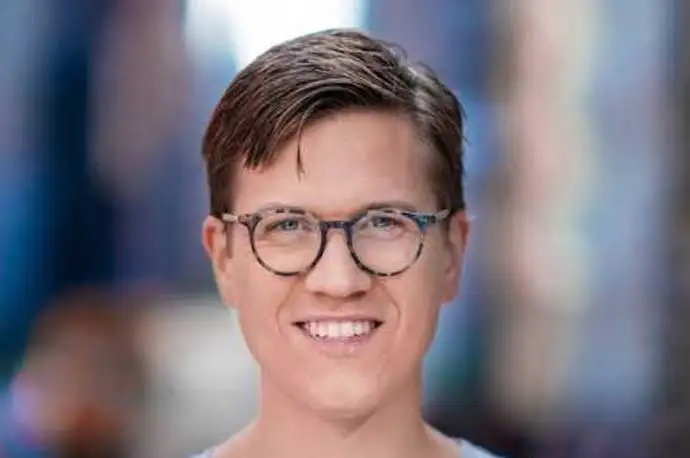
CEO: Erik Bernhardsson
Headquarters: New York
This month, Modal disclosed a $750 million Series D round of funding at a $15.75 billion post-money valuation after previously revealing a $355 million Series C round in May.
The company provides cloud infrastructure for developing, training and serving AI applications, including AI agents and generative video applications.
Since May, Modal has grown more than 15 times year on year and crossed $1 billion in annualized run rate, according to the company.
Modal’s partner program offers resources for implementers, consultancies and other business models, according to its website. Partners can receive technical support, special credit grants and distribution through tens of thousands of developers and companies that use Modal.
Recent Modal innovations include environment-level budgets for users, more access to sandbox sidecar containers, improved observability, multinode clusters and endpoint candidates for optimizing inference servers on Modal.
CEO Erik Bernhardsson co-founded Modal in 2021, according to his LinkedIn account. His resume includes about six years with Better.com as CTO, growing the team from one to 300. He also worked at Spotify for about seven years, leaving in 2015 as an engineering manager.
Openlayer
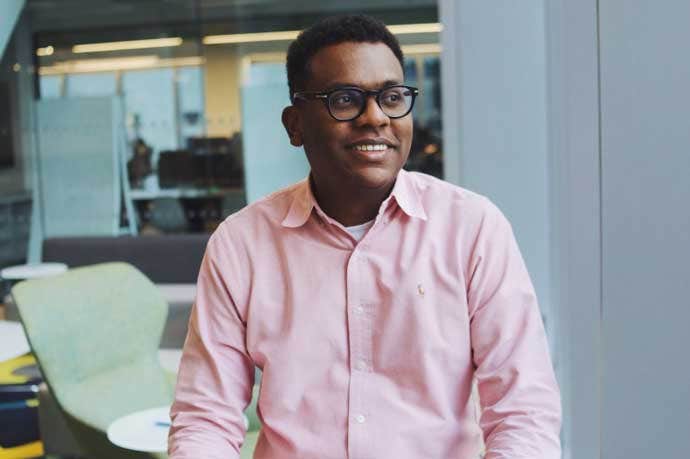
CEO: Gabriel Bayomi Tinoco Kalejaiye
Headquarters: San Francisco
Openlayer’s partner program has resources for global systems integrators, VARs, consulting firms and other partner business models.
The company pitches itself as an operating system for enterprise AI governance, giving solution providers a platform for building recurring governance services. The technology tests AI systems before production and enforces policies at runtime, generating audit-ready evidence for customers.
The company landed a channel partnership with Telefónica Tech in March and recently added its Jevals open-source Python library for agent evaluations and guardrails.
Solution providers can leverage Openlayer to launch AI governance practices that generate recurring services revenue while delivering measurable customer outcomes, according to the vendor.
Recent product innovations by Openlayer include the release of its Jevals open-source Python library for agent evaluations and guardrails built around Jev-style decision models and a new user interface with enhanced data visualizations for spotting patterns and issues and taking quick action.
Openlayer CEO Gabriel Bayomi Tinoco Kalejaiye co-founded the company in 2021. He previously worked at Apple for about two years, leaving the computer maker in 2021 as a machine learning engineer, according to his LinkedIn account.

Vapi
CEO: Jordan Dearsley
Headquarters: San Francisco
Vapi is pursuing a partner-first growth strategy for its voice AI products, targeting global systems integrators, consultancies and other business models in its partner program.
The company promises partners differentiated humanlike AI agents, co-selling and marketing support, demo environments, early access and technical enablement, among other resources, according to Vapi’s website.
In May, the company raised a $50 million Series B round of funding with participation from Microsoft’s M12 venture fund and others. Vapi disclosed that it had grown enterprise revenue tenfold with its agents having handled more than 1 billion calls.
The new funds will go toward distribution, improved delivery and engineering advancements in core infrastructure, governance and the self-improvement loop.
Product advancements since then include a Vapi for CX offer to improve customer experience operations. A personal-agent calling feature allows AI agents to dial phone numbers, conduct conversations and report back to the human user.
The company has also launched Vapi Simulations to give users AI-powered testers to converse with AI agents before they enter production and Vapi Campaigns for batch outbound calling, among other features.
CEO Jordan Dearsley co-founded Vapi in 2023, according to his LinkedIn account. He previously co-founded Superpowered in 2020, leading it as CEO to $500,000 annual recurring revenue and 10,000 weekly active users before his departure.
Xbow
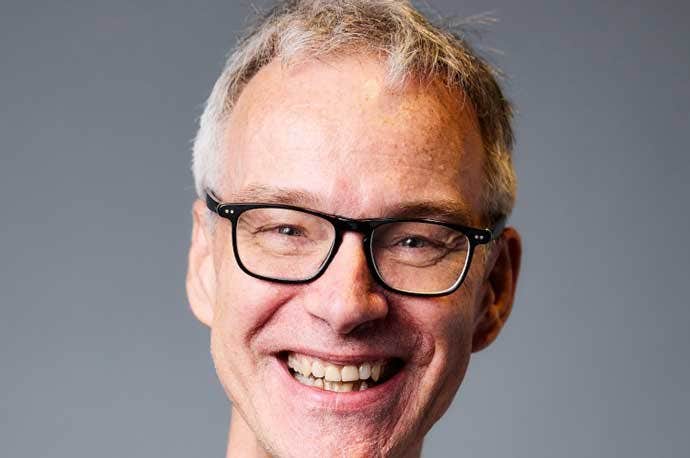
CEO: Oege de Moor
Headquarters: Seattle
Xbow offers users a way to continuously find exploits across attack surfaces, exploring applications and APIs like real attackers.
The company can chain vulnerabilities into working attacks and independently prove exploitability before human teams, according to Xbow.
Users define the scope, while Xbow logs every action to provide an auditable record. The platform’s deployment options also align with requirements around data separation, residency and compliance.
Xbow also works with partners and offers a deal registration option on its website. The company has also deepened its partnerships with Amazon Web Services, Microsoft and other vendors.
The company raised $120 million in a Series C round of financing in March and secured an additional $35 million in May, according to Xbow. Participants included Accenture Ventures, Nvidia’s NVentures, Samsung Ventures and SentinelOne’s S Ventures.
At the time, Xbow revealed that it has more than 100 customers worldwide and plans to use the money toward go-to-market expansion and international growth, especially in Asia-Pacific.
CEO Oege de Moor co-founded Xbow in 2024, according to his LinkedIn account. He previously co-founded Semmle and led the code analysis company as CEO until its 2019 acquisition by Microsoft-owned GitHub. He left GitHub in 2023 as vice president of its Next research and prototyping team.