Amazon Q4 Earnings: Jassy Defends Spending Spree, Denies ‘Quixotic Topline Grab’
‘We have confidence that these investments will yield strong returns on invested capital,’ Amazon CEO Andy Jassy says.
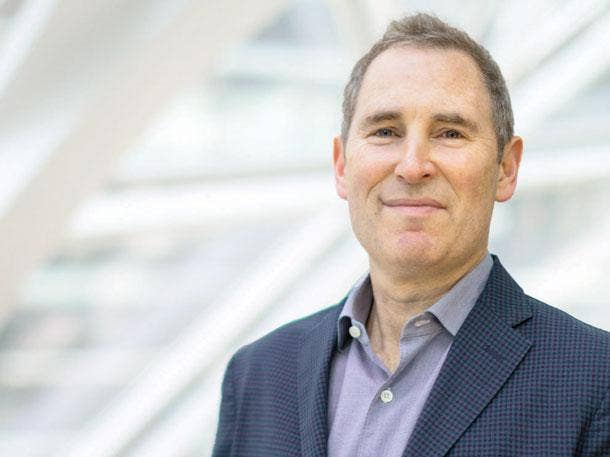
Andy Jassy, CEO of Amazon Web Services parent Amazon.com, defended an eye-popping $200 billion in capital expenditures the company expects to spend in 2026 in part to increase capacity for cloud and artificial intelligence demand, a number 25 percent higher than the $160 billion Wall Street expected and with the payoff coming down the road.
“This isn’t some sort of quixotic top-line grab,” Jassy told analysts on Thursday’s quarterly earnings call, covering Amazon.com‘s fourth fiscal quarter, ended Dec. 31. “We have confidence that these investments will yield strong returns on invested capital. We’ve done that with our core AWS business. I think that will very much be true here as well.”
Jassy said that inference costs will continue to get optimized as utilization grows, with prices normalizing over time. He pointed to Amazon’s investment in AI and cloud components such as custom chips as a move that will help improve prices and economics, a playbook Amazon ran in the earliest days of the cloud revolution.
[RELATED: AWS Layoffs Hit US And Canada Employees As Amazon Sheds 16,000 Jobs]
Amazon Q4 Results
Amazon’s stock joined a hurting technology and services sector this week, with Reuters reporting Wednesday that $830 billion in market value was wiped out after Jan. 28, when Microsoft, SAP and ServiceNow reported quarterly results that disappointed investors.
Amazon’s stock price fell about 11 percent after market close Thursday. Amazon traded at about $199 a share Thursday evening.
The sell-off hit companies that haven’t reported earnings yet, with Salesforce down 17 percent from Jan. 28 to Thursday and Oracle down about 21 percent. AMD was down about 20 percent since reporting earnings Tuesday.
Multiple media outlets also blamed recent news from Claude AI chatbot maker Anthropic on a legal software tool that showed AI upstarts pushing deeper into the application layer and challenging traditional software vendors.
Amazon Spending Breakdown
Jassy explained that most of the $200 billion CapEx is going into AWS to meet high demand for both core and AI workloads, with the company monetizing capacity quickly. Core workloads “are growing at a faster rate than we anticipated,” but the CEO is still bullish on the AI opportunity—which solution providers have also participated in.
“I passionately believe that every customer experience that we know of today is going to be reinvented with AI,” Jassy said. “There are going to be a whole bunch of customer experiences that none of us ever imagined that are going to become the norms of how we all operate every day and what we use.”
Data in the cloud, not on-premises, is the best way to leverage AI expansively, a boon for the cloud business, he said.
“We’re going to invest aggressively here,” he said. “We’re going to invest to be the leader in this space, as we have been for the last number of years. We have, I think, a fair bit of experience over the years in AWS of forecasting demands, doing it in such a way that we don’t have a lot of wasted capacity. And that we also have enough capacity to serve the demand that’s there.”
Even with all the spending, AWS saw 35 percent operating margin in the latest quarter, up 40 basis points year on year, Amazon.com CFO Brian Olsavsky said on the call.
AWS Still Growing
AWS saw fourth-quarter sales grow 24 percent year on year to $35.6 billion. That growth was above Wall Street expectations of 21 percent and marked an acceleration over the 20 percent growth reported last quarter. It also marked AWS’ fastest growth in 13 quarters and represented $2.6 billion quarter over quarter and nearly $7 billion year over year.
In a shot at the growth rates of smaller rivals, Jassy told analysts on the call that 24 percent growth on that ARR is more difficult than a higher percentage growth on a smaller user base.
Jassy said AWS has seen strong growth in core, non-AI workloads from enterprises moving infrastructure from on-premises to the cloud. He also pointed to AWS’ “vibrant partner ecosystem” as a differentiator, with Accenture—No. 1 on CRN’s 2025 Solution Provider 500—called out by name during the earnings report.
AWS’ backlog was $244 billion, up 40 percent year over year and up about 22 percent quarter over quarter.
Jassy described the current AI market layout as a barbell, with AI labs spending heavily on compute and “a couple runaway applications.”
On the other side of the barbell are enterprises already getting value out of AI in productivity, cost avoidance, customer service, business process automation, improved fraud detection and other use cases.
In the middle of the barbell are enterprise production workloads that are still getting evaluated plus new businesses and applications that companies build running on AI from the start, he said.
“That middle part of the barbell very well may end up being the largest and the most durable,” he said. “The lion’s share of that demand is still yet to come.”
Growing Chips Business
Amazon’s chips business grew triple-digit percentages year over year. Trainium AI accelerators and Graviton CPUs now have a combined annual revenue run rate of more than $10 billion.
Graviton has a multibillion-dollar annualized run rate business growing more than 50 percent year over year, Jassy said.
Trainium2 is fully subscribed with 1.4 million chips landed. Amazon expects nearly all Trainium3 chips expected to be committed by mid-2026. The chip is a multibillion-dollar annualized revenue run rate business with 100,000-plus companies using it.
Amazon expects to start delivering Trainium4 in 2027, according to the vendor. The chip will have six times the 4-bit floating point precision (FP4) compute performance, four times more memory bandwidth and double the high memory bandwidth capacity of Trainium3. AWS’ Graviton5 is now used by more than 90 percent of its top 1,000 customers.
“People know about our chips capability, our chips business, but I’m not sure folks realize how strong a chips company we’ve become over the last 10 years,” Jassy said.
Jassy has pointed to chips as an investment vehicle for Amazon to cut down on prices for customers. He said that the majority of new computing capacity Amazon adds is from Graviton.
“If we want AI to be used as expansively as companies want, we have to make the cost of inference lower,” the CEO said. “A significant impediment today is the cost of AI chips. Customers are starving for better price performance and, typically and understandably, the dominant early leaders aren’t in a hurry to make that happen. They have other priorities.”
Product Milestones
Amazon published a range of adoption milestones across its product portfolio Thursday that could interest solution providers.
Those include:
- The AWS Transform application modernization tool helping customers analyze 1.8 billion lines of mainframe code since launch
- The Amazon Connect customer experience product hitting a $1 billion annualized revenue run rate business and growing more than 30 percent with an average of 20 million-plus interactions happening on it each day
- The Rufus agentic AI shopping assistant was used by 300 million-plus customers and delivered nearly $12 billion in incremental annualized sales last year—with customers that used Rufus about 60 percent more likely to complete a purchase
- The Lens AI-powered product finding tool saw usage grow 45 percent more year over year.
- The Amazon Bedrock foundation model access offering is a multibillion-dollar annualized run rate business with customer spend growing 60 percent quarter over quarter
- The number of developers using the Amazon Kiro vibe coding tool more than doubled quarter over quarter
Amazon Q4 In Depth
Operating income was $12.5 billion, up 18 percent year on year from the $10.6 billion reported for the same period a year ago.
For the full year, AWS sales grew 20 percent year on year, reaching $128.7 billion. AWS operating income was $45.6 billion, up 15 percent year on year from 2024’s $39.8 billion.
AWS’ parent said to expect between $173.5 billion and $178.5 billion in the first quarter of 2026, up between 11 percent and 15 percent year on year.
The vendor expects operating income between $16.5 billion and $21.5 billion—which could mean as much as a 10 percent decrease year on year or as much as a 14 percent increase over the $18.4 billion reported for the same period a year ago.
Amazon also factored in about $1 billion of higher year-over-year costs to scale Amazon Leo—the low Earth orbit satellite network project formerly called Project Kuiper and a competitor to Elon Musk’s Starlink—in 2026.
Amazon has launched 180 satellites, plans more than 20 launches in 2026 and plans more than 30 in 2027. The company expects to launch the satellite business commercially in 2026 and has commercial agreements signed with AT&T, Australia’s National Broadband Network and others.