Anthropic’s Corfield On AI Skills, Partner Growth, Enterprise Adoption
‘Partners are learning as they go, and they’re getting some great [references] from their customer-zero work but also the work that they’re doing with their customers,’ says Anthropic Channel Chief Steve Corfield.
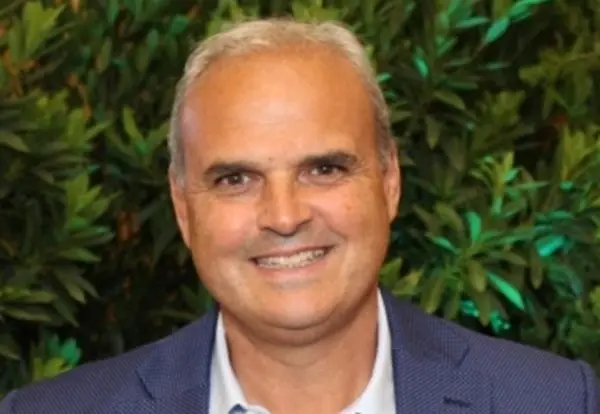
As enterprises move beyond artificial intelligence experimentation, Anthropic customers increasingly want solution providers that can demonstrate clear returns on investment and proven case studies deploying AI agents at scale, Anthropic Channel Chief Steve Corfield told CRN.
“Partners are learning as they go, and they’re getting some great [references] from their customer-zero work but also the work that they’re doing with their customers,” said Corfield, whose official title is head of business development and partnerships. “One of the things they can knock over fairly confidently [is communicating to customers] where they know there’s the ROI, there’s the TCO and all that good stuff while building a platform to do the more complicated agentic things.”
Corfield said solution providers in the Claude Partner Network have helped customers with everything from deployment to measuring AI outcomes. At this stage of enterprise AI adoption, he said, customers care more about business results and model strategy over cost per token.
[RELATED: Anthropic Launches Claude Security: 5 Things To Know]
Anthropic Invests In Certifications
Tony Olzak, CTO at Irvine, Calif.-based solution provider Trace3—No. 36 on CRN’s 2026 Solution Provider 500, a CRN 2026 MSP 500 honoree and an Anthropic partner—told CRN in a recent interview that Trace3 is differentiating itself in the AI channel by going beyond solving one-off customer problems through an end-to-end engagement with consulting up front and delivering production at scale.
Trace3’s variety of vendor partnerships and ability to work with AI startups sets it apart in the channel, Olzak said.
“If you’re only focusing on—‘Can I prove out this use case and a prototype for it?’—once it goes from prototype or demo to scale into production, there are a million problems that have to be solved,” he said. “You’re not going to be able to solve them by building all that stuff yourself. Nor should you spend time trying to scaffold all that stuff yourself. That’s why all these startups exist. And no one knows that space better than us. If you truly want to be successful doing this, we believe that Anthropic plus plus plus, which is Trace3’s lane, is how you’re going to be the most successful.”
Here’s more of what Corfield had to say about Anthropic’s burgeoning channel partner program.
What should Anthropic solution providers know about how you are investing in the certification program?
If you think about enterprise AI adoption, it’s going to depend on a range of people and skills.
And the more that we create this global enterprise and create this big footprint, the more of a portfolio of skills we’re going to need. We’ve worked hard to address that.
Given the fact this is probably the biggest platform shift that any of us will ever see, and all enterprises are going to it, there are genuinely going to need to be millions of people trained who know what they’re doing.
Our view is very much that that workforce barely exists today. And somebody has to build it. And somebody has to set the standard. We intend to do both.
There are thousands of organizations deploying Claude. They want to govern it. They want to evaluate it. Customers need the ability to check and ensure that people are skilled and qualified before their work starts.
Our ambition was simple. We wanted Claude certifications to be that gold standard. How do we become recognized internationally as the proof that somebody can deploy AI safely? … Our Claude certifications have become the passport.
Over the last five months, we’ve done a lot of work with our ministry of education. We’ve done a lot of work with our partners. We’ve done a lot of work with Pearson around building global systems of record.
This thing has real teeth … as of today, we [have 75,000 certified consultants in the ecosystem] across nearly 2,000 firms. And it’s accelerating by the day.
What we’re really experiencing is this massive demand in the market to have that existence of certification. How do you get that safe diffusion … at scale into this network?
[We’ve looked to tackle] how do we build this gold standard of enablement that covers all the foundational requirements you’d need … [all] the way through to how do we consider forward-deployed engineers? What needs to sit around that? We’ve got a program that pretty much is now being evolved to cover all walks.
How does building an AI partner program differ from traditional software vendors?
Organizations [can] go from zero to thousands of partners over 20 years. We launched a network in March, and current registration is [about] 42,000 partners.
That gives you an example of the demand. … We have [multiple partner tiers, including] Select, which is for our smaller regional SIs. We have our Preferred tier, which is our medium SIs. And then we have our Global Premier partner.
Within that, we have set certain requirements, like having a certain amount of certified individuals. But then we go deeper. How many customer deployments have you done? Have we got referenceable work? How do we bring in things like a customer success score?
We can look at things in different dimensions. In the SaaS world, partners would go and deploy technology and build something. … [Our approach includes asking] have you got the certified people?
Have you deployed customers? And can we get a view on deployment quality? Then the last piece is: Have we got public customer stories that can be shared more broadly with customer references, which is a point of reference for being super high quality.
We have taken the pillars of what you would see in a standard architecture, but then we are distilling that into: How does that need to work in an AI landscape?
Where is Anthropic’s partner program headed?
Enterprises are taking the world of AI incredibly seriously now, and I think they are looking to the partners that they know to look at how they can then deploy the technology appropriately.
With a number of our Global Premier partners, we have infused our applied AI technology people to work alongside them.
So when you’ve got the traditional thinking of a GSI, and they’re looking at how do you redefine a process or look at how a business is operating, we are infusing our applied AI technology teams into their teams such that we’re working hand in hand to bring everybody up to speed.
[We are using the $100 million partner investment] for things like: How do we do proofs of concept? How do we do MVPs [minimum viable products] with customers? What does our customer investment fund look like to help, A, accelerate work? But B, show to our customers that we are prepared to invest with our partners to do transformational things.
All those things lead to deployment. And then hopefully that becomes more of a factory approach within the customer as they agentify certain things.
There are lots of questions around … using the right models and is it model-based? The more we dug into those questions, it wasn’t the customers caring so much about the price of the token.
But it was really more about the cost of getting the work done. … A piece of work that we will be doing with partners is making sure that the partners are matching the customer with the right model for the job. So how are you using Fable [Anthropic’s AI model designed for long-running, complex tasks like multiday coding projects]? Or Haiku [Anthropic’s fastest, most cost-efficient AI model tier, built for high-speed and low-latency tasks]?
How do you make sure that they have the right controls and spend caps and usage so that the work matches what they’re doing?
That’s a piece of work that we’re working with our partners on just to make sure that the customers that are working with our partners are working more toward outcome-based rather than just token consumption. People are very motivated with that.
Our large customer base is always expanding. … It’s right for us to work with the partners to ensure that they’re deploying the right technology at the right time, and such that those economics work for every customer that we deal with.
Can AI upstarts overcome incumbents’ enterprise advantages in having built relationships over decades and holding decades of customer data?
We’ve announced an awful lot of strategic deals with some of the biggest brands in the world.
And those strategic deals aren’t just to use the API key to do work and develop things for customers.
But this is actually for them to transform themselves and how they use Claude internally and have some of the best hero stories that then they can articulate how they took their [300,000- or] 400,000-person organization, truly transformed it and agentified certain processes or certain businesses within their own.
[For example] KPMG talking about the [Digital Gateway Powered by Claude, which brings Claude into KPMG’s client delivery platform built on Microsoft Azure].
You can see how our partners are really thinking about … the billions of dollars of the economy that could be addressed with AI and how they’re thinking about approaching it very differently and using powered by Claude technology to do that.
The more that we can do that, the more you will see the ecosystem develop even further on Claude.
What should solution providers know about the Ode with Anthropic, the AI services company affiliated with your company?
We’re a small organization from a head count perspective. Our goal is very much scaling through the partners and how much autonomy can we drive through the partners.
To drive that autonomy and to ensure things like customer success, it has to be super high quality. And that’s why you’ve seen us go for proctored exams.
Our applied AI base camp [for partners] is the same training that … we deliver to our own people.
When I talk about autonomy, what I really want is people thinking if somebody comes in AAI-base-camp trained, they have an applied AI person from Anthropic or equivalently trained.
And then how do we give all of our partners access back to the mothership such that we can drive scale?
Anthropic is always going to be a small head count organization. … Our mantra isn’t to become a huge organization by people.

Are you concerned about AI technology enabling cheating on certifications and credentialing?
We’ve done a lot of work with Pearson. … We’re using their infrastructure, their credential, their certification platforms because they have some very clever technologies that allow them to consider when people are potentially cheating.
They have a bunch of algorithms and things that run that can pull out who’s cheating. We actually get a list of those people that potentially have cheated.
I’ll give you an anecdote on the insatiable demand for our certification. We went to India … with a heady goal of training 5,000 people in person. And this is something that we only thought about about eight weeks [prior].
We trained 5,000 people face to face and certified 5,000 people in [Bengaluru] who came to our physical site to do the training. That week we trained 7,000 in total with boot camps and workshops and things, but we actually certified 5,000.
We had a backlog of 29,000 people and a queue out the door. This is what we’re feeling inside the organization, which is this demand for the thing that that everybody wants and needs.
That’s why you’re seeing us invest so hard on not only making it available to everybody and at scale, but the bar is super high. … Our Claude Certified Architect: Foundations [certification], it has a good pass rate, but it isn’t a 100 percent pass rate by any means. It is a proctored exam that is difficult. … Now that people are starting to get these qualifications, you can see them on LinkedIn.
You can see them talking about it. … It’s not just hands-on experience of Claude. You have to have some business intelligence to use it. … And it’s going to evolve over the time. … We’re looking down the road at a super high-quality program for FDE. … As we bring on different things, we’ll build those badges.
And we’ll constantly improve the foundational elements around things like developer, architect and FDE [roles].
How should partners approach customer AI conversations?
Partners are learning as they go, and they’re getting some great [references] from their customer-zero work but also the work that they’re doing with their customers.
Many are focusing on data. Models change a lot. Models upgrade. One of the things they can knock over fairly confidently [is communicating to customers] where they know there’s the ROI, there’s the TCO and all that good stuff while building a platform to do the more complicated agentic things.
The partners are getting more and more skilled. They’re getting more and more intelligence. They’re getting more and more reference-ability.
That is building the confidence in the enterprises to say, ‘These partners are now good to go.’ And all we’re doing is making sure we’re fueling them with the enablement and also access to our people, people like our applied AI people, etc., to make sure when we’re doing things on the ground that it is up to our standard and quality.