Broadcom Q3 Results: CEO Tan Forecasts Surging AI Infrastructure Buildout
‘This is, again, a carefully structured outlook that we believe we can achieve,’ Broadcom CEO Hock Tan says.
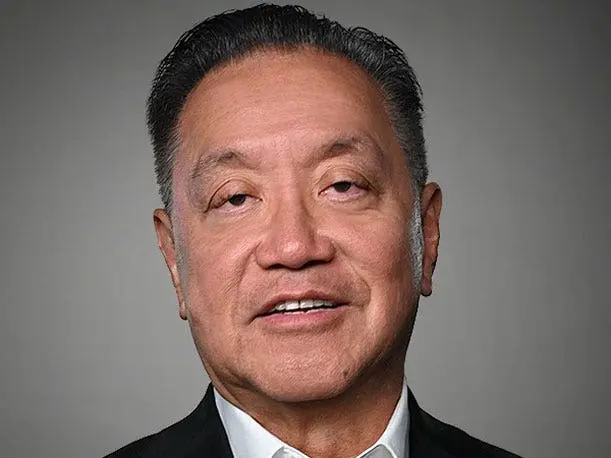
Broadcom CEO Hock Tan continues to see artificial intelligence-related spending roaring for at least the next few years, feeding demand for the vendor’s XPUs and broader AI infrastructure portfolio.
However, during the Palo Alto, Calif.-based vendor’s latest quarterly earnings call Wednesday, Broadcom presented a financial forecast that appeared conservative to some analysts on the call. The vendor reported the results of the third quarter of its 2026 fiscal year on Wednesday, covering the three months ended Aug. 2.
Tan told analysts that the forecast reflects data center site availability and the volatile supply constraint environment.
“We can ship significantly more,” Tan said on the call. “[The] question [on] our mind sometimes is: Are they going to be—even as we ship the chips—going to be deployed on a timely basis? And that’s always very much in our mind when we give you that outlook.”
He continued: “If circumstances change, and our ability to secure more supply changes, of course, we will uplift. But at this point, that’s our best outlook. … This is, again, a carefully structured outlook that we believe we can achieve.”
[RELATED: HP Expects ‘Slower Rate’ Of Memory Cost Increases From Now On: CFO]
Broadcom’s top channel goals for 2026 include improving partner profitability and increasing the amount of professional services going through partners, according to CRN’s 2026 Channel Chiefs.
Giovanni Carraro, senior vice president of global strategic alliances at New York-based Kyndryl—No. 13 on CRN’s 2026 Solution Provider 500—told CRN in a recent interview that his company is expanding its strategic alliance with Broadcom, including delivering end-to-end consulting services for the vendor’s VMware Cloud Foundation (VCF) offer.
“From our perspective, we think we’re bringing what I would say is a cloud-like speed, automation, developer experience to private and hybrid cloud environments,” Carraro told CRN. “Together, we’re helping enterprises modernize, secure, and scale mission-critical systems. We’re—whether it’s sovereign, whether it’s AI-ready private clouds—reducing some of the operational complexity, securing by design, strengthening [customers’] long-term performance.”
AI Networking, Switching Chip Growth
Tan called Broadcom “the leader in AI networking” and the leader in every generation of peripheral component interconnect express (PCIe) switching and leading-edge optical digital signal processors (DSPs). The vendor also has a rapidly expanding capacity and market position in a variety of laser options for optical interconnects, the CEO said.
Broadcom’s AI networking revenue for the quarter more than doubled year on year. Tan expects AI networking revenue to grow just as fast as XPUs over the next few years.
Charlie Kawwas, president of Broadcom’s Semiconductor Solutions Group, described on the call growing adoption of the vendor’s Tomahawk Ultra, an Ethernet switching chip designed to connect thousands of AI accelerators and graphics processing units (GPUs).
Broadcom saw customers deploy the chip in the quarter and expects scale-up application in the 2027 fiscal year, he said.
Tomahawk 5 customers have been upgrading to Ultra in part for latency improvement or to the higher-bandwidth Tomahawk 6. Customers have also deployed the more advanced Tomahawk products with both XPU and GPU clusters, Kawwas said.
Broadcom Expands Laser Capacity
Broadcom executives on the call detailed a variety of ways the vendor is working to expand hardware production capacity as AI demand grows.
The vendor expects to address substrate supply bottlenecks somewhat through deployment in a Singapore facility in fiscal year 2027, for example, Tan said.
Kawwas told analysts on the call that the vendor has already expanded, for example, capacity for its electro-absorption modulated laser (EML), continuous wave (CW), vertical-cavity surface-emitting laser (VCSEL) and indium phosphide factories this year. He expects to increase capacity significantly over the next two years.
That growing capacity is part of what’s fueling Broadcom’s growing capital expenditure (CapEx) as well, Kawwas said. Growing sales in XPUs compared to other Broadcom products with better margins also impacted Broadcom’s overall margins for the quarter.
“Stop focusing on gross margin is what we are saying,” Tan told analysts on the call. “Look at where it matters—operating margin—at the end of the day. Because the growth in revenue far surpasses the growth in OpEx—operating spending—to support their growth in revenue.”
Although Broadcom doesn’t supply memory to customers, the memory supply chain crisis can delay customers from deploying Broadcom products, Tan said on the call. Delays in constructing data center shells can also factor into timing for getting Broadcom products into production—hence a more conservative outlook by the vendor than some analysts expected on Wednesday’s call.
“We believe with a pretty high degree of confidence we will ship $350 billion of AI semiconductors to these customers (AI vendor giants) in the next two years,” Tan said. “That’s the best way to look at it. It doesn’t necessarily mean all 30 gigawatts need to have been deployed within that period.”
OpenAI, Anthropic Becoming AI Hyperscalers
Tan said on the call that he sees ChatGPT maker OpenAI and Claude maker Anthropic becoming hyperscalers “in their own right.” Like the hyperscalers of Microsoft, Amazon Web Services and Google, the two AI upstarts seek first-party compute capacity, cost-performance-optimized silicon and running their own data centers.
“They are using cloud services, third-party services to deploy their models,” the CEO said. “Long-term, we see these guys to be no different from a hyperscaler, and will run their own data centers and be first party to offer AI, generative AI APIs (application programming interfaces), access models to the world. So we see that happening. It’s not speculation. It’s actually happening, and we are in the midst of enabling that.”
Broadcom partnered with finance giants Apollo and Blackstone to enable more than 20 gigawatts of compute infrastructure for OpenAI and Anthropic by the end of 2028, Broadcom CFO Amie Thuener said on the call. Broadcom closed the first $35 billion tranche in June for Anthropic’s 1 gigawatt deployment already underway.
Tan Points To Custom AI Chip Outperformance
Throughout the call, Tan held up Broadcom products as superior to those from GPU giant Nvidia.
During the quarter, Broadcom began production shipments of the next-generation Google Tensor Processing Unit (TPU) version 8i, whose performance “is comparable, if not surpasses, the [Nvidia] Vera Rubin GPU,” the CEO said.
Broadcom also started shipping OpenAI’s first generation custom accelerator Jalapeno, “which outperforms [Nvidia’s] Grace Blackwell GPU for inference workloads,” the CEO said. Jalapeno can run frontier models at half the cost of a GPU.
“Jalapeno outperforms the Grace Blackwell Ultra in performance for … latency, throughput, and power,” the CEO continued. “It’s actually comparable to Vera Rubin GPUs in running OpenAI workloads. The lesson here is when you co-develop a chip that is optimized for your particular LLM (large-language model) workloads, you will outperform any GPU.”
Broadcom XPU shipments for the third quarter grew more than threefold year on year and represented 73 percent of AI revenue during the quarter, Tan said.
Growing AI Investment By Cloud, AI Giants
Tan shed some light on the AI investments of some of the largest AI vendors in the market today.
In the fourth quarter, Broadcom expects to accelerate shipments of Google’s Ironwood seventh-generation Tensor Processing Unit to Anthropic and ramp up high-volume shipments of the new TPU version to Google. Broadcom plans to deliver 1 gigawatt of Ironwood to Anthropic in 2026 with another 5 gigawatts of TPU version 8i in 2027. Anthropic could deliver another incremental 10 gigawatts in 2028.
“Anthropic is on track to become our largest XPU customer in 2027 and sustain that in 2028,” Tan said.
Broadcom expects to deliver multiple tens of billions of dollars of TPUs a year over the next several years, Tan said. “We have consistently, I should say, delivered the fastest time to market for TPUs from product definition to production.”
OpenAI’s Jalapeno should deploy 1.3 gigawatts in 2027. Tan expects OpenAI to deploy more than 5 gigawatts of Jalapeno and its successor generation, making OpenAI the No. 2 XPU customer for Broadcom.
Broadcom Q3 Revenue Surges On AI Semiconductor Growth
Broadcom saw a record $29.6 billion in revenue in the third quarter, up 86 percent year on year.
The vendor brought in $16 billion in operating income during the quarter using generally accepted accounting principles. Without using GAAP, operating income was a record $20.1 billion, almost double year over year.
The vendor generated $14.2 billion in cash from operations and saw $13.7 billion of free cash flow, 46 percent of revenue.
The AI semiconductor business brought in $16.7 billion during the quarter, more than tripling year on year. The business grew about 50 percent quarter over quarter.
Broadcom’s overall semiconductor business brought in a record of about $20.8 billion for the quarter, more than doubling year on year. Its infrastructure software business brought in $8.8 billion in the quarter, up 29 percent year over year.
Broadband and server storage revenue grew in the quarter, Tan said on the call. Broadcom spent $532 million in CapEx during the third quarter.
Broadcom Forecasts AI Revenue Growth Through Fiscal 2028
Broadcom executives said to expect $34.8 billion in the fourth quarter of the 2026 fiscal year, which would mark an increase of 93 percent year over year. The vendor expects a non-GAAP operating margin of 66 percent, the same as a year ago.
Tan expects XPU and AI networking revenue to triple year on year, driving fourth fiscal quarter AI revenue to $21.7 billion, more than triple year on year. The activity also led Tan to increase the total revenue expected for the 2026 fiscal year, going from $56 billion now to $58 billion. That $58 billion expectation would mark more than double the growth of revenue from a year prior.
Broadcom has enough AI semiconductor supply to double revenue to about $115 billion in 2027, Tan said on the call. “Our demand actually exceeds this outlook, and we will work to improve supply,” the CEO said.
Fiscal year 2028 AI semiconductor revenue should again double, hitting $230 billion. Broadcom has the supply to reach that revenue and does not plan to update the figures quarterly.
Tan told analysts that he continues to expect the AI leaders’ need for compute infrastructure to inflect even more in 2027 and 2028, which is a boon to the XPU business.
Broadcom expects non-AI semiconductor revenue to hit $4.3 billion in the fourth quarter, up 5 percent sequentially. Infrastructure software revenue should grow 25 percent year on year to $8.7 billion.
The vendor expects to spend $1.4 billion in CapEx in the fourth quarter, partly to build capacity. Broadcom’s stock traded at about $360 a share after market close Wednesday, down about 1 percent.