CDW’s AWS-Focused Mission Wants To Get Customers Out Of ‘POC Land’ Into Real AI
Mission Cloud’s Ted Stuart tells CRN that the CDW-owned Amazon Web Services practice is expanding AI offerings that help customers move beyond failed POCs toward production-ready projects, business alignment and deeper agentic AI-powered migration assessments.
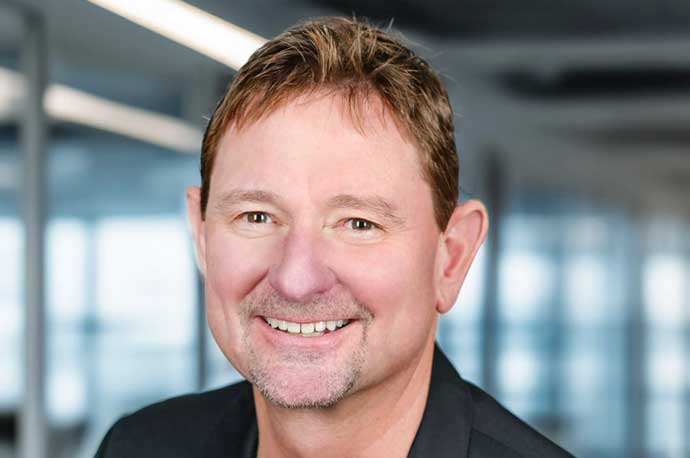
Amazon Web Services-focused cloud services provider Mission Cloud has sharpened its role inside CDW since being acquired in November 2024, becoming “Mission, A CDW Company” and serving as CDW’s dedicated AWS practice.
Ted Stuart, president and chief operating officer of Mission, told CRN that his company recently introduced several new AI offerings, including AIM, or AI with Mission, and Five-by-Five-by-Five, which is designed to help customers work with five stakeholders, five data sources, and five days to move quickly toward usable AI outcomes.
Stuart said most customers are already past the stage of debating whether AI matters and are now focused on execution, prioritization and business alignment. “Everybody knows that they need to do it to remain competitive within their industry,” he said.
[Related: Analysis: CDW’s Hiring Of HPE’s Hang Tan Underscores Enterprise Services Ambitions]
Stuart also said Mission is trying to move customers beyond traditional proofs of concept, which often fail to reach production because they do not fully address data, governance and security issues. He positioned Five-by-Five-by-Five as more of an MVP or minimum viable product approach that can go into production sooner and then expand as more data sources are added. Mission has completed more than 400 AI projects over the past few years, but Stuart said the newer programs significantly improve the success rate of AI projects.
“These are newer packaged offerings, and they’re meant to solve some of the problems that we’ve seen around alignment,” he said. “I think more packaged offerings have a higher chance of success and not getting stuck in POC land.”
Within CDW, ranked No. 5 in CRN’s 2026 Solution Provider 500, Stuart said Mission does not compete with Azure or Google Cloud practices because most customers have already chosen their primary technology stack. Instead, he described collaboration across CDW’s cloud practices.
Looking ahead, Stuart said Mission will continue enhancing its AI products ahead of AWS re:Invent and expanding its use of agentic AI, particularly in migration assessments. “The bottom line is, the agents can just produce far more depth than humans can do in the same amount of time.”
There’s a lot going on in AI and in Mission, A CDW Company. To learn more, read CRN’s complete conversation with Stuart, which has been lightly edited for clarity.
How do you define Mission?
Mission Cloud Services was founded back in 2017. We are 100 percent focused on AWS, so we do AWS migrations, modernization, resale, and manage services. And in November of 2024, Mission was acquired by CDW. So now we are CDW’s dedicated AWS practice. We’ve consolidated all of the AWS resources—Mission resources, CDW resources—all into this dedicated practice led by Mission. We’ve also done things like rationalize our product and services portfolio and our pricing and all of that.
So CDW is still keeping the Mission name?
Yes. We’re now officially Mission, A CDW Company.
Why did CDW decide to move its AWS business to Mission rather than making Mission’s AWS focus a part of CDW overall?
Mission as a brand was very strong within the AWS ecosystem. There’s a lot of brand recognition within AWS. I would imagine over time we might transition away from the Mission name, but it’s only been 18 months, and I think it’s still a very strong brand. So we’ve kept it Mission, a CDW Company, and I think it’s one of those things we’ll probably revisit every year and see what makes sense. But one of the reasons CDW acquired Mission was the brand we had within the AWS ecosystem was important to them. It was a valuable asset.
Does Mission work with any of the other hyperscalers or does it focus exclusively on AWS?
Exclusively on AWS.
Where was Mission originally headquartered?
We were originally owned by Great Hill Partners, a private equity firm out of Boston. Then we acquired two consulting firms in Southern California, and one consulting firm in Boston, and that’s what formed the foundation of Mission. Up until COVID, we had an office in Los Angeles and one in Boston, but after COVID, we shut down the physical offices and went 100 percent virtual.
Is the Mission team still 100 percent virtual?
Yes. No return-to-office mandates. And it’s actually been a good thing for us in the sense that it’s really opened up recruiting and our ability to attract talent. It’s just so much easier when it’s virtual. It’s actually been a really good thing for us and our customers, I think.
OK, Mission has a bit of news. What’s going on?
We just unveiled a whole bunch of new AI-focused products at the June AWS Summit New York. The first is AIM, or AI with Mission, which is the Mission spin on the AIR (AI Roadmap Prioritization) Workshop from AWS. We have another offering called Five-by-Five-by-Five, based on Amazon Quick. They work together, so if a company is looking to get started on their AI journey, or wherever they’re at, the AIM Workshop is a great way to do that. It’s a 90-minute workshop aimed at getting alignment between the business stakeholders. Coming out of that, a natural next step is to do what we would call a Five-by-Five-by-Five. We work with five stakeholders using five data sources in five days, so it’s meant to get customers up and running quickly. We also offer a fixed-fee chatbot and an agentic POC (proof of concept). Then, depending on what’s important to the customer and what their use cases are, we’ll go from there.

When Mission talks to customers, have they already pretty much started to implement AI, or are most of your potential customers still in the pre-implementation phase?
I would say that almost all of them are implementing AI in some form or fashion. Questions about, is AI here to stay, does AI work, nobody’s thinking about that anymore. Everybody knows that they need to do it to remain competitive within their industry. What we’re more focused on now are other things. One is getting alignment around what are customers’ top priorities, kind of stack ranking them based on business impact, cost, and time to value. One of the outputs of the AIM workshop is something like a bubble chart format that says here’s your biggest impact, your time to value. You have to look at all those variables and get the business aligned around what your top AI priorities.
We’ve also seen lots of studies out there where the POCs have, for the most part, not been successful. They don’t make it to production, and a big reason for that is that, for a POC, data is typically not a big issue. You’re hooking up maybe one or two data sources. You don’t have governance or security concerns, so POCs, by nature, are sort of meant to succeed. They’re meant to prove out a particular technology. But once you get into the real world, well, now all those other things matter. Data matters, security matters, governance matters, but those are all the things you typically strip out of a POC. So, a lot of what we’re doing with customers, such as Five-by-Five-by-Five, I would not call those POCs. Those are MVPs, or minimum viable products, that are actually in production once you get those five data sources connected. It’s relatively easy to add more data with an MVP versus a POC. We’re trying to go straight to production where we can.
How many customers do you think have gone through Mission’s AIM and Five-by-Five-by-Five processes so far?
It’s relatively small, probably only somewhere between, call it 10 to 15, if I had to guess. I don’t know the exact number. We’ve done well over 400 AI projects over the past few years, so we have a lot of experience, but these are newer packaged offerings, and they’re meant to solve some of the problems that we’ve seen around alignment. I think more packaged offerings have a higher chance of success and not getting stuck in POC land.
So AIM and Five-by-Five-by-Five are focused on getting customers started in the process and getting them to a minimum viable product. Prior to this, then, how did you complete the 400 or so AI cases that you’ve done without having AIM or Five-by-Five-by-Five?
I think we did it the same way a lot of other folks probably do it. We certainly did our fair share of POCs. AWS put a lot of funding behind POCs, and initially we along with our customers were very excited to do POCs. But I think the challenges with POCs are now well understood, and so we’re just trying to move to the next step and help our customers be successful and get alignment across business stakeholders.
With the AIM workshop, if someone happens to be somewhat technical and knows something about AI, that’s great. But we can also take someone who knows virtually nothing about AI but who understands their business very well, and so it doesn’t have to be a super technical conversation, where I think earlier on in the AI journey it was mostly a technical conversation driven by technical leaders. Now we’re trying to move that to more business-led conversations and projects, and we hope that’ll be successful.

Mission is focused on AWS and AI. But Microsoft is probably the most common AI used by business. And Google AI and other AIs are out there. Does Mission compete with other parts of CDW in terms of helping customers implement AI from different providers?
We haven’t seen that yet. I work very closely with my counterparts that run the GCP practice and Azure practices, and from my experience of being 18 or 19 months into our acquisition, most of the customers we talk to have already made their primary selection. I met with the CEO of a retail company not too long ago at a customer event, and we met with their team and talked to them about AI. They made it very clear that they had standardized on the Microsoft tech stack, and so I just handed that off to my counterpart that runs the Azure practice. So I haven’t seen any situations where we’re actually competing. Most customers have made their decision, so we don’t spend a lot of time trying to convince someone to change. There’s been a lot of good collaboration, but I have not experienced us competing against the other practices. Customers have already made an investment. They know what they want to do.
What comes next for Mission? What are some things that you want to do throughout the second half of the year?
We have two big events in the year. We recently were at the AWS Summit New York, and we did product launches there. The big event every year is AWS re:Invent. That’s coming up, typically the week after Thanksgiving, and we’ll be further enhancing the new products that we’ve launched and coming up with the next versions of those. And we’ll continue to build out new services and solutions that are heavily focused on AI.
One of the things we’re having a lot of success with is what we call an agentic assess. AWS has this MAP or Migration Acceleration Program. The first phase of that is an assess that is typically funded by AWS. It takes anywhere from two weeks to five weeks, depending on the complexity and the size of the customer. In Q1, we started doing these with AI agents, and initially I think we had something like 19 or so agents. Last time I heard from the technical team, we’re up to over 50 agents that we use to do the assess, and it’s been very well received by our customers. The bottom line is, the agents can just produce far more depth than humans can do in the same amount of time. We still touch on all the same aspects like networking and operations and security and cost, and all those pillars. But with the help of agents, we can just go literally about 30 or 40 times deeper than we could before in the same amount of time.
The other thing that’s cool about it is, a lot of engineers don’t really enjoy writing. That’s why they’re engineers. Having AI take that off their plate by not only helping with the technical work but also producing all the documents and presentations, we can now move so much faster with AI and actually start showing the customer results in a matter of just literally a few days. Now it becomes an iterative process where we show them what the agents have found and what’s going on, and we can then course correct or add things that we might have missed very easily. Before, we might spend, say, a four-week process where the customer really wouldn’t see anything until we got to week four, and then it’s kind of this big reveal. Even if the engineers have done phenomenal work, if you’ve missed something or the expectations are slightly off, well, you’re at the end of the process and it’s very hard to fix something. But in the world of agents, we can show them the output very quickly and find areas where we need to go deeper, or things we missed. It’s a much more iterative process. We want to apply this agentic AI concept to more and more things. We’ve been using it primarily when someone wants to migrate a workload from a data center to AWS, but we would like to expand with the next iteration into other areas with other workloads, other technologies.