IBM Q1 2026 Earnings: CEO Krishna Says AI Is A Tailwind To The Business
‘As [customers] get to scale, they’ve got to use the data from their internal systems. If they’re using data from the internal systems, many parts of our portfolio—be it Red Hat, be it Confluent—will come to be consumed more and more,’ says IBM CEO Arvind Krishna.
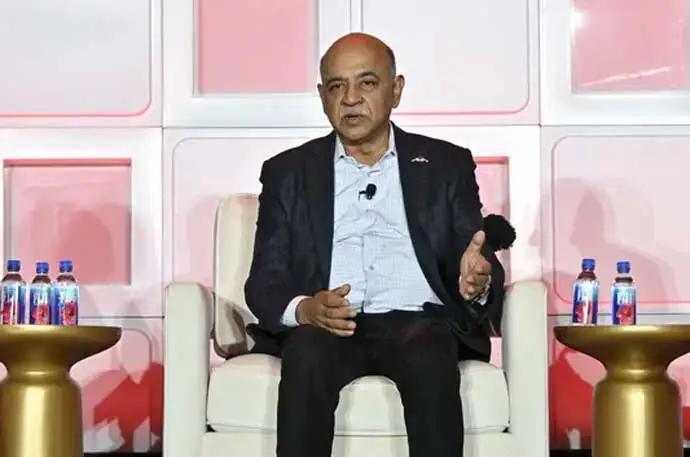
Growth in IBM’s first fiscal quarter in its artificial intelligence, software and hardware portfolios did not translate into an improved forecast for the rest of the year—but Chairman and CEO Arvind Krishna (pictured) and his team feel confident in the long-term durability of parts of the vendor’s business as OpenAI, Anthropic and other AI upstarts continue to innovate.
AI is a tailwind to the Armonk, N.Y.-based vendor’s business, Krishna told analysts on the company’s first-quarter earnings call held Wednesday, covering the three months ended March 31.
Customers experimenting with AI might make copies of some of their data, put it on a public cloud and put it in a public frontier AI model. “[But] as they get to scale, they’ve got to use the data from their internal systems,” the CEO said. “If they’re using data from the internal systems, many parts of our portfolio—be it Red Hat, be it Confluent—will come to be consumed more and more.”
[RELATED: The 50 Coolest Software-Defined Storage Vendors: The 2026 Storage 100]
IBM Q1 2026 Earnings Highlights
Jack French, area vice president of the cloud global solutions and architecture team at Maryland Heights, Mo.-based World Wide Technology—No. 9 on CRN’s 2025 Solution Provider 500—told CRN in an interview on WWT’s financial operations (FinOps) practice that IBM’s Cloudability cloud financial management platform has been one of his team’s essential tools.
WWT has paired Cloudability and other FinOps tools with its Advanced Technology Center for testing how the tools work in different environments and whether the tool can support and ingest new data sources from AI companies to deliver a more holistic understanding of benefits and trade-offs for any one customer.
“We can consult on tooling, but I think most impactful is [that] we’re proving out [artificial intelligence] model effectiveness and our application architectures for AI that show the most cost-effective patterns,” French said.
IBM and various divisions of its portfolio, including Confluent and Red Hat, have been investing in their partner programs to seize opportunities in AI, data streaming and hybrid cloud.
Red Hat, for example, is looking to add core sales training, core technical training, sales tools and other capabilities throughout the year to help partners with its AI portfolio, according to CRN’s 2026 Partner Program Guide.
Confluent this year looks to increase the overall percentage of company revenue that comes through the channel and increase the amount of professional services going through partners, according to CRN’s 2026 Channel Chiefs.
IBM’s Growing AI Business
IBM’s AI platform, agents, assistants and orchestration business is north of $1.5 billion, CFO Jim Kavanaugh said on Wednesday’s call. He considers that business about 25 percent penetrated.
The AI business is contributing 2 points of growth on an annualized basis, Kavanaugh said. IBM’s AI business “eclipsed” $4 billion in annual recurring revenue in the first quarter.
“It is central to the way we run a services-as-software model overall,” the CFO said.
IBM Consulting—No. 6 on CRN’s 2025 Solution Provider 500—makes up about 40 percent of AI signings with 30 percent of the backlog related to generative AI.
IBM will continue the neutral “Switzerland” position it has taken in AI frontier models for three years now, Krishna said on the call. IBM is not going to predict which of the frontier model makers will win.
“We want to work with all of them,” he said. “Then we also work with open-weight models. And we produce models where we have either domain expertise—or people may want much smaller models to be able to run them on-premises, or I’ll say euphemistically, on a one-to-four GPU server node, as opposed to a very, very large cluster.”
Users continue to turn to IBM’s software development and coding tools portfolio instead of OpenAI Codex or other models because they don’t want their code exposed to the public and they want to address the entire software development cycle from testing and patching to documentation and maintenance, the CEO said.
IBM’s recently acquired Confluent business will help AI agent users manage and control data exposure, Krishna said.
IBM Software Results: Durability Amid AI Disruption
AI presents a flywheel, multiplier opportunity for other parts of IBM’s business, Krishna said. As IBM customers increase consumption of IBM software products, that leads to more consumption of the company’s automation products and mainframes as the customers implement more fraud protection and other tools.
IBM’s product portfolio is more consumption-based than subscription-based, which should mean less vulnerability to AI tool disruption—with fewer human employees, meaning fewer subscriptions and licenses needed in workplaces.
Even IBM’s decades-old mainframe business is measured in million instructions per second capacity, which is a consumption measure, Krishna said.
About 4 percent of IBM’s software portfolio are applications–—mainly in the Maximo suite of enterprise asset management, maintenance and reliability, which some might argue is more so a system of record for maintenance records going back decades, Krishna said.
Krishna and his team have driven the IBM portfolio to this state over the past seven years, betting that the underlying data layer and business logic is the real value in enterprise technology, the CEO said. In contrast, interaction layer technology will see a decrease in value as agents replace people, he added.
“The interaction layer by itself is not sticky,” Krishna said.
Kavanaugh added that the high-value, recurring revenue software portfolio is now about 80 percent of IBM’s annual business, about $30 billion-plus for the trailing 12 months. Twenty percent of the business is a transactional engine underneath.
IBM’s software business grew 8 percent year on year ignoring foreign exchange to $7.1 billion in revenue. Within software, automation grew 7 percent year on year. IBM’s acquired HashiCorp business in its first year with the tech giant saw record signings and generated more than $200 million in new incremental annual recurring revenue.
IBM’s data business grew 16 percent year over year during the quarter. Kavanaugh said the vendor expects its data business to grow in the low 20-plus percent range for the year, delivering 5 points of software growth. Confluent should contribute about 15 points of the 20 percent to 25 percent data growth for 2026.
The transaction processing business, also part of software, grew 2 percent year on year ignoring foreign exchange.
IBM Consulting Results: Signings, Backlog, GenAI Demand
In IBM Consulting, the business saw signings return to growth, the mix of net-new business and expansions up 7 points year to year and 4 points quarter to quarter, Kavanaugh said.
IBM Consulting captured 400 new clients in the first quarter. Backlog erosion is stable, duration continues to come down and realization is accelerating throughout the year. IBM Consulting backlog yields are up 4 points year over year. And 80 percent of the GenAI book of business comes from net new clients overall.
For the quarter, IBM Consulting grew 1 percent year on year ignoring foreign exchange, reaching $5.3 billion in revenue. Within consulting, the strategy and technology division and intelligent operations division each grew 1 percent.
IBM On Macroeconomics, Geopolitics, M&A
Although some investors looked for IBM to improve its forecast based on a strong quarter, Kavanaugh said that “we’re executing extremely well across our high-value innovation, software, infrastructure and consulting that sees signs of progress.”
An operating margin up 140 basis points, earnings up nearly 20 percent and profits up 23 percent mark a strong start to IBM’s fiscal year, he said. IBM started out with the strongest free cash flow position it’s seen in over a decade and a free cash flow margin up in the mid-teens. Although that’s less than 15 percent of what’s required for the year, IBM has the “execution mentality” to meet its goals, the CFO said.
Asked about geopolitics, Krishna said IBM saw its strongest growth in decades in the Middle East and he expects the second quarter in that region to play out similarly.
Asked about IBM’s appetite for more mergers and acquisitions following the close of its $11 billion deal for Confluent, Krishna said that company multiples are very attractive right now, but “that does not always mean that the sellers are willing to accept these values. That may take a few months for them to acknowledge that this is the new baseline.”
Red Hat Growth, Hardware Demand, Memory Constraints
IBM’s Red Hat and hybrid cloud business, part of its software segment, grew 10 percent year on year. Red Hat’s subscription business accelerated and saw revenue under contract grow double digits.
Red Hat OpenShift accelerated and saw $2 billion in annual recurring revenue, with overall percent growth in the high 20s. Red Hat Virtualization is now north of $600 billion annual recurring revenue. And Red Hat’s consumption business returned to expectations, Kavanaugh said.
Red Hat Enterprise Linux did decelerate in growth in the quarter. Kavanaugh attributed that to the U.S. federal government shutdown and “a very dislocated hardware supply chain market.”
IBM is monitoring the RHEL business for vulnerability to rising memory prices and component shortages due to the technology’s tie to enterprise hardware placements. The memory crisis could hit IBM’s distributed infrastructure and storage business, Kavanaugh said, but it has “a de minimis impact to us overall.”
The distributed infrastructure business still grew 13 percent year over year ignoring foreign exchange. The infrastructure business overall grew 12 percent year on year ignoring foreign exchange, reaching $3.3 billion in revenue. The hybrid infrastructure division grew 25 percent year on year. And IBM Z grew 48 percent year on year ignoring foreign exchange. Infrastructure support fell 6 percent year on year.
IBM has mitigated some constraints from the component crisis due to a favorable reputation it has with suppliers and as an early user of new memory technologies, Krishna said.
Q1 In Depth, 2026 Forecast
During the first fiscal quarter, IBM saw $15.9 billion in revenue, an increase of 6 percent year on year ignoring foreign exchange.
The vendor exited the quarter approaching $25 billion in annualized revenue, growing 10 percent.
IBM’s financing division grew 10 percent year on year ignoring foreign exchange, reaching $200 million in revenue.
For the quarter, the vendor saw a gross profit margin of 56.2 percent using GAAP. The margin grew 100 basis points. The operating margin, not using GAAP, grew 57.7 percent, up 100 basis points.
IBM’s pre-tax income margin was 8.7 percent using GAAP, up 80 basis points. Operating, non-GAAP PTI margin was 13.4 percent, up 140 basis points.
Net cash generated from operating activities was $5.2 billion, up $800 million year on year. Free cash flow was $2.2 billion, up $300 million year on year.
Even with that growth in the quarter, IBM maintained its 2026 full-year forecast of more than 5 percent revenue growth for the year ignoring foreign exchange. IBM expects a $1 billion increase in free cash flow in 2026.
IBM’s stock traded at about $234 a share Wednesday after market close, down about 7 percent.