IBM Starts New Fiscal Year: 5 Channel Takeaways
AI, software, Red Hat and growing interest in private, on-premises AI bode well for IBM partners.
IBM’s executives launched into the company’s new fiscal year with plenty of high points, smashing some Wall Street expectations for the year that was and signaling plenty of opportunity ahead for its solution providers and the channel overall.
From artificial intelligence as a growing share of the Armonk, N.Y.-based technology giant’s revenue to tailwinds in the software and Red Hat business to the upcoming close of IBM’s acquisition of Confluent, solution providers have a variety of opportunities within the IBM product portfolio in fiscal year 2026, which started Jan. 1.
IBM expects fiscal year 2026 revenue growth of 5 percent year on year and free cash flow to grow about $1 billion to $15.7 billion. Wall Street expected closer to $15 billion in free cash flow.
“We are excited about our prospects in 2026,” IBM CFO James Kavanaugh told investors lasst week on the vendor’s latest quarterly earnings call. “Our growth accelerators—portfolio mix, integrated value and continued investment in innovation—are driving sustainable revenue growth and strong free cash flow.”
[RELATED: IBM’s Sovereign Core Software Foundation Set To Give Partners More Control Over AI]
IBM Fiscal Year 2026
For its most recent fiscal quarter, IBM beat Wall Street expectations in a variety of areas, including $19.69 billion in total revenue, up 9 percent year on year and against analysts’ expected $19.21 billion, according to a Wedbush report Thursday.
The vendor also shows healthy free cash flow headed into the new fiscal year with $7.55 billion, above the $6.2 billion reported for the same period a year ago.
IBM partners’ opportunities in 2026 stretch beyond software, with its hardware business showing potential with enterprise interest from on-premises AI adoption, IBM Chairman and CEO Arvind Krishna said on the call.
Read on for more channel takeaways from IBM’s wrapped up fiscal year and executives’ comments on the year ahead.
AI Growing In Share Of Business
Just as IBM’s leadership grew software as a higher percentage of the mainframe vendor’s revenue, Krishna and Kavanaugh’s efforts to grow the AI business appear to be bearing fruit.
IBM’s generative AI book of business backlog reached $12.5 billion, up from the $9.5 billion reported for the prior period, according to a Wedbush report Thursday. IBM’s GenAI book of business was in the low hundreds of millions of dollars in 2023.
Going forward, the vendor will no longer break out a stand-alone GenAI metric because of the pervasiveness of where IBM embeds AI throughout the product portfolio, Kavanaugh said on the call.
Krishna said to expect growth in the data business from the Watsonx AI product suite, including Orchestrate for AI agents.
Good Signs Ahead For Software, Red Hat
IBM said to expect fiscal year 2026 revenue growth of 5 percent year on year, with software growing 10 percent and Red Hat growing in the mid-single digits.
Within software, 7 percent of that growth is organic and the rest from mergers and acquisitions. This comes after IBM reported $9 billion in software revenue for the latest quarter, up 11 percent year on year and exceeding the $8.77 billion Wall Street predicted.
IBM also still expects to acquire Confluent by the middle of 2026 to add new opportunities to its software portfolio for itself and solution providers. The acquisition should cause about $600 million in dilution to IBM. But the business should prove accretive to IBM’s adjusted earnings within its first full year within IBM. Confluent should also prove accretive to IBM free cash flow in the second year after close.
IBM reported annual recurring revenue of $23.6 billion, up more than $2 billion from the end of 2024.
IBM said to expect Red Hat to grow in the mid-single digits year on year in fiscal year 2026 after the division decelerated to 8 percent growth year on year in the latest fiscal quarter. Krishna noted that the business has more than doubled from around $3 billion since IBM bought it.
The Red Hat Linux business is growing in the mid-single digits.
IBM credited the U.S. federal government shutdown as a factor in the deceleration, even though other parts of the business were strong including Ansible growing in the midteens.
Red Hat continues to win business from legacy virtualization vendors, Kavanaugh said on the call. Red Hat has seen more than $500 million of contracts signed over the last two years thanks in part to customers irate over pricing changes from companies including VMware. But Kavanaugh cautioned that the virtualization momentum has a longer growth arc.
OpenShift’s annual recurring revenue is now $1.9 billion, growing more than 30 percent thanks to growing demand for containers for hybrid applications and virtualization.
IBM expects its hybrid cloud business to grow double digits in 2026. It expects its data business to grow in the high teens in 2026 after closing the latest quarter with 19 percent growth year on year.
Although the automation business’ growth decelerated last quarter to 14 percent year on year, IBM executives said to expect double-digit growth again in 2026, with Krishna describing secular demand increasing for automation products due to greater customer need to manage more compute and infrastructure in the AI era.
That demand has shown up in the HashiCorp business, cost management tool Apptio and IBM’s applications and data integration portfolio, Krishna said on the call. “Expecting well into double-digit growth for that part is appropriate, and we see that in our early demand signals,” he said.
HashiCorp saw record bookings during the latest quarter, although IBM did not break out an amount.
IBM’s transaction processing business showed improvement, growing 4 percent year on year in the latest quarter. The vendor expects that business to grow in the low to mid-single digits in 2026.
IBM Working On Consulting Improvement
IBM’s consulting division—No. 6 on CRN’s 2025 Solution Provider 500—looks to grow in the low to mid-single digits in the first quarter of the new fiscal year and modestly grow throughout the year.
Kavanaugh credited backlog penetration of more than 25 percent. IBM Consulting added 400 new clients over the year and improved net-new business contribution by 8 points, with higher revenue realization by 4 points year on year. GenAI represents about a third of bookings, 25 percent of the backlog and more than 15 percent of revenue on an exit run rate. GenAI ARR in consulting is $3.6 billion and should accelerate. The $32 billion backlog was up 2 percent but saw record low erosion, Kavanaugh said.
The IBM Consulting team is at work improving the fundamentals of the business, reshaping the business model to one of asset-based SaaS and moving beyond business process outsourcing to business application transformation, application migration and modernization, application operations and cybersecurity, Kavanaugh said.
Clients are prioritizing cost efficiency but continuing to invest in AI-enabled transformation. The consulting GenAI book of business surpassed $2 billion in the quarter.
The division was one of the few underperformers from the latest earnings report, coming in at $5.35 billion for the quarter against Wall Street’s expected $5.37 billion. Consulting still delivered 1 percent growth year on year. Kavanaugh noted lower overall signings against record signings for the same period a year prior, but the division reported its highest margin levels in three years.
Infrastructure, z17 Refresh, Growing On-Premises Demand
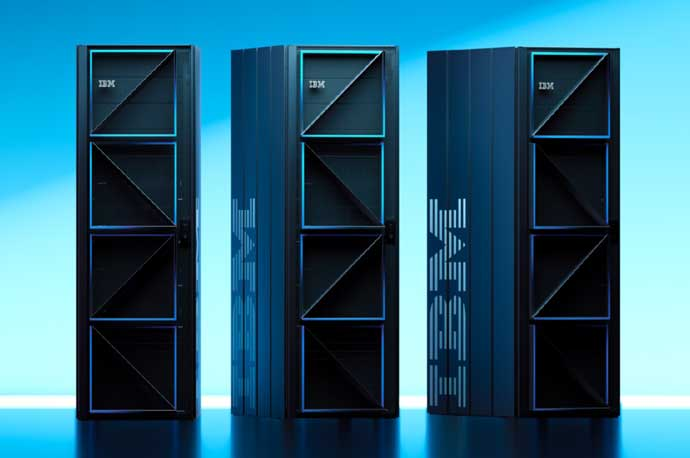
IBM’s mainframe business could see low to mid-single-digit growth ahead, Krishna told analysts.
Secular factors contributing to IBM’s growth confidence include demand for sovereignty and on-premises control, he said. Mainframes have the lowest unit cost economics for certain workloads. Watsonx Code Assistant for Z’s ability to refactor COBOL into Java without moving the code and help developers understand code running on the platform to help extend mainframes for the AI era.
“That headwind of people saying this is a hard platform to modernize has gone away,” Krishna said.
The z17 also allows for AI use in line with transactions with a delay of only milliseconds instead of full seconds. Multiple IBM clients have told the vendor they are keeping space in their machines for Spyre GenAI cards to give that capability, which only came to market in the fourth quarter of 2025 and has more room for growth.
Once the card is in, the customer needs the software stack and help running models on the platform to start use cases, the CEO said.
And the platform has a stack multiplier of threefold to fourfold across IBM, making it a major cross-selling juggernaut for relevant solution providers.
Infrastructure beat Wall Street’s $4.73 billion estimate with $5.13 billion in revenue delivered during the quarter, up 17 percent year on year. It was the highest annual revenue for IBM z in about 20 years, with 61 percent growth year on year. The platform’s real-time AI inferencing, quantum safe security and AI-driven operational efficiency have proven attractive to customers, Kavanaugh said on the call.
The z17 processes 50 percent more AI inferencing operations per day than its predecessor, the z16, and is positioned well as AI moves on-premises for some enterprises.
The hybrid infrastructure business grew 24 percent last quarter while support fell 2 percent.
Asked about the effects on IBM from rising memory prices, Krishna said that he doesn’t expect headwinds to the hybrid cloud or Linux businesses thanks in part to market-share movement to Red Hat. “That mix, overall, I think keeps us growing well,” he said. “I also believe that both Red Hat AI and OpenShift AI will feed into the demand from the AI servers, which is going to help that demand.”
Memory price inflation could last even a couple of years, Krishna said. Dynamic random access memory prices are up around sixfold year on year. Much DRAM capacity is moving to high- bandwidth memory, which is required for AI servers and uses around four to eight times DRAM capacity.
“As long as that dynamic is there, those pricing issues are going to be there through the year,” he said.
AI Could Lead To Hybrid, Private Cloud Renaissance
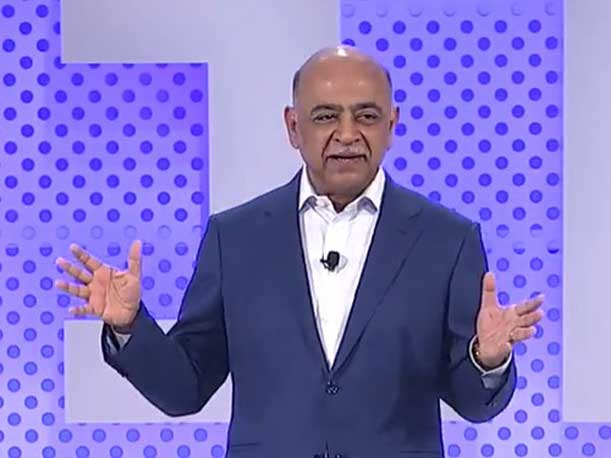
During the earnings call, Krishna (pictured) predicted that over the next three to five years, 50 percent of enterprise AI usage will be in a private cloud or one of the enterprise’s own data centers due to demand for privacy and concern on what models learn from answering queries and where those learnings go.
“This is not data that we want to take anywhere else,” Krishna said, according to a call transcript.
If enterprises leverage smaller AI models, the share of private and on-premises inference could rise to as much as 90 percent, he said.
Krishna pointed to its plans for an AI-ready Sovereign Core software foundation as an important tool in achieving that technology sovereignty, which will be a focus looking ahead for IBM and its partners.
The upcoming data center investment bodes well not only for IBM and its partners, but for other major data center hardware vendors including HPE and Dell Technologies.