Insight CEO Jack Azagury: ‘We Want To Be The Leading Solution Integrator’
The CEO of the Arizona-based solution provider discusses his first seven months in the role and why he’s optimistic about Insight’s future.
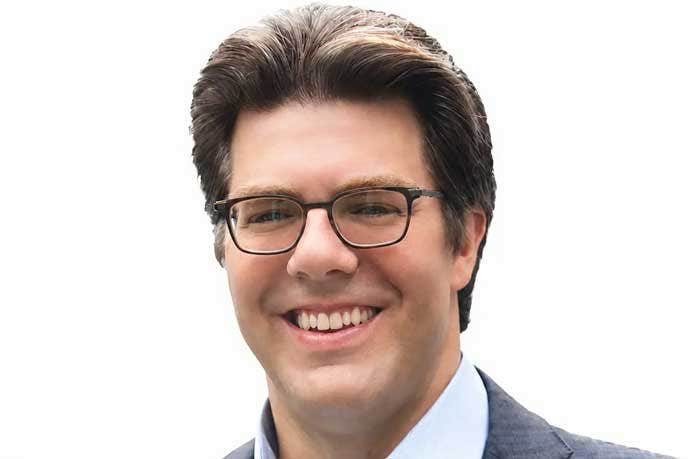
Heavy investment in artificial intelligence capabilities, unifying under the One Insight operating model and helping clients balance on-premises, cloud and hybrid investments in the age of AI mark some of the top goals for Insight President and CEO Jack Azagury seven months into his tenure.
Chandler, Ariz.-based Insight—No. 21 on CRN’s 2026 Solution Provider 500 and a 2026 MSP 500 honoree—occupies a unique spot in the channel for the engineering depth it brings spanning mainframes, on-premises IT environments, hybrid ones, cloud and other parts of the IT stack in the age of AI, Azagury told CRN in an interview.
“We want to be the leading solution integrator,” Azagury said. “And for that, we need to provide a seamless view of everything we do from devices to infra to AI services to data to security.”
[RELATED: Nutanix Partners: New Elevate Incentives And AI Will Drive Profits]
Azagury spoke to CRN before reporting third fiscal quarter earnings Thursday, which covered the third quarter of its fiscal year. The quarter ended Sept. 30. Insight reported consolidated net sales up 22 percent year over year to $2.4 billion. Gross profit grew 20 percent year over year to $523.2 million.
Insight’s gross margin contracted 30 basis points to 21.4 percent and the company brought in consolidated net earnings of $22.2 million, down 57 percent year on year. Adjusted earnings before interest, tax, depreciation and amortization (EBITDA) grew 22 percent year over year to $177.4 million. Cash flow from operating activities was $128.4 million.
The solution provider expects some growth moderation in its fourth quarter due in part to Insight lapping acquisitions completed last year, ongoing Google partner program changes and some prudence over uncertainty from memory pricing, supply chain disruptions and macroeconomics.
Insight expects hardware gross profit up high single digits with growth in infrastructure and devices. Insight expects core services gross profit to grow in the mid-teens and cloud gross profit to grow in the mid-20 percent range. Insight expects to spend about $20 million to $30 million in capital expenditures.
Insight raised its full-year 2026 gross profit growth expectations to between 12.5 percent and 14 percent, with gross margin of about 21.5 percent.
Azagury joined Insight following about 30 years with Accenture, No. 1 on CRN’s Solution Provider 500, leaving in 2025 as group chief executive of consulting.
At Accenture, he led the global consulting team, its 42 industries and enterprise functions and served on the company’s executive and global management committees.
Here’s more of what the CEO had to say in his interview with CRN covering his first seven months in the role and looking forward to Insight’s future.
How is your first year with Insight going?
When I joined Insight, I had a few simple criteria.
One, I wanted to work with a team that had the right culture. People I enjoyed working with. … There’s a passion for Insight. Even when I speak to clients and our partners, the first thing they’ll say is, ‘We love working with your team.’ … We’re in very interesting times with AI, in security, infrastructure.
There is a lot of activity. Our clients need help. Everybody’s looking for ways to transform. And we’re right in the middle of that. And that’s fascinating for me.
And then third, I wanted to work for a company that had potential to thrive. … It’s a great team doing great things with clients and a great company with a lot of potential.
What does the future hold for Insight in the AI age?
We’ve got two areas where we’re going to invest disproportionately for growth.
One is AI infrastructure. Our infrastructure business has been performing great. But the need for compute, I see it as a long-term trend.
The complexity of people’s environment—whether it’s compute in the cloud or hybrid or on-prem(ises). And so infrastructure and compute and the storage and the network goes with it.
That’s an area we’re investing in. Hiring very heavily. And we’ll continue to do so.
The second one is AI engineering and security, AI services. I grew up in services. We are investing heavily in security, in our engineering talent, in data.
Those are all areas where our clients need help. And we want to be there with deep engineering talent to help them solve those problems.
How about the One Insight operating model?
We want to be the leading solution integrator. And for that we need to provide a seamless view of everything we do from devices to infra to AI services to data to security.
And so we’ve embarked upon a One Insight motion, including our operating model and how we’re organized. … That involves living by our cultural attributes of—we call it hunger, heart and harmony—every day. … That is one of the dimensions I’m going to evaluate all our teammates [by].
Did you live by our core values? Did you live by a One Insight philosophy where it’s not about you, it’s about our clients, our partners, our shareholders and our teammates?
That’s what the mission is about: taking care of clients, taking care of our partners, taking care of our teammates and taking care of our shareholders.
But also making sure we reward in the right way for performance. Making sure we provide the training that is needed for our people to succeed, making sure we equip them with the right tools and the AI tools to succeed.
The talent transformation is a big topic, especially with AI where the skills we have today and the skills we need in six months are going to be—what we need to learn and what our teammates need to learn is tremendous. … Ultimately we’re in the war for talent, like all our competitors.
And ultimately, people work at companies they enjoy working with, for leaders they enjoy working with, with teammates they enjoy working with. And that ultimately makes the difference. People look forward to coming into work and working with the team. And so, for me, the culture is paramount.
How is the solution integrator workforce changing in the AI age?
Depth of engineering talent is critical. Our clients need people that can hit the ground running at speed and get them to results at speed. … Frankly, I had done a lot of due diligence before I joined, but I didn’t know the depth of our engineering talent and our delivery talent.
And it has exceeded my expectation. … We need to make sure we provide the training and the upskilling and the certifications that our teammates want.
We need to make that available at all times. And then one of the things that is critical is being able to be agile and change at speed. … That ability to be adaptive to change at speed is critical.

How is Insight working to move faster?
We’ve been driving a lot of change over the last six months. And the teammates are up for it. … In terms of the shape of the workforce, we’ve always built the team with a foundation of depth and engineering. … We’re hiring more engineers than ever.
A tremendous amount of training, whether it’s in AI or certification with our partners. … I expect our teammates to have more and more intellectual curiosity. Not just the training that we provided at Insight, but the training they’re going to do.
I tell our teammates, ‘You have got to have your own curriculum. What are you going to learn next quarter and the quarter after that? What are the things you need to beef up? What are the things your clients are asking you to go 10 levels deeper [on]?’
We can provide a lot of training certifications. But I need our teammates to have a hunger for learning as well. That’s paramount in this environment.
Is vendor and client interest in FDEs a major change for Insight?
So we have one colleague who’s responsible for the FDE community. He is administering a very stringent test to determine who is an FDE and different levels of FDE.
It’s a very strict and enforced definition with a formal interview process within Insight. And we see the definition of FDEs out there in the market are very different. Apples and oranges and bananas out there in terms of definition.
The core problem we’re trying to solve with FDEs is our clients need results and they need them faster than ever. And so the days of studying a problem with PowerPoint and Word documents and spreadsheets for weeks and weeks and weeks are gone.
You have to be hands on keyboard and start to show proof of value and then start to scale it at speed—the speed at which you can develop, the speed at which you can roll out, the speed at which you can synthesize complex documentation has increased dramatically. Orders of magnitude.
And so as a service provider to our clients, our speed has to be there. And that FDE community is the one that can—and we’ve done this—sit down with a client on Monday, understand their business needs, start developing them by Friday as a proof of value.
We had one of our FDEs in Europe. She was in the Uber on the way to the client, listening to a conference call with the client and coding, and arrived at the client site, and there was already an initial proof of value ready to go.
Tools these days allow you to move at such speed. … That’s why the FDE community is at the highest level in terms of deepest experts that can translate business needs in a matter of hours and days, not weeks and months. The days of waiting months to get to value are disappearing fast.

What’s your message to vendor partners to help Insight go faster?
Partners for us are critical. They’re a key part of our strategy. When we develop offerings and assets, they are with our partners.
We also have our own reference architectures of what we think will work with different clients. So we have our own point of view. … All of our top partners, I’ve met some of them half a dozen, a dozen times, maybe more.
[Key for us] is making sure we’re up to speed with their strategy and make sure of where they’re taking their products, where is their R&D (research and development) going, to make sure that we are on the bleeding edge with them, and that when they release a new product or a new service or a new capability, our teammates are able to represent them and implement them in the right way to get results for our clients.
We have spent decades building these partner relationships. They are absolutely critical to us. … Our clients want to see Insight with a partner working together to solve the problem so they don’t have to figure out who to go for what.
What’s Insight’s partnering strategy at a time when we have AI upstarts competing with traditional Insight vendors who are also building AI practices?
We spend a lot of time with our top partners. And those are often some of the largest technology companies. … We do look at some of the smaller startups.
And we have a categorization where we look at some of the upstarts to figure out—where is the next company that’s going to be one of these top technology organizations?
Our partner team monitors that—whether it be in security or AI or data. … We’ve been doing OpenAI work with clients. But the next level of partnership is especially focused on the mid-market. … We’ve got hundreds of people also certified on Anthropic. And obviously the Microsofts and Googles and IBMs [and other hyperscalers] are very important partners. They’re a core group of some of the largest, most prominent technology companies that are key partners.
But we also look at, where is the next generation of startups, companies that are getting incubated? That we need to pay attention to because they’re going to solve problems for our clients over the next few years and quarters.
Do you have a message to AI upstarts interested in partnering and deepening their partnership with Insight?
For any technology company, having a clear strategy of whether they want to go at it alone and whether they want partners, and then reflecting that in terms of how you’re organized, who you hire.
Then having a partner program that actually is somewhat predictable that partners and the channel can work with is very important.
Every technology company, there are segments where they are going to go direct. Segments where they are going to use partners. Having clarity [is important].
And then if you’re going to use partners, then make sure your operating model is aligned with that. And then be clear on the partner program.
Some of the largest technology companies, the partner programs are very well defined. They’re communicated. We get early notice when they want to make tweaks, which they do all the time. They have to, to align with the strategy.
And then investing the time to have the dialog with your partners and make sure they’re up to speed on where you’re going. What is your strategy? And how that’s reflected into partner programs.
And then investing the time on the ground, making sure those relationships and that message cascade all the way to your account executives in the field. … Cascading that relationship strategy all the way to the frontline so there’s no ambiguity when you’re actually serving clients. Our top partners do all of this very, very well.
What do you want to see from vendors as they start to build in-house services wings and in-house FDE teams?
Most software companies or AI companies will have some internal services—whether you call them the FDEs—people that are extremely deep on the tech.
For any software firm, you need to decide where that starts, where that ends, and when you get help.
And then you need to figure out from your financial model—if you’re a software company, and a software company generates 40 [percent] or 50 percent EBITDA (earnings before interest, taxes, depreciation and amortization) margins.
And then you’ve got a services business at 15 percent of your EBITDA margins, just to pick a number—financially, what is your architecture as well? And so every software company needs some services internally.
It’s important for some of your more complex implementations, first product releases, flagship clients.
And then (have) clarity. Where does it start and stop? Being clear with your clients and being clear with your partners. … Partners like ourselves can help you scale at that speed. You could do the first two or three big projects yourself, but when you get to hundreds of projects, do you want to build that internally? Or do you want to work with a partner that’s going to be able to scale and train and everything else?
Focusing on technology, what do you keep hearing from clients that you think is useful feedback for vendors?
It is different whether we’re talking to a networking company or a model company. … It is a very complex technology landscape, and it’s only getting more complex.
There are more and more startups. AI allows you to develop products and solutions faster than ever before. You look at spaces like cybersecurity, and most companies will have half a dozen to a dozen software partners on the cyber side. How do you integrate it? How do you manage it?
It’s hard for our clients to make sense of the highly complex, very broad range of solutions available to you to solve business problems.
If you’re developing AI solutions, first of all, you need to be grounded in your clients’ reality. Understand the industry, understand their processes. Having a deep understanding of how the clients and the industries that you serve operate is critical. … The second thing I would say is our clients need results at speed.
So how does your solution get to an ROI (return on investment) that is measurable at speed? … And the third one is safety and security. This is a big topic with AI.
There’s only so much risk a company is going to be able to take with technology. They need to know that it’s going to scale. It’s going to scale safely. It’s going to produce outcomes that are predictable, especially with AI. How do you manage that? How do you have the right controls around it? How do you know it’s secure?
How is customer appetite for AI?
I try to meet a client every day at least four days a week. My goal is five days a week, five clients a week. … It’s super important for all our leaders to spend time with clients and really listen to them every day.
I have not had a single discussion where AI was not brought up. Not a single one. Over hundreds of discussions, it’s a 100 percent hit rate on AI. Ninety-five percent of our clients are going to invest more in AI, not less.
Most of our clients are figuring out how to offset those higher AI spend somewhere else in their technology budget. So it’s not like there’s free money somewhere. Many—actually, most—are struggling with token costs and how to maximize the ROI on every token used.
And most of our clients—well over 50 [percent], probably over two thirds—are struggling to measure the ROI on their AI investment.
Many of them will say our employees are saving an hour a day. Or we’ve done a survey and we’ve saved X thousands of hours.
But when you speak to the CFO (chief financial officer) or the business unit leader that owns the P&L (profit and loss statement), they say, ‘Can you measure the impact on your top line or your bottom line or your customer set?’ They can’t.
And yet they’re still committed to spend more on AI because they see the power of the technology. And so, there is a big question around, how do you measure the ROI? How are we going to make sure we get the ROI?
A lot of these cases are giving people an extra coffee break. If you’re running a company, how do you quantify that? How do you capture the benefits from that? And you’re spending millions [of dollars] on AI. Millions in many cases. And way more on tokens.
At some point, how do you reconcile the two? And that is the discussion we’re having with a lot of clients. How do you get to measurable ROI against the cost and the continued expenditure on AI going forward?
How does the ROI conversation go with clients?
The first thing is, is there a clear governance around your AI efforts? If I go to a company, I say, ‘Who’s in charge of AI? Is it the business unit leader? Is it the CFO? Is it the chief AI officer or the chief digital officer?’ … I then see two forms of AI deployment.
The bottom up, which is all of us building agents. I have multiple agents that support me every day. … We’re probably close to 10,000 now at Insight.
And a lot of those are our teammates developing their own agents, making their days easier, their job easier, making them more productive. That is the bottom-up effort.
And that is very hard to measure the ROI on that. … But then you have to have a top-down effort that’s driven from the leadership team around two or three processes that you’re actually going to transform end to end where you can attach a clear business case and an ROI.
When I started in tech a long time ago, we talked about people, process and technology. … I studied artificial intelligence in the late ‘80s and early ‘90s. Even four years into this journey, five years in, [AI’s capabilities are] mind-boggling.
But people have forgotten that the technology is so amazing, but you still have to do the transformation work. And that’s transforming the process end to end, and transforming your operating model and your skills and even your org(anizational) chart.
And so, for example, at Insight, we’ve taken three mega processes, and we’re going to transform them. Our customer operations process, how we fulfill orders and everything, end to end. Our finance processes end to end. And our sales process end to end to support our sales executives and give them all the information they need to be able to serve a client.
With three processes, I touch over 50 percent of our teammates, probably close to 60 [percent]. So I don’t need to have 20 processes that I tackle. I measure three.
The leaders of those groups, we’ve got clear metrics and KPIs (key performance indicators). I know what the impact is going to be in my 2027 budget and 2028. I can measure it. … Everybody has access to our Horizon AI platform. Ninety-plus [percent] of our employees have access to [Microsoft AI assistant] Copilot. Many have access to Anthropic [Claude] and [Google’s] Gemini, and now [ChatGPT by] OpenAI. … They have all the tools to do that bottom-up innovation.
But then there are a few transformational initiatives with a measurable ROI that are going to deliver the returns that offset all the investment we’re going to make internally. And that’s where a lot of companies have forgotten that you actually need to transform the process to really get the value.
Say we’ve got a process that has 50 steps, we can now do it in 20. Out of the 20, 10 are going to be done by agents and 10 by humans. And the performance is going to increase 40 percent on that process whether it’s the cost or the sales or whatever the metric is.
How are you individually using AI?
I have an agent running to give me news on our partners, our competitors, what’s going on in terms of any tech news that I need to know. So that runs every morning.
I have an agent running every Sunday that gives me a preview of the week ahead. Any meeting, what I need to prepare, where I’m not prepped, surface any prep material I need to get done.
I have one also running on Sunday that goes through—because I’m not a zero-inbox person—so any unread emails. But also summarizing any meetings we had because we record [those] through [Microsoft] Teams. And then through [Microsoft Copilot] Cowork, I could analyze any actions that were taken during those meetings. … Copilot is open all the time.
Claude is open all the time. Gemini is open all the time. Fortunately, my CDO (chief digital officer) gets me access to everything. And I run multiple models to test the answers and send the output from one to the other and try to quickly get to any deviations between the models to figure out if there’s hallucinations and things like that.

How is Insight balancing opportunities in services, hardware and software?
I grew up in a services background, much more on the software side than anything. The power now of having device, infra and software partners and cloud partners in this environment is critical.
Our device business, a very large percentage of the devices we sell now are AI ready. And when we look at developers and token economics, more and more of our clients are going to be running small models on the edge on their laptops, and so we’re seeing—whether it’s [Apple] Mac or PC—we are seeing a move toward more and more AI-ready PCs. … Our cloud business and our infrastructure business are increasingly working together.
Most clients now want a hybrid posture. They want some of their data on-prem, some of their compute on-prem and some of the compute in the cloud.
What can you say about Insight’s VMware deauthorization by Broadcom in North America?
This happened many, many months ago. Over six months ago. I got the first call a week before I joined.
I’ve spent time with the Broadcom team. Our focus is serving our clients, being able to give them the best advice on-prem, hybrid cloud, cloud. That’s all we are going to keep focusing on. We’ve got plenty of things to do with our clients.
We have a very talented team with deep VMware capability. We’re still serving our clients. We’re actually still a partner in some countries in Europe. And so we have a very deep virtualization practice. … Ultimately, we have to solve these problems in an integrated manner, which is on-prem, virtualized, hybrid, cloud. We had to help get our clients to the best answer that serves their needs. And that’s what we’re focused on doing.
Is on-premises investment growing in interest among your clients?
When we look at our planning, I believe on-prem is going to continue to grow.
But cloud is going to grow a little bit faster. Companies are repatriating some loads and some data on-prem. And we see both cloud and on-prem growing at very sustained rates over the next few years. … In 2021 and 2022, everything was heading to the cloud. Our clients are now adopting a more balanced posture and investing in both.
Our capabilities allow us to provide advice on both and how to integrate both.
Does intellectual property become more important for Insight in the AI era?
For any company figuring out what data is truly differentiated and how to curate that data and how to leverage it is critical.
[Many organizations have] underinvested in their data for many, many years. And now with AI, you’re realizing … data actually matters. It matters to differentiation. It matters to what you get out of your AI footprint.
And the same with us. We’ve invested a lot in our data footprint. We’re going to continue to invest. … Investments in data are not cheap. I mean, it’s millions of dollars quickly, if not tens [of millions of dollars].
And it is a foundational investment that doesn’t carry a direct ROI. But once you invest in your data, then what you can do with it, that does carry an ROI.
Sometimes you have to make the investment in the foundation of the house in order to build a better house, and that’s what data is.

Going back to partner vetting, is Insight doing a constant vetting of its own partners for best fit?
Yes and no. Our big partners have been with us for decades. And there’s no vetting there. They’ve been decade-long partners, whether it’s a Cisco or a Dell or Microsoft or an HPE (Hewlett-Packard Enterprise) or an HP or Lenovo or a Google.
We’re not vetting them. We’re focused on deepening the relationship and training our people and representing their solutions.
When we see the next generation, more the startups, the early stages, then yes. We do that very carefully. Because before I spend time training my team, educating my account execs, do they solve the right client problems? Are they differentiated?
Is it really something that some of our top partners are not going to do better? And maybe somebody’s got a six-month advance, but eventually one of our large partners is going to [invest in the space as well].
What’s underappreciated about Insight?
We’ve got a long history. We were started 38 years ago. We started as a reseller.
But when you look at the pivot that my two predecessors [Ken Lamneck became CEO in 2010 and in 2022 was succeeded by Joyce Mullen, who departed this year and was succeeded by Azagury] have executed over the last decade, organically and inorganically—with some great acquisitions like Inspire11 [in 2025] and SADA [in 2023] and Infocenter [in 2024] and Sekuro [in 2025].
And we’ve radically pivoted the business. And now what we do in cloud, what we do in AI services, what we do in security, and that combination of being a reseller and a service provider—the reality of what we can do in the depth of our engineering talent and what everybody sees, there’s sometimes a lag.
And so it’s our job to make sure people understand the full breadth and depth of what we can do here at Insight to be that solution integrator.
This year we stopped acquisitions. And I announced that on my first earnings call. I wanted to spend time with the team and on the One Insight transformation program and executing on that.
Eventually when the time’s right and we find the right companies we want to acquire, we’ll start to look at that going into ‘27 and beyond.
I’m not in a hurry, but if we find the right companies that are aligned with our strategy and aligned with our culture, then we’ll get back to acquisitions at some point.