Microsoft Q2 Earnings: CEO Nadella Defends AI Investments
‘Acquiring an Azure customer is super important to us, but so is acquiring an M365 or a GitHub or a Dragon Copilot [customer], says Microsoft CEO Satya Nadella.
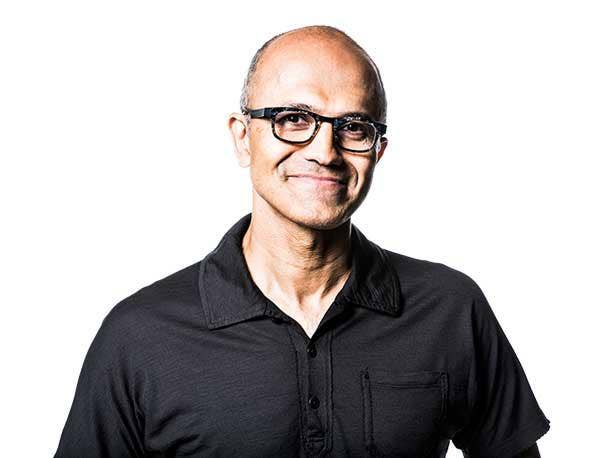
Microsoft executives fielded questions Wednesday around their high spending to meet demand for the vendor’s artificial intelligence products, with Chairman and CEO Satya Nadella defending his company’s capital expenditures as not only a way to win business in the short run but to build healthy businesses in the long run and across the product portfolio.
“Acquiring an Azure customer is super important to us, but so is acquiring an M365 or a GitHub or a Dragon Copilot [customer],” the CEO said on the Redmond, Wash.-based technology giant’s quarterly earnings call Wednesday.
Each of those products recommend incremental business and large total addressable markets (TAMs), Nadella told investors on the call, where he and CFO Amy Hood reported results for the second quarter of Microsoft’s 2026 fiscal year. The quarter ended Dec. 31.
[RELATED: Microsoft Takes On AWS, Google And Nvidia With Maia 200 AI Chip Launch]
Microsoft Q2 Earnings
“We don’t want to maximize just one business of ours,” Nadella said. “We want to be able to allocate capacity while we’re sort of supply constrained in a way that allows [us] to essentially build the best LTV [lifetime value] portfolio.”
Along with analysts pressing Microsoft executives on more details around CapEx, Nadella and Hood sought to address concerns around business backlog exposure to ChatGPT maker OpenAI and shared that increasing memory prices could affect different parts of Microsoft’s business.
Microsoft CapEx Concerns
Microsoft doesn’t see much risk in insufficient revenue from the six-year average useful life of hardware and servers because the GPUs and capital Microsoft spends there is for existing contracts, Hood said on the call. Margins also improve with time because Microsoft gets more efficient as it delivers over a piece of hardware’s useful life.
She warned analysts against directly correlating the vendor’s capital expenditures and Azure revenue growth. She recommended analysts think about Azure guidance as an allocated capacity guide for what Microsoft can deliver in Azure revenue.
“Much of the acceleration that I think you’ve seen from us and products over the past bit is coming because we are allocating GPUs and capacity to many of the talented, AI people we’ve been hiring over the past years,” she said. “We’re working as hard as we can to add capacity as quickly as we can [worldwide].”
Nadella added that Microsoft uses software to continuously run the latest models on its aging fleet for greater duration. “It’s not about buying a whole lot of gear one year,” he said. “You use software, and then you optimize across all of it.”
For the quarter, Microsoft’s capital expenditures were $37.5 billion. Two-thirds of CapEx was on GPUs, CPUs and other short-lived assets. The rest was spent on long-lived assets meant to last 15 years at least. Total finance leases, for example, were $6.7 billion. Those leases were primarily for large data center sites, Hood said.
Higher cash CapEx pushed Microsoft’s free cash flow down sequentially to $5.9 billion in the quarter.
As part of Microsoft’s capacity-adding efforts, the vendor added nearly 1 gigawatt of total capacity during the quarter, Nadella said. Microsoft is working to optimize tokens per watt per dollar, building its Fairwater interconnected AI data centers and investing in custom silicon such as the Maia 200 accelerator that recently came online.
Although Microsoft still has partnerships with chipmakers including Nvidia and AMD, the AI giant said it doesn’t want to be locked in with any vendor or product given the rapid pace of innovation in silicon. Microsoft has to have the best semiconductor fleet at any given point of time, Nadella said.
“It’s not a one-generation game,” he said. “A lot of folks just talk about who’s ahead. It’s just, remember, you have to be ahead for all time to come.”
OpenAI Investment, Contributions To Income
Asked about the riskiness of 45 percent of Microsoft’s backlog coming from OpenAI, Hood instead pointed to the remaining 55 percent—about $350 billion—reflecting a broad product portfolio and customer mix.
“That is a significant RPO [remaining performance obligation] balance, larger than most peers, more diversified than most peers,” Hood said. “Frankly, I think we have super high confidence in it.”
For the quarter, commercial remaining performance obligations (CRPO) more than doubled year on year to $625 billion. About a quarter of that should be recognized as revenue in the next 12 months, up 39 percent year on year, Hood said.
While multiyear Azure commitments from OpenAI contributed to this backlog, Anthropic and Microsoft’s core business contributed as well, she said.
That non-OpenAI portion of the backlog is growing 28 percent and across customer segments, industries and geographies, she said. Hood added that Microsoft is still happy with its OpenAI partnership.
“We continue to be their provider of scale,” she said. “We’re excited to do that. We sit under one of the most successful businesses built. And we continue to feel quite good about that. It’s allowed us to remain a leader in terms of what we’re building and being on the cutting edge of app innovation.”
For the quarter, Microsoft also broke out its OpenAI investment’s impact on net income. Net income using GAAP was $38.5 billion, up 60 percent.
Without using GAAP—and, thus, ignoring Microsoft's investments in ChatGPT maker OpenAI—net income was $30.9 billion, up 21 percent year on year ignoring foreign exchange. Microsoft said it received $7.6 billion in net income from net gains in its OpenAI investments in the second fiscal quarter.
For the same period a year prior, the OpenAI investment cost Microsoft $939 million in net income. Microsoft’s GAAP net income for 2024 was $24.1 billion. Using non-GAAP and removing that OpenAI loss puts Microsoft’s net income for that period at $25 billion.
Rising Memory Prices
Microsoft’s executives said on the call that they have not been immune to impacts from rising memory prices set to affect PC sales and other hardware.
The vendor’s on-premises server business saw revenue increase 1 percent, with Hood contributing some of the higher-than-expected growth to higher transactional purchasing ahead of memory price increases. She also credited demand for hybrid products and the launch of SQL Server 2025.
Next quarter, the on-premises server business should see revenue decline in the low single digits, with increased memory pricing potentially creating additional volatility in transactional purchasing, Hood said. She also contributed the decline to a waning bump from SQL Server 2025.
Hood also said to expect Windows OEM and device revenue to decline in the low teens, with Windows OEM revenue declining around 10 percent. She said the potential impact of memory pricing on the PC market is a factor as is a waning bump from Microsoft ending support for Windows 10.
Rising memory prices could impact Microsoft’s future CapEx, though the impact on Microsoft Cloud gross margins will build more gradually given the six-year lifespan of those assets, Hood said.
Growing Copilot Usage
Nadella used the call to boast about Microsoft’s areas of innovation in the AI era and growing usage of a variety of products and services.
“We offer the broadest selection of models of any hyperscaler,” he said, pointing to the more than 1,500 customers that have used Anthropic and OpenAI models on Microsoft’s Foundry AI application and agent factory.
He also called Microsoft “the first provider to offer this type of agent control plane across clouds” for its Agent 365 AI agent orchestration offer.
Breaking down the new usage milestones Microsoft hit in the quarter, Nadella said that in Copilot the company saw:
- More than 80 percent of the Fortune 500 have active agents built using Microsoft’s low code, no code tools including Copilot Studio
- Daily users of the Copilot application nearly tripled year over year
- Microsoft 365 Copilot’s average number of conversations per user doubled year over year
- Daily active users increased tenfold year over year
- M365 Copilot seat adds saw a record quarter, more than doubling year on year
- M365 Copilot now has 15 million paid seats with “multiples more” enterprise Chat users
- The number of M365 Copilot customers with more 35,000 seats tripled year over year
- GitHub Copilot Pro+ subscriptions for individual developers increased 77 percent quarter over quarter
- Microsoft now has 4.7 million paid Copilot subscribers, up 75 percent year over year
- More than 100,000 medical providers automate their workflows with Dragon Copilot
- Microsoft helped document 21 million patient encounters this quarter, tripling year over year
In Foundry and Microsoft’s Fabric data analytics platform:
- Fabric’s annual revenue run rate is now more than $2 billion with more than 31,000 customers two years into its broad availability
- Fabric is the fastest-growing analytics platform on the market with revenue up 60 percent year over year
- The number of customers spending $1 million-plus per quarter on Foundry grew nearly 80 percent, driven by strong growth in every industry
- More than 250 customers are on track to process over 1 trillion tokens on Foundry this year
Nadella also sought to show investors that parts of the Microsoft business that aren’t necessarily tied to AI continue to grow.
- Microsoft now has 1.6 million security customers, including more than 1 million who use four or more workloads
- Also in security, 24 billion Copilot interactions were audited by Purview this quarter, up ninefold year over year
- The new SQL Server has more than doubled the IaaS adoption of the previous version, reflecting continued opportunities for cloud adoption
- Windows 11 hit 1 billion users, up more than 45 percent year over year and about three months since Microsoft ended support for Windows 10
AI’s Customer Spend Multiplier Effect
Microsoft’s AI and data products offer a multiplier effect and cross-selling potential across its portfolio, Nadella said, similar to how security products can add to a user’s Microsoft spending while getting more value out of the company.
“The vast majority of Foundry customers use additional Azure solutions like developer services, app services, databases as they scale,” for example, Nadella said.
The recently unveiled Microsoft Work IQ layer beneath Copilot has a compounding potential for users because of the ability to do more with company data on workers, customer relationships, projects getting worked on, artifacts, communications and other data captured by Microsoft products. As an example, customers can leverage Work IQ with a GitHub repository to look at design meetings for the last month in Teams and make sure those are reflected in the repo.
“That’s a pretty high-level way to think about how what is happening,” Nadella said. “Suddenly the agents are helping you coordinate, bring more leverage to your enterprise.”
Q2 In Depth
Microsoft reported $81.3 billion in revenue for the quarter, up 15 percent year on year ignoring foreign exchange. Gross margin dollars increased 14 percent. Operating income increased 19 percent.
Company gross margin percentage was 68 percent, down slightly year over year. Hood credited the decrease in part to continued investments in AI infrastructure.
Microsoft Cloud brought in $51.5 billion during the quarter, up 24 percent year on year ignoring foreign exchange. Gross margin percentage was slightly better than expected at 67 percent, but down year over year due to continued investments in AI, Hood said.
Microsoft’s productivity and business processes business segment grew 14 percent year on year to $34.1 billion. Within the segment, Microsoft 365 Commercial cloud revenue increased 14 percent year on year. Microsoft 365 Consumer cloud revenue increased 27 percent. And Dynamics 365 revenue increased 17 percent.
Paid M365 commercial seats grew 6 percent year over year to more than 450 million. The primary contributor was small- and medium-business and frontline worker offerings, which are areas Microsoft solution providers tend to sell into.
M365 Commercial products revenue increased 10 percent year on year ignoring foreign exchange, ahead of expectations due to higher-than-expected Office 2024 transactional purchasing, Hood said. Productivity and business processes business operating income was $20.6 billion, up from $16.9 billion for the same period a year prior.
During the quarter, Microsoft’s “intelligent cloud” segment hit $32.9 billion in revenue, up 28 percent year on year. Within the segment, Azure and other cloud services revenue increased 38 percent year on year ignoring foreign exchange. Segment gross margin dollars increased 19 percent. Intelligent cloud operating income was $13.9 billion, up from $10.9 billion for the same period a year prior.
Microsoft’s “more personal computing” segment saw $14.3 billion in revenue, down 3 percent year on year. Within the segment, Windows OEM and devices revenue grew 1 percent.
This segment also includes losses from the Xbox content and services business and gains from search and news advertising. Segment gross margin dollars increased 1 percent. The segment’s operating income was $3.8 billion, down from $3.9 billion the same period a year prior.
Looking ahead, Hood said that the third fiscal quarter should result in revenue of $80.65 billion to $81.7 5 billion, growth of 15 percent year on year to 17 percent.
Cost of goods sold (should be $26.65 billion to $26.8 5 billion US dollars, up 22 percent or 23 percent. The vendor expects operating expense of $17.8 billion to $17.9 billion, up 10 percent to 11 percent and due to R&D and AI compute capacity and talent investments.
Microsoft Cloud gross margin percentage should be roughly 65 percent, down year over year due to continued investments in AI. Microsoft expects the productivity business processes segment to deliver revenue of $34.25 billion to $34.55 billion, growth of 14 percent to 15 percent.
M365 Commercial cloud should grow 13 percent to 14 percent. M365 Commercial product revenue should decline in the low single digits, down sequentially, assuming Office 2024 transactional purchasing trends normalize, Hood said.
M365 Consumer cloud revenue growth should be in the mid to high 20 percent range. Dynamics 365 should grow in the high teens.
The intelligent cloud segment should see revenue of $34.1 billion to $34.4 billion, up 27 percent to 29 percent. Azure revenue should grow 37 percent to 38 percent. In the more personal computing segment, Microsoft expects revenue of $12.3 billion to $12.8 billion.
Microsoft’s stock traded at about $452 a share after market close Wednesday, down about 6 percent.