Nutanix Goes Big On Agentic AI, Adds Multi-Tenant Cloud Capabilities
Nutanix is using this week’s Nutanix .NEXT conference to introduce a complete agentic AI platform, solidify new partnerships with leading storage vendors Everpure and NetApp, and show its determination to migrate customers away from arch-rival VMware with a big push to help its channel partners work in multi-tenant environments.
Hybrid multi-cloud computing and hyperconverged infrastructure technology developer Nutanix Tuesday opened its Nutanix .NEXT conference with multiple changes to its product offerings aimed at helping channel partners and customers explore new ways to not only advance their cloud and AI agendas but also more easily migrate off the competitive VMware platform.
Nutanix .NEXT, held this week in Chicago, is expected to draw about 5,000 attendees, said Lee Caswell, senior vice president of product and solutions marketing for the San Jose, Calif.-based company.
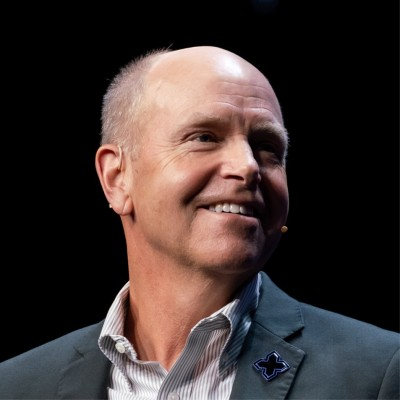
The flagship news from Nutanix .NEXT is a major update to the Nutanix Cloud Platform aimed at helping customers manage their supply chain risks and de-risk their Broadcom VMware estates, Caswell (pictured above) said during a pre-show press conference.
[Related: AMD Commits $250M To Nutanix To Accelerate Enterprise Agentic AI Infrastructure]
Nutanix is a leading competitor to VMware, and is on a big push to convince VMware customers who may be dissatisfied with that company and its sales and licensing changes it was acquired by Broadcom in 2023.
The latest version of Nutanix Cloud Platform includes Service Provider Central, or SP Central, to give customers granular control over GPU-enabled AI resources now to the DL cloud providers, Caswell said.
Also highlighted with the Nutanix Cloud Platform is Nutanix Agentic AI, which was originally introduced at last month’s Nvidia GTC conference, he said.
“Nutanix Agentic AI is a full-stack AI solution to go and offer full access to large language models that are curated and certified, running on certified GPUs, including an AI gateway,” he said. “Partners are coming to us as a path into the enterprise user taking full advantage of our v4 APIs, as well as our open catalog, to make sure that they can get their solution, their software, brought into our complete solution, if you will.”
Nutanix also showed its Kubernetes orchestrated container solutions, including a new offering for running Kubernetes on bare metal, Caswell said.
“One of the reasons why, by the way, the Nutanix approach to containers is working so well right now, is that we’re the only company that offers what we call a dual native approach to running containers,” he said. “You can either run containers as most do in on-prem environments on an enterprise hypervisor—that’s our AHV offering running Kubernetes, our NKP on that. Or the other mode is to run directly on bare metal.”
That second approach is a brand-new offering, Nutanix Kubernetes Platform Metal, Caswell said.
“NKP Metal now offers the same security and networking support for Kubernetes running on bare metal that we have in Kubernetes running on VMs,” he said. “In addition, we’ve got the same data services—snapshots, replication, DR (disaster recovery)—running in a bare metal environment with our container NKP Metal platform as we do in NKP running in virtual machines. This really gives us an interesting opportunity to give customers full choice of running Kubernetes either in virtual environments or on bare metal.”
Caswell said Nutanix expects that, in virtual private data centers, customers will prefer to run Kubernetes on virtual machines, with Kubernetes extended to edge environments via NKP Metal.
“Our view is that the ability to have containers that can be portable across the full hybrid cloud, all the way from the edge into the data center and then to the public cloud with the same operating model, the same security method, and the same data services, is a unique offering from Nutanix, allowing customers to go and bring containers into their environments at their pace,” he said.
Nutanix also introduced Nutanix Unified Storage 5.3 to its cloud platform aimed at driving the transformation of object storage into a performance storage tier that AI Factories require, Caswell said. This new release uses smart tiering to help seamlessly move data to Google Cloud and OVHCloud S2 while adding multi-tenant object scaling and quotas, he said. Later this year, NUS will add RDMA (remote direct memory access) acceleration for S3-compatible object storage.
Nutanix is also expanding its Nutanix Elevate service provider program in a number of ways, including giving channel partners the ability to work in multi-tenant environments for the first time, Caswell said.
“We have service providers coming to Nutanix in part because many of them lost their ability to be a service provider within the traditional VMware environment because of licensing changes, and so we’ve got a huge uptick here.”
The change gives channel partners an enterprise-grade multi-tenant infrastructure as a service or IaaS offering based on the Nutanix Cloud Platform. It is slated to be available in the second half of the year.
John White, chief operating officer at US Signal, a Grand Rapids, Mich.-based solution provider and — thanks to its 2024 acquisition of OneNeck, a long-time Nutanix channel partner — told CRN that Nutanix’s new focus on multi-tenant environments is key to helping move customers from he called the “debacle” of VMware after that company was acquired by Broadcom.
It really shows that Nutanix is listening to its channel partners, White said.
“They have a huge opportunity in the space, and they are trying to help their partners exceed and excel,” he said. “For the whole multi-tenant side of things, we have been looking to provide an option to VMware.”
White said his team has been working with Nutanix on the multi-tenancy issue for some time. He said he worked with another channel partner as early as 2005 to help bring multi-tenant virtualization to VMware.
“When US Signal first got into Nutanix, that was our biggest ask,” he said. “Our customers, they sometimes have 10 virtual servers, and they don’t need to buy three or four hosts. That’s overkill for them. We need something a little bit more right sized. So we’ve been pushing Nutanix to do multi-tenancy since early ‘24, and we’ve been a huge design partner with them, working with their teams, helping them work out the kinks, telling them what features are missing to get us parallel with what we had with VMware so we can start to migrate customers to Nutanix.”
US Signal also provides cloud services to the MSP community where multi-tenancy is critical to take advantage of US Signal’s shared VMware infrastructure, White said.
“MSPs don’t want to go and buy hosts,” he said. “So I have hundreds of customers with thousands of VMs that are locked up in VMware right now until we can find them alternatives. And so that’s what we see as a big upside with this.”
Nutanix .NEXT is also seeing a lot of new strategic partnerships with Nutanix, Caswell said.
Everpure, which until early this year was known as Pure Storage, is at the event for the first time, he said.
“Who would have thought maybe three years ago that Everpure would be on our list of sponsors?” he said. “Nutanix has moved beyond just the HCI model to now support external storage systems. We started with Dell PowerFlex, of course, but you can see Everpure is now a platinum sponsor. Very interesting, because this means for Everpure customers and resellers, the opportunity to go and work together, including working with Cisco on our FlashStack with Nutanix.”
NetApp will also be at .NEXT showing with Nutanix how they are working to bring all the Nutanix capabilities to NetApp customers, Caswell said. Nutanix is also planning to add support for NetApp Ontap and will expand support for NetApp AFF all-flash A-series and some FAS hybrid flash systems.
“And for partners, the endorsement from Cisco that FlexPod will also support Nutanix plus NetApp plus Cisco jointly together,” he said. “And as we know, once Cisco gets Cisco-validated designs together around FlexPod, we’ll see a great appetite from the channel and resellers and customers for taking that jointly certified solution.”
Nutanix has added synchronous disaster recovery support for Dell PowerFlex storage, and is planning to support Dell PowerStore, Dell Private Cloud automation, and Dell PowerFlex Ultra5 environments
Nutanix, meanwhile, expanded the list of AMD CPU-based servers it supports, and said it will add support for AMD GPU-accelerated compute servers targeting AI workloads.
Nutanix is expanding support for Lenovo ThinkSystem storage, Lenovo ThinkSystem servers, and XC One automation.
Also new from Nutanix is the extension of Nutanix database-as-a-service offering to now include MongoDB. Previously, it supported SQL Server, Oracle, and Postgres, Caswell said.