Workday Co-Founder Returns As CEO Ahead Of Q4 Earnings
‘AI is a bigger transformation than SaaS—and it will define the next generation of market leaders,’ says Workday co-founder and CEO Aneel Bhusri.
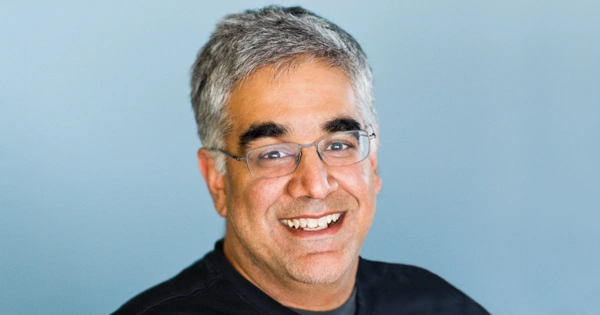
Workday co-founder and former CEO Aneel Bhusri has returned as the company’s top executive just weeks before the vendor reports earnings for its fourth fiscal quarter and about two years after leaving the position.
The Pleasanton, Calif.-based provider of a platform for managing people, money and artificial intelligence agents puts Bhusri—who was serving as executive chair—in the top spot as Carl Eschenbach steps away as CEO and a board member, Workday said in a statement Monday. Bhusri started as CEO on Friday. Eschenbach is staying on for an unspecified time to serve as Bhusri’s strategic adviser.
“I’m deeply grateful to Carl for leading Workday through an important chapter—scaling the company, building on our foundation and positioning us well for what’s ahead," Bhusri said in the statement. "We’re now entering one of the most pivotal moments in our history. AI is a bigger transformation than SaaS—and it will define the next generation of market leaders.”
[RELATED: Workday Looks To Expand Its AI Agent Partner Ecosystem With New Program]
Workday Restores Former CEO
CRN has reached out to Workday for additional comment.
Workday will report its latest quarterly earnings Feb. 24. The company reaffirmed its expected results for the fourth fiscal quarter and 2026 fiscal year, which ended Jan. 31.
For the quarter, Workday expects subscription revenue of about $2.4 billion, representing 15.5 percent growth year on year. The vendor announced an operating margin of at least 28.5 percent without using GAAP.
For the fiscal year, Workday expects subscription revenue of about $8.8 billion, representing growth of 14.4 percent year on year. Workday expects a non-GAAP operating margin of about 29 percent.
However, the vendor revealed in January that it expects to cut about 2 percent of its workforce, an action that will cost it about $135 million during the fourth fiscal quarter. Because of the layoffs, Workday expects fiscal 2026 fourth-quarter GAAP operating margin of 24 to 25 percentage points lower than its fourth-quarter non-GAAP operating margin and fiscal 2026 full-year GAAP operating margin of 22 to 23 percentage points lower than its full-year non-GAAP operating margin. Workday won’t include the layoff charges in its non-GAAP financial measures.
The layoffs focused on non-revenue-generating roles within Workday’s Global Customer Operations team, according to a regulatory filing. Workday plans to keep hiring in key strategic areas and locations throughout fiscal 2027, including additional revenue-generating areas to meet market opportunities.
The vendor had more than 20,400 employees as of Jan. 31, 2025, according to a regulatory filing.
The company has shown interest in recent months in investing in its partner program, revealing in September that one of its programs, the Workday Agent Partner Network, grew more than fourfold to more than 50 partners after launching three months earlier.
Partner program members include 2025 CRN Solution Provider 500 members Accenture and Cognizant, according to Workday’s website.
During the company’s latest quarterly earnings call in November, Eschenbach said that “partners continue to play a critical role in our success,” with more than 20 percent of net-new annual contract value sourced from partners during the quarter, according to a call transcript.
He also pointed to partners as a key motion for increasing adoption of the Workday Go unified human resources, payroll and finance platform for SMBs.
While Eschenbach’s departure “comes as a surprise,” Bhusri’s appointment “should provide a steady hand” for the company given his familiarity with the day-to-day operations, according to a Monday report from William Blair.
Workday, like other technology vendors, faces macroeconomic headwinds and pressure on its seat-based software model, according to the investment firm. But Workday is considered one of the best-in-class human capital management platforms, with Workday potentially benefiting from more enterprise software systems moving to the cloud.
Presidents Staying On
The company’s Monday statement said that Gerrit Kazmaier, president of product and technology, and Rob Enslin, president and chief commercial officer, are staying on. The statement also commends former CEO Eschenbach for helping Workday become more mature, global and disciplined with a stronger operational foundation.
“It’s been a privilege to serve as CEO over the past three years and I'm proud of all we achieved—instilling greater operational discipline, expanding globally, broadening our industry focus and laying meaningful groundwork in AI,” Eschenbach said in the statement. “I could not be more grateful to Aneel and to our board for the trust they placed in me to lead this special company, and I look forward to supporting Aneel and Workday in this next chapter."
Bhusri will remain on the company’s board chair, according to a regulatory filing. He co-founded Workday in 2005. He served as president from 2007 to 2009 and then co-CEO from 2009 to 2014. He served as sole CEO until 2020.
In 2022, the company named Eschenbach co-CEO alongside Bhusri, with Bhusri leaving the co-CEO role in January 2024.
Before joining Workday, Eschenbach worked at Sequoia Capital for about seven years as a partner, according to his LinkedIn account. His resume includes about 14 years with VMware, leaving in 2016 as president and COO. Dell Technologies acquired VMware that same year.
Bhusri’s resume includes serving in senior management positions with PeopleSoft, purchased by Oracle in 2005. He has also been serving as an advisory partner at venture capital firm Greylock Partners.
As CEO, Bhusri can receive an initial annual base salary of $1.25 million and an annual target cash bonus of up to 200 percent of the amount of his then-current base salary starting Jan. 31, 2027, according to a regulatory filing.
As part of Eschenbach’s separation agreement, he receives an aggregate lump sum cash payment of $3.6 million, according to the filing.
Workday’s stock has fallen about 6 percent since the regulatory filing announcing the CEO transition published Friday, but it is up about 2 percent since the vendor published a statement about the transition on its website. Over the past year, the stock has fallen about 40 percent.
Workday’s stock traded at about $153 a share as of Monday afternoon Eastern.