Co-President Dan Schwab: D&H Has Become An ‘Incredible Destination’ For Midmarket/Enterprise Partners Dissatisfied With ‘Incumbents’
‘We have really become an incredible destination for midmarket and enterprise resellers that have become dissatisfied with service elsewhere and literally just didn’t know D&H existed,’ says Schwab. ‘It is amazing how many partners were doing business with the incumbents because they felt they had to do business with them. Those partners weren’t familiar with us.’

D&H Co-President Dan Schwab said the SMB distribution stalwart has become an “incredible destination” for midmarket and enterprise partners dissatisfied with the service provided by competitors.
“We have really become an incredible destination for midmarket and enterprise resellers that have become dissatisfied with service elsewhere and literally just didn’t know D&H existed,” said Schwab in an interview with CRN. “It is amazing how many partners were doing business with the incumbents because they felt they had to do business with them. Those partners weren’t familiar with us.”
The midmarket and enterprise segment of D&H’s business grew at a 30 percent clip in the most recent fiscal year ended April 30 even as the company posted 27 percent sales growth to nearly $7 billion, said Schwab.
“We have now expanded into the midmarket and become a desired solution for many of those partners,” said Schwab. “Partners that weren’t familiar with us two years ago are now doing tens of millions of dollars a year [with us]. Above and beyond that, we have quickly become a destination for enterprise partners as well.”
Schwab said he sees D&H’s midmarket/enterprise success as a “coming-of-age” story that has made D&H one of the big three distributors in North America alongside TD Synnex and Ingram.
“Today it is really Ingram, TD Synnex and D&H,” Schwab said. “We are one of the big three. What I feel we have done is provide a choice for partners. We have matured to the point where we have gone upmarket and taken a large slice of that pie. What is amazing is that for some vendors we are becoming their No. 2 or No. 1 distributor. TD Synnex and Ingram used to be 10 to 20 times bigger than us. Now they are only three to four times larger in North America. What’s more, we often have very similar revenue to them for the lines we carry.”
The midmarket/enterprise segment was propelled by a whopping 283 percent growth in D&H’s professional services business. “That number blew us away,” said Schwab. “It obviously starts with customer service and people. One of the things that D&H brings to bear that differentiates us versus our competitors is our professional services where D&H helps our partners expand their opportunities.”
Schwab said D&H’s “old-school” approach to the business is benefiting the company. “We don’t worry about shareholder equity the way public companies do,” he said. “We don’t worry about private equity taking money and getting rich on the backs of the history of the company or partners. We really focus on how do we help our vendors and our customers grow and win.”
That formula has been the D&H formula for success for decades, said Schwab. “What has happened is our business model stands out,” he said. “We are providing high service levels as our value proposition [becomes] better than ever and it seems that other people are retreating, which just allows us to stand out that much more.”
What kind of results did D&H see in its most recent fiscal year ended April 30?
We finished the fiscal year with 27 percent growth approaching $7 billion. Michael and I became co-presidents in 2008, and we were at $1.6 billion. Four months after we became co-presidents, we experienced the great recession. That was one of the biggest challenges that we would face.
We navigated it very differently than the other distributors by doubling down on our partners. We grew 21 percent that year, while North America distribution shrank by double digits.
We are in our 107th year of consecutive sales growth and profitability. We have been in business for 107 years, and we have made money for 107 years.
How did the results in the last fiscal year compare to your expectations?
It exceeded expectations. It is one of the most rewarding years that the company has had. Last year it was a bit of a kitchen sink. You had the tariff issue and a lot of macro events going on. You had the launch of AI that initially did not take off in the commercial space from a widespread utilization perspective. You had all the talk of Windows 11 upgrades. That is really materializing more so this year. We see that as a big 2025 revenue driver.
I would summarize our fiscal year results as a validation of D&H’s business model and our focus on service. While we are doubling down on service, a lot of other companies are going the other way. They are outsourcing roles. They are pushing people to self-service, driving answers only via AI, instead of being able to talk to one of our employee co-owners that have an average tenure of over 10 years. D&H believes that trust, relationships and expertise remain at the core of IT distribution. Channel partnerships are still a people-to-people business, and D&H wants to continue to reinforce our customer-centric business model.
A lot of distributors are public or private-equity-owned, and they are all just trying to drive costs out of the equation [for the benefit of shareholders] or the private equity company. We think that is short-term-focused. So we remain steadfast in our focus on long-term value creation for our partners, and our people are at the center of that business model. D&H believes that trust, relationships and expertise remain at the core of IT distribution.
What kind of growth did you see in the services segment?
We saw 283 percent growth in professional services. That number blew us away. It obviously starts with customer service and people. One of the things that D&H brings to bear that differentiates us versus our competitors is our professional services, where D&H helps our partners expand their opportunities.
For example, if you are a partner doing Pro AV [audio visual] solutions and you have an opportunity that is now national, you could be based in New York with an opportunity to roll out a solution to 27 states. D&H has professional services both our own and third parties that help our customers scale their business.
D&H really started off as the SMB distributor. We’ll never lose that. That segment grew 23 percent last year. SMB is kind of the foundation of D&H’s pyramid. But we have really become an incredible destination for midmarket and enterprise resellers that have become dissatisfied with service elsewhere and literally just didn’t know D&H existed. It is amazing how many partners were doing business with the incumbents because they felt they had to do business with them. Those partners weren’t familiar with us. That professional services growth comes in large part from us helping partners scale their business. A partner that did $5 million three years ago [is] now doing $15 [million] to $20 million because we have really developed strategic partnerships with them and invested in them with training and certifications primarily to drive their professional services growth whether they are migrating to become MSPs or MSSPs. That’s where our focus has been around cloud, modern solutions with security and storage. It’s all about trying to help our partners scale their business.
A lot of our competitors charge for some of these services. D&H continues to offer free pre- and post-sales services. Any technical support is free at D&H to every partner. A lot of our peers charge an hourly fee for tech support. That is silly. It is our job to invest in partners to help them grow their business. Providing those professional services has been a key fuel driving our hardware business.

How much did D&H grow in the midmarket segment?
That was our fastest growth area. We saw enterprise/midmarket growth of over 30 percent.
How do you define the midmarket?
We break the pyramid into three areas: the base of the pyramid being SMB where D&H was originally focused on. We have now expanded into the midmarket and become a desired solution for many of those partners. Partners that weren’t familiar with us two years ago are now doing tens of millions of dollars a year.
Above and beyond that, we have quickly become a destination for enterprise partners as well. They are the ones automating the Fortune 1000 with us.
What percentage of sales is the midmarket/enterprise business?
That midmarket/enterprise business now makes up 36 percent of our annual revenue. We do business each quarter with over 1,200 midmarket/enterprise partners.
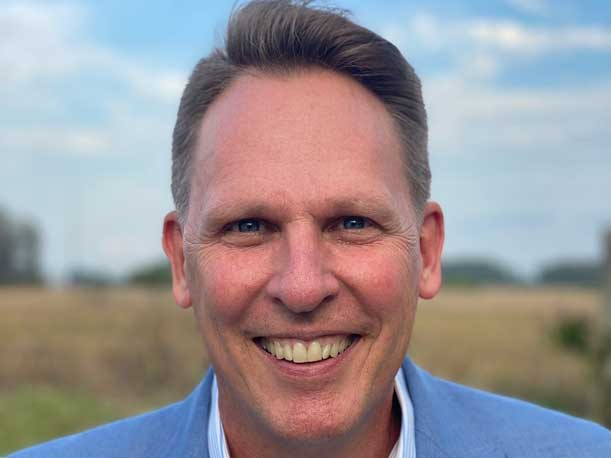
When you hired Marty Bauerlein [pictured], how big a difference did that make in the midmarket/enterprise push?
Hiring Marty was a linchpin to our success because he has assembled a team of current D&H co-owners and new recruits to D&H. We have hired over 100 people from different distributors in the last 18 months. What it has really done is validated D&H as a midmarket/enterprise destination. Those individuals have relationships and are able to articulate our midmarket/enterprise value proposition.
How big a defining moment is this for D&H?
It is a coming-of-age story. Twenty years ago, there used to be articles in CRN on the top 50 distributors in the United States. Now you don’t even need two hands to count the major distributors. It used to be Merisel, Ingram and Tech Data. Then it became Ingram, Tech Data and Synnex. Today it is really Ingram, TD Synnex and D&H. We are one of the big three. What I feel we have done is provide a choice for partners.
We have matured to the point where we have gone upmarket and taken a large slice of that pie. What is amazing is that for some vendors we are becoming their No. 2 or No. 1 distributor. TD Synnex and Ingram used to be 10 to 20 times bigger than us. Now they are only three to four times larger in North America. What’s more, we often have very similar revenue to them for the lines we carry.
When you look at those two [TD Synnex and Ingram], they are almost identical in how they do business. They are a $58 billion and a $48 billion global distributor that are public . Their go to markets are very similar because I believe both of them would like to be valued as recurring revenue companies because that increases their stock price.
D&H is very old school in our go to market. We don’t worry about shareholder equity the way public companies do. We don’t worry about private equity taking money and getting rich on the backs of the history of the company or partners.
We really focus on how do we help our vendors and our customers grow and win. That has been the secret to our success for decades. What has happened is our business model stands out. We are providing high service levels as our value proposition [becomes] better than ever and it seems that other people are retreating, which just allows us to stand out that much more.

Do you see D&H providing more complex solutions in the future to midmarket/enterprise focused partners?
Yes. As part of that we are launching immersive learning destinations with some of the midmarket/enterprise talent we have hired. What we are building is immersive experiences where partners can test solutions and learn and activate new opportunities. We are launching three of them in October at our headquarters. It is a complete interactive training center for emerging AI across the entire modern enterprise. It has AI demonstrations, use cases and how you leverage AI to drive productivity and operations.
Partners are going to be able to try use cases. It will be for AI and a cyber resilience solution lab where partners can see cyberattack simulations with zero-trust workshops so they can have a secure place to see what would happen in an IT environment if certain things happen.
The third area is our collaboration Pro AV Zone. That will include demos and literally running your IT environment with multiple videoconferencing and digital solutions. All of these are intertwined so if you roll out a new AI program, you can make sure from a cybersecurity standpoint it doesn’t create risk or expose any of your data.
This is what we are doing to leapfrog our competitors. The world is getting more complicated. We believe it is our job to help not only create training for partners but more than that to create interactive and immersive solutions where they can demo solutions.
How big an investment are these immersive interactive experiences?
It’s a multimillion-dollar investment launching in October. I view this as our putting a stake in the ground and letting the market know that D&H is the new midmarket/enterprise distributor.

What kind of growth are you seeing in security?
We had a 41 percent increase in modern security solutions. We were a distributor of the year for SonicWall and for Cisco we are absolutely excelling at selling their security solutions. We are helping MSPs become MSSPs. That is a forte of ours. We have thousands of MSPs who we are helping migrate their business models to MSSPs.
We also had a 29 percent increase in cloud solutions, where we are helping partners leverage Microsoft Azure and other technologies. That all fits into us migrating into midmarket/enterprise solutions.
What is the message to partners who do not know D&H as a midmarket/enterprise distributor?
If you aren’t familiar with D&H or do not know our capabilities, our message is explore and find out about what we bring to bear in the marketplace. The best testimonials we have is that partners that do business with us want to do more business with us. It’s amazing. I get notes from five to 10 customers a week thanking me, for example, that our Cisco team has helped raise the profitability of their business or we have helped put them into different solutions where we helped them get certifications or driven leads their way.
At the end of the day, we are still easy to do business with—people doing business with people. Oftentimes that is forgotten. Partners see that. They can email me or Michael, or text us and we get back to them within minutes. If an employee co-owner sees an issue with a customer, they are empowered to create a solution and to fix the issue. My biggest message is: If you are frustrated with your current landscape, you would be remiss not to at least explore D&H as an alternative.
We have customers that we visit every two weeks that tell us they haven’t seen their competitors in three years. They used to visit them all the time, but those companies changed their business model.
I’ll speak to any new customer directly. If they want to have an initial conversation with Marty, Michael or myself, we are happy to have an introductory call with new partners.
How do you feel about the future of D&H with these midmarket/enterprise gains?
I don’t think I have ever felt more optimistic about D&H’s future than I do at this moment in time. I think we are positioned really well to help partners grow their business and increase their profitability. That is our formula: how do we help partners grow their business and increase their profitability in a quickly evolving and changing business environment.
I think all the investments we have made in the last four years with our built-for-growth initiative, hiring over 250 new salespeople and sales engineers in the last three years. Those 250 are almost all partner-facing.
We have invested in our IT systems, our warehouses, our credit and training programs. We believe now is the time where we are able to reap those rewards by helping our partners be successful. D&H being successful is a byproduct of helping partners win and grow.
How many people do you expect to hire this year?
We have 109 open positions right now and we have almost 1,300 employees at our headquarters.