Kyndryl CEO On Driving ‘3As’ Strategy: More Alliances, More Advanced Delivery, Focused Accounts
‘Our work on focused accounts continues to be the decisions we’re making to engineer reductions in some of our revenue streams so we get the margin profile where we want it. The margin profile is the beneficiary, and that’s why margins were up 100 basis points year to year on essentially flat revenue,’ Kyndryl CEO Martin Schroeter tells CRN after the company reported its first fiscal quarter results.
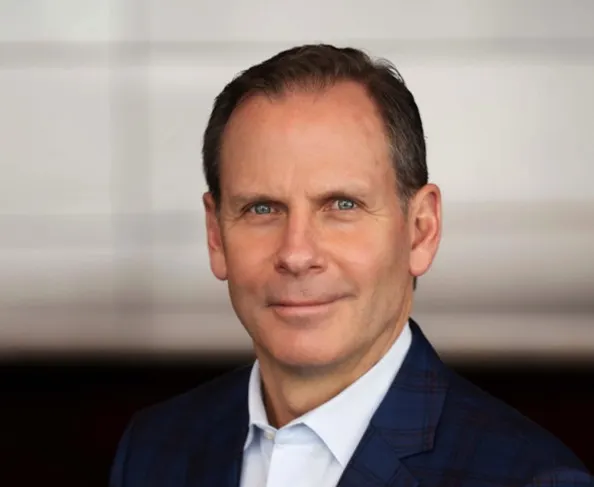
Kyndryl was born in November 2021 when it was spun out of IBM’s managed infrastructure services business. With that spinout, the company was also saddled with multiple long-term but low-margin contracts signed by IBM, contracts that Kyndryl Chairman and CEO Martin Schroeter told CRN held back margins.
What a difference a few years make. Kyndryl Monday reported that for its first fiscal quarter 2026 it enjoyed a 39 percent year-over-year increase in adjusted pretax income to $128 million despite a mere $4 million growth in revenue over last year to $3.74 billion.
Schroeter said the gradual winding down of those old IBM contracts is part of the company’s “3As” strategy—more alliances, more advanced delivery and focused accounts—has been key to leading Kyndryl’s growth going forward.
[Related: Kyndryl Launches Agentic AI Framework To Combine Business AI, Human Capabilities]
Kyndryl has continued engineering declines in the old IBM contracts that have impacted margins so dramatically and positioning itself for long-term revenue and profit growth, Schroeter said.
“Our work on focused accounts continues to be the decisions we’re making to engineer reductions in some of our revenue streams so we get the margin profile where we want it,” he said. “The margin profile is the beneficiary, and that’s why margins were up 100 basis points year to year on essentially flat revenue.”
Here is more of CRN’s conversation with Schroeter.
What’s your latest definition of Kyndryl?
Kyndryl is still the world’s largest infrastructure services provider. It’s the company that’s only focused on infrastructure and bringing innovation. And so we have the world’s best engineers, the world’s best talent, solving the world’s hardest problems in infrastructure. And we’re investing heavily to make sure we stay ahead of everybody.
What are the key highlights for the quarter?
A good start to our year. We showed progress across all of the things that are key to us, for us to hit both this year’s guidance as well as the longer-term aspirations that we laid out last year. On earnings, as an example, we had very solid 39 percent year-to-year growth for profit. I think we’re a bit ahead of where the consensus is. Our strategy of ‘3As’ continues to drive our earnings growth and margin expansion. Kyndryl Consult revenue, one of our critical growth factors, was up again in the quarter and strongly for the last trailing 12-month period. Hyperscaler-related revenue came in at $400 million. After building a more than $1 billion business through last fiscal year, we said this year we’ll get to $1.8 billion, and we’re at $400 million already. That’s good, solid growth. That’s probably growth in the 80-percent-plus range.
We also showed good overall margin performance within the P&L, but also with what we put in the backlog, and our gross profit book-to-bill was very strong again. And all the deals we’re signing have margins that support our longer-term margin profile. So like I said, a good start to the year with good progress where we need to make it good.
Kyndryl’s total revenue was basically flat, up only $4 million over last year. But Kyndryl is also reporting Kyndryl Consult revenue as up by 30 percent over last year. So what revenue component fell?
So remember our strategy here on the 3As. One is alliance activity, which grew. The second is advanced delivery, and that’s part of how we delivered the improved margin profile. And the third ‘A’ is our focused accounts where we’ve been engineering declines in order to move the content that has impacted our margins so dramatically out of our P&L and reimagining those relationships with our customers so that we can position this business for good long-term revenue and profit growth. So our work on focused accounts continues to be the decisions we’re making to engineer reductions in some of our revenue streams so we get the margin profile where we want it. The margin profile is the beneficiary, and that’s why margins were up 100 basis points year to year on essentially flat revenue. And PTI [pre-tax income] is at 39 percent.
So we will continue to focus on growing the two growth factors we identified, the consult and alliance activities, and then we’ll continue to make decisions around our focused accounts. Yes, that will reduce the revenue from [certain] elements, but it’s the thing that allows us to move the margin profile dramatically.
Kyndryl became independent from IBM in November 2021. You’ve been talking about reducing the impact from the legacy business that IBM made part of Kyndryl at the time for over three years. When will the focus instead be on Kyndryl’s overall growth?
There are a few things to keep in mind. One of the powerful elements of our business models is it’s a backlog-based model that gives us really good visibility to a few years’ worth of revenue. It also means, however, that because of the long-term nature of our contracts we can’t just get out of things maybe as quickly as we’d like to. So last year, for instance, in our third year being independent of IBM, only half of our P&L was from our post-spin signings, and half was still from IBM pre-spin. This fiscal year, about two-thirds, 65 [percent] or 66 percent, of our P&L will come from post-spin. The remaining one-third-plus will come from pre-spin signings from IBM. It takes a while to unwind it. Next year, we’ll take another step up, and we’ll be roughly 80 percent of our signings will be from us. So in the time frames we laid out back in November of last year, when we talked about our triple-double-single, we said that we’ll triple cash flow, double profit, and get mid-single-digit revenue growth. We’ll exit that time frame in fiscal 2028. By the time we get to fiscal ’28, that longtail of IBM signings that are in our P&L will be in the single digits, think about 5 [percent] or 6 percent only. So we are getting closer. But it does take a while in this business to work your way out of and through the backlog.
Do you think investors understand the impact of the legacy IBM contracts?
Oh, I think so. I think we’ve been pretty clear about what the focused account activity would be worth. When we first laid out the strategy, we initially said it would improve our bottom line by $800 million of profit cumulatively over the next few years. We’re already north of that now; we’ll have some more progress to do. So I think we’ve been very clear about what it means to our business, to our P&L, and to our cash flows in order to execute the focused accounts. So yes, that’s the short answer to your question. I think they understand it.
Any guess as to when Kyndryl might be able to report significant revenue growth on a consistent basis?
I think we’re kind of there this fiscal year. Not significant revenue growth, but we get to revenue growth this year and in the time frames for fiscal ’28, which is what we talked about in November of last year. By the way, that starts for us in 20 months. We don’t have a calendar fiscal year, so our fiscal ’28 starts in 20 months. Over that time frame, we’ll get to mid-single-digit revenue growth. And we get there because the focused account activity is de minimis, and the vectors of growth continue to grow quite well like our consult and Alliance activities. So we’re getting there. We’re making a lot of progress towards those longer-term goals.

Kyndryl’s U.S. revenue actually fell 8 percent over last year, which was the biggest change in terms of geography. What happened?
This is our focused account activity. As we start to get out of those contracts and that content, we’ll see future growth ahead with a great, a great book to build in the U.S. It just takes time to work that through the P&L.
How about the impact from tariffs on you and your customers?
I’m sure our customers feel this. We have customers in all industries, and so when the discussion around physical goods trade comes into play, it’s obviously going to affect some of our customers. From our perspective, I wouldn’t say there's a direct impact to us because we’re not in the physical goods trade. Yes, we certainly have a supply chain that allows us to refresh hardware for our customers. But we don’t see any sustainable impacts, no direct impacts. But we are helping our customers think about their supply chains, reacting to what they need to do in their business in order to respond to tariff impacts, but that’s what we do every day on any other change in either the regulatory environment or their macro outlook. That’s what we’re here for.

What are some of your strategic priorities for the rest of the year?
The strategy we laid out around the 3As and Kyndryl Consult and creating and delivering innovation in the form of Kyndryl Bridge [platform for integrating and orchestrating complex IT infrastructure] will still be the focus for this year. We’ve done amazing things in Kyndryl Bridge in bringing innovation to our customer base. We continue to expand the ecosystem in which we’re working. As an example, we added a next generation of important AI companies, Databricks, into our alliance program. So we’ll continue to focus on innovation.
We’ll also continue to focus on expanding the ecosystem in which we operate, and we’ll continue to focus on investing in things like [Kyndryl] Consult, and we’ll focus on investing and building the skills needed to help our customers. As an example, within the past few months, we announced new AI centers in in the U.K., France and Singapore. We opened a new GenAI data center, a small one, for our Japanese customers. And we partnered with Intel and Nvidia. So our strategic focus for the rest of the year will continue to be investing in consult to build new capabilities and continue to expand our alliance activities.